Paul Rudolph's 1982 Edersheim Residence is on the market

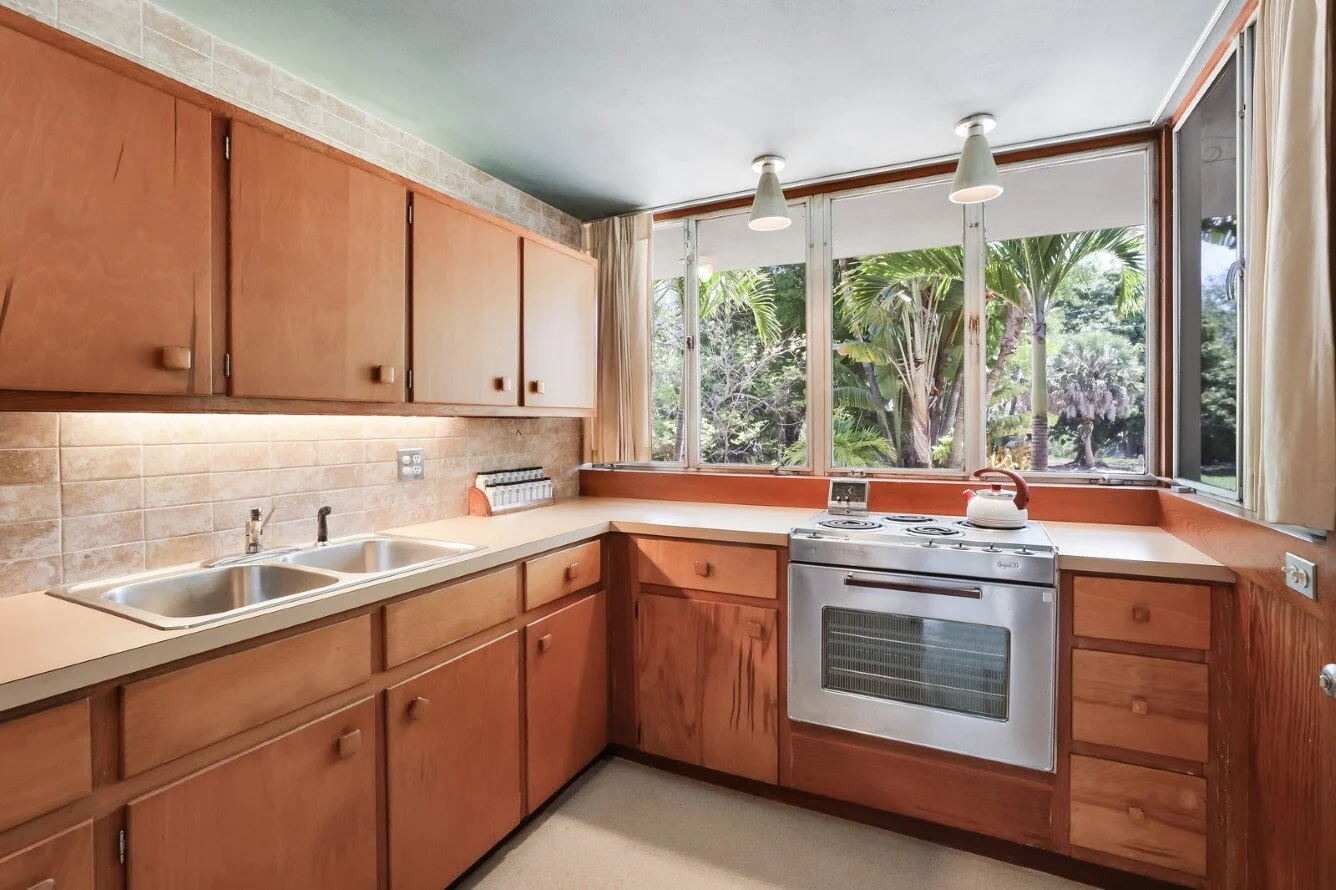
The Edersheim Residence in Larchmont, New York in 2020. Photograph by Filip Michalowski of CT Plans, courtesy Houlihan Lawrence

The Edersheim Residence in Larchmont, New York in 2020. Photograph by Filip Michalowski of CT Plans, courtesy Houlihan Lawrence

Paul Rudolph’s Edersheim Residence at 862 Fenimore Road in Larchmont, New York is for sale.

The original house was constructed in 1958 and owners Maurits and Claire Edersheim hired Rudolph to design alterations to the property in 1982, following his interior renovation of their New York City Apartment on Fifth Avenue in 1970.

The Edersheim apartment in New York City in 2019. Photos by Ethan Shapiro © The Estate of Paul Rudolph, The Paul Rudolph Heritage Foundation.

The Edersheim apartment in New York City in 2019. Photos by Ethan Shapiro © The Estate of Paul Rudolph, The Paul Rudolph Heritage Foundation.

1970.07-02.04.0005.jpg

The Edersheims requested Rudolph design alterations and additions to the property again in 1989 and 1991. Original Rudolph designs include a pool/guest house, main residence entry, covered porch, expansive built-ins, skylights, interior lighting and a complete renovation of the main structure.

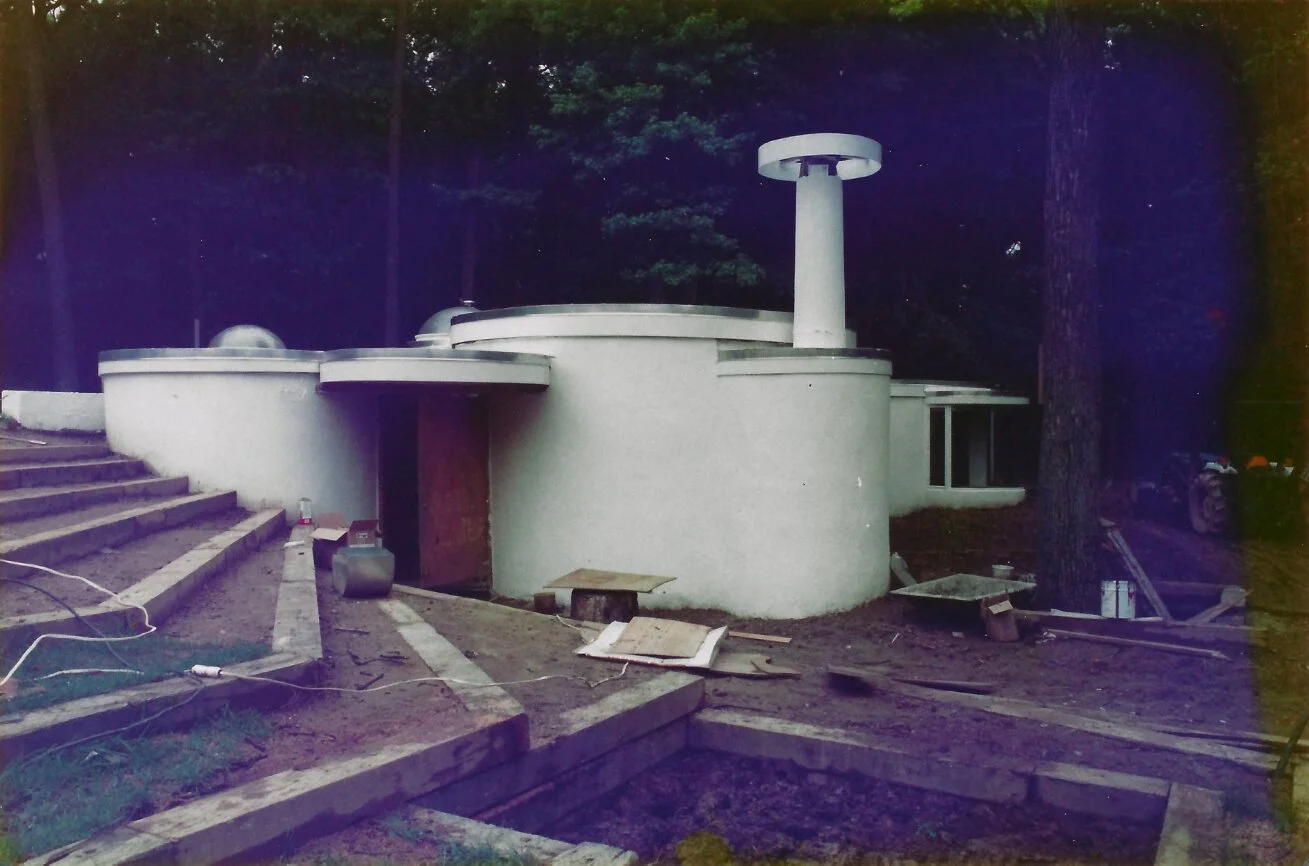
The Covered Porch under construction. Photo by R.D. Chin from the Archives of The Paul Rudolph Heritage Foundation.

The Covered Porch under construction. Photo by R.D. Chin from the Archives of The Paul Rudolph Heritage Foundation.

The Pool/Guest House under construction. Photo by R.D. Chin from the Archives of The Paul Rudolph Heritage Foundation.

The Pool/Guest House under construction. Photo by R.D. Chin from the Archives of The Paul Rudolph Heritage Foundation.

The Pool/Guest House under construction. Photo by R.D. Chin from the Archives of The Paul Rudolph Heritage Foundation.

The Pool/Guest House under construction. Photo by R.D. Chin from the Archives of The Paul Rudolph Heritage Foundation.

The Edersheims would become some of Rudolph’s most faithful clients, choosing him to design several projects including an office suite for Mr. Edersheim at the Salomon Smith Barney office in New York’s World Trade Center Complex in 1994.

The compound (renovated in 2020) includes the Main Residence, a separate Apartment/Office and a Pool/Guest House. This is a rare opportunity that is perfect for sheltering in place.

Located in Larchmont, NY - just north of New Rochelle and New York City - the home is sited on a 2.49 acre landscaped lot and is listed for $6.4 million USD.

The property includes indoor & outdoor swimming pools, wet/dry sauna, media room, gym, and multiple work spaces. The open flow floor plan features several additions designed by Paul Rudolph. The Master Suite includes a 21 jet tub, steam shower, rain/body showers, dual water closets, towel warmers, vanity/ dressing area and attached closets.

About 10,000 sq feet of outdoor living space includes a 1,000 sq ft screened-in outdoor covered porch with an outdoor kitchen for entertaining.

The residence is located on a unique 2.49 acre private landscaped property in Larchmont and is an easy NYC commute with access to golf, country clubs & the water.

You can learn more about the Edersheim Residence (including more images) at the Paul Rudolph Heritage Foundation’s page for the property’s sale here.

You can also reach out to us at office@paulrudolphheritagefoundation.org for more information.

What's In A Name? When a "Rudolph" Really Isn't One

A home in Chester, NY that the owners claim was designed by Paul Rudolph. Image from a previous listing on Weichert Realtors.

A home in Chester, NY that the owners claim was designed by Paul Rudolph. Image from a previous listing on Weichert Realtors.

When you represent the estate of an architect who has designed residential properties, you eventually receive word that they are going to be sold. At that point, in steps a real estate agent with the marketing vocabulary and poetic license to find a new owner.

As Christine Bartsch writes in her blog Writing Creative Real Estate Listing Descriptions: 3 Pro Tips (and a Warning!), “The better your listing description is, the better your chances are that buyers will come see your home in person. And the more showings you have, the higher your odds are to get multiple offers.”

It can sometimes be hard to find a new owner for a Rudolph-designed home. They can be of a certain age that they seem too small for today’s buyers (like the Cerritto Residence) or in a location that is no longer remote and in danger of being demolished for a bigger house (like the Walker Guest House) or they can be in a style that can make them hard to love (like the Micheels Residence).

In some cases the owners reach out to the Paul Rudolph Heritage Foundation and we work with them to find a new owner who will preserve the property. We list these properties on our website with instructions here.

As we state in our mission statement, one of our goals is to help provide connections between sellers of Rudolph properties with preservation-minded buyers and design-sensitive real estate professionals. In order to ensure the properties are preserved, it is important they are owned and maintained.

So its interesting that - while its already challenging to preserve original Rudolph designs - we come across properties that claim they are Rudolph designs when there is no evidence that they are.

Note: The following homes are not included in Rudolph’s project list and we have no evidence (in either drawings, photographs or written communication) that they are Rudolph designs. We are happy to update our archives if the owners contact us and can provide supporting documentation.

Let’s take a look at three of these homes:

904 Virginia Drive in Sarasota, Florida

The original house in 2007

The original house in 2007

The new house in 2020

The new house in 2020

According to the property’s listing:

This entertainer's dream home is located in the heart of Sarasota's Cultural District. This home was designed by renowned architects Ralph Twitchell and Paul Rudolph in 1940 with construction being completed in 1941. The home was remodeled and expanded in 2009, and refreshed in 2019. The design is a perfect blend of contemporary and mid-century modern.

As soon as we read the listing (sent from a Rudolph fan) we knew the Rudolph reference was mistaken because he joined Twitchell’s office in the Spring of 1941 - the same year construction was completed.

We reached out to several friends in Florida and learned the original address is indeed a Twitchell design, known as the ‘Second Lu Andrews residence’. Pictures of the home appear in John Howey’s 1997 book The Sarasota School of Architecture, 1941-1966.

We were provided a note by a previous owner in the 1990’s that explains a short history of the home. Below is an excerpt:

“There was a small piece in our paper yesterday in the real estate section about the Lu Andrew home in Tahiti Park. I was moved to give a brief history of her second home built in 1939, which my husband and I owned about six years ago. Both homes were built by her boss Ralph Twitchell.

When Pat and I started looking to buy our first home we were living on Hickory street and had both been living here and there in the IBSS neighborhood for years. It was our hope to find a house in the area, and we spent a year looking.

Walking our dogs we came upon 904 Virginia Drive, a for sale sign had just been erected and we immediately went back home to call our realtor to inquire about this charming modern house. We set up an appointment for the very next day, the price was a bit out of our range, but with the idea of negotiating we remained positive.

Meeting the realtor at 904 we knew right away that the outside of the property was a dream, and once the door opened we knew instantly that we had finally found our home. It was small, 900 square feet, perfect for two. It was important for us that the house we bought wasn't entirely bastardized.

Walking into 904 we were delighted by the original integrity, design and layout. Putting an offer in quickly, and dealing with owners that loved the house and yard, it was a given that it would all work out.

Once we occupied the Twitchell house we started to research it's previous owners and history. In the hopes of meeting it's original owner we went to see if Lu Andrews was home at her Tahiti Park address.

Arriving there, we knew from the looks of the house that it hadn't been lived in for quite some time. One of her neighbors saw us and we all started talking and she told us that Lu's son had put her into a nursing home just a few months ago. She knew a lot about the history and about Lu, and was kind enough to let us know where Lu was now living. We called the nursing home and made an appointment to meet with her.

We learned that Ralph built the home for Lu and her son, that Lu slept in the living room on built-in day beds (no longer there) that her son slept in the back bedroom and the front room was to rent out to someone so that it was affordable for Lu. Times ware tough in Sarasota in the 40's, the building boom declined rapidly and when the war broke out work was hard to get. Being a single parent with a son to raise, Lu moved to Washington DC to work as a secretary. She had lived in 904 for a short time, never to return. she moved back to Sarasota after the war and the Tahiti Park house was built for her by Ralph, but the materials used were more humble as the economy here was still tight. She was a dear lady, and her memory faded back and forth, but we were still able to extract this brief history.

Once our children arrived the house was becoming quite small, so we investigated adding on and hired the architect John Howey. We felt John would be perfect as he had just published a book on the Sarasota School of Architecture. Plans were drawn and during the process my neighbor across the street had decided to sell his home, and it was offered to us. Economically it was a wise decision, building the addition was expensive in comparison. We would be going from 900 s.f. into 2000 s.f. without the headache, but with the loss of our sweet Twitchell home.

Sometimes we make decisions with the hopes the what we decide will stay the same, unfortunately two years ago 904 was forever changed.

The beautiful 100 year old river cypress torn away from the walls - paneled throughout the ceilings and walls - piled high into dumpsters. When living at 904 while reading in bed my eyes could not help but to always delight in the beauty of the cypress grain, every bit worthy, of it's title, River Tide, as the grain looks like the water moving along the shore. As if the cypress tree is so ingrained into the life of the water from which it is born.

Twitchell often left a whimsical signature in the homes he built, stars cut out from the cypress, and the cut out itself, neatly imposed near entryways. As the demolition continued at 904, Pat was able to salvage the star paneling and many paneling boards.

On the back of some of the boards was a stamp from the lumber mill from which the cypress originated. In 1922 Cummer Sons Cypress Company was built on 100 acres in Pasco County, in the town of Lacoochee, Florida. The town of Lacoochee thrived for nearly 40 years, where Cummer Sons Cypress, a giant in the logging and lumber industry, made their last stand near the Withlacoochee river. It closed in 1959, and with its demise the town fell into hard times, as the mill was the main employer, providing jobs and housing mostly for African Americans.

I still dream about 904, mostly that I have forgotten a treasure, tucked away in the beautiful memory of a cypress tree.”

The home was modernized in the 2000’s and then later sold to a new owner who demolished 95% of the house and rebuilt it. As our source in Florida told us, “Twitchell at 904 Virginia Drive is long gone.”

On a side note - a wonderful SketchUp model of Lu Andrews’ 3rd house at Tahiti Park referenced in the note above can be found here.

1212 East Sierra Way in Palm Springs, California

A photograph of 1212 East Sierra Way from the property’s listing on Zillow.

A photograph of 1212 East Sierra Way from the property’s listing on Zillow.

The AirBNB listing for the 4,100 s.f. property states:

This iconic mid-century multi-level home in the prestigious Indian Canyons neighborhood was designed by renowned architect Paul Rudolph. Casa Colibri is a sprawling property with expansive rooms and an abundance of floor-to-ceiling windows that shed light on the spectacular, mid-century interior.

In this case, we were alerted by Docomomo - a non-profit organization dedicated to the documentation and conservation of buildings, sites and neighborhoods of the modern movement - asking for confirmation. The listing says the exact location will be provided after booking. A little digging and we discovered a similar listing for ‘Casa Colibri’ on Vrbo which also states, “this iconic mid-century multi-level home in the prestigious Indian Canyons neighborhood was designed by renowned architect Paul Rudolph.”

What caught our eye was the Vrbo listing headline - “3 bedroom 5 bath mid-century 4100 sq ft home featured in modernism week tours.” When members of the Paul Rudolph Heritage Foundation were in Palm Springs for Modernism Week in 2019 to see the Walker Guest House replica we had no idea we were only a 6 minute drive away. No one we spoke to mentioned a Rudolph-designed home was in town, and information about Rudolph at the replica’s installation made no reference to it.

A public records search of Palm Springs (along with a little flying around via Google Earth) and we learned that Casa Colibri is located at 1212 East Sierra Way. According to the property records, the residence was built in 1977. We also found a Zillow listing for a previous sale by Douglas Elliman in 2017 that states:

A house of pure architecture and one of Indian Canyon's most dramatic houses. The different levels recall the work of modernist architect Paul Rudolph and are part of what makes the sight lines so interesting. Extensively renovated by Solterra Construction in 2008 this home has comfortable yet contemporary style and lots of architectural drama.

Within a few years a house that ‘recalls’ Paul Rudolph has become ‘designed’ by him.

19 Greentree Lane in Chester, New York

Photo from the Property Description Report from the Orange County, NY Municipal website

Photo from the Property Description Report from the Orange County, NY Municipal website

The 7,202 sqft home - which sold for $285,000 in 1995 and then $238,000 in 1999 - jumped 1,034% in price to $2,700,000 in 2014. According to public property records, the home was originally built in 1986 and last modified in 2000-2001. The additions include a 240 s.f. carport, 650 s.f. attached garage and 80 s.f. covered porch. No date is available when the heliport was added on the property.

The residence was listed and delisted several times since 2013 and marketing mentions Paul Rudolph although you might miss it based on the spelling:

“The Hudson Villa is named after its historic origin. Created by the renowned architect Paul Rudolf, the estate is a masterpiece of design and craftsmanship featuring a private white-sand beach and a resort-like setting less than an hour away from New York City.” - Hudson Valley Style Magazine, 07/09/2020

On its own website, the property description states:

“Designed by the renowned American architect Paul Rudolph, the home pays homage to the lodge tradition - precise craftsmanship is evident in architectural accents including cathedral ceilings, light-flooding skylights, and warm stone elements. Security and privacy are front of mind in the design, layout, and features of the property.”

We encourage you to visit the website and judge Rudolph’s participation for yourself based upon the pictures of the home’s interior.

Or, you can check this listing from the Off The Mrkt blog in September 2018:

Reality TV personality and mentor on Scared Straight and MAURY, Dave Vitalli, is selling an aspen style safe house in Chester, New York for $3,088,000.

This safe house located at 19 Greentree Lane was originally built by Paul Rudolph, a renowned architect, in 1986. Rudolph spared no expense when it came to making sure the house would withstand the threats of the world outside. 

The safe house is built of thick slabs of concrete and reinforced steel to help maintain the structure just in case something were to happen. It also has generators, wells, and septic systems in place to allow for comfortable off the grid living. This property has also been previously used as a retreat for diplomats, celebrities, and dignitaries through the years.

The site includes a link to Rudolph’s wikipedia page, because they wouldn’t be able to find a link for the home in our project archives.

Its also interesting to note that the home’s location - Chester, NY - is located in Orange County. Orange County is best known for several Rudolph-related preservation controversies including the destruction of the John W. Chorley Elementary school in Middletown and the partial destruction and insensitive addition to the Orange County Government Center. Could the controversy and Rudolph’s name in the local paper have inspired the marketing connection?

The USModernist organization - which follows and promotes the preservation of modernist homes - says the house was “for sale 2014-2018, advertised as a Paul Rudolph design, based on a claim by the owner. We found no evidence to support that claim whatsoever, and the owner declined to produce any.

USModernist contacted the property’s real estate agent in 2017, who could not produce any documentation but that Rudolph’s authorship is something ‘the family told them.’ The agent also said the owners commissioned Rudolph to do the renovation.  However, they bought the house in 1999 after Paul Rudolph had passed away in 1997.

After speaking with us, USModernist informed the sales agent and asked that the record be corrected. Instead, the house was delisted only to return yet again as a Rudolph in several relistings with different agents ever since.

Rudolph comes up a few times in the history of this property - either ‘sparing no expense’ in 1986 or renovating the property in 1999 from the afterlife. We note with irony that the renamed ‘Hudson Villa’ is trademarked on the listing’s current website, while taking liberty with the mention of Rudolph’s involvement in the ‘trademark’ design.

Why Now?

Several sales of Rudolph properties have been in the news lately, so we aren’t surprised that Rudolph’s name is being used as a marketing tool.

In 2019, two original Rudolph properties were sold. The 1952 Walker Guest House in Sanibel, Florida was sold at auction by Southebys-New York in December for $750,000 and, with auction house fees, the total came to $920,000. As we reported earlier this month, it is in the process of being moved to a location in California.

The other sale was Rudolph’s 1986 Triestman Residence which went through a subsequent interior modification by the new owner.

In 2020, Rudolph’s 1949 Bennett Residence was sold for $395,500 after being listed for just 3 days. We learned that the new owner purchased it sight unseen for the full asking price - even in the middle of a pandemic.

This year also saw the sale of the Walker Guest House Replica that was on display during Palm Springs Modernism Week (a short drive from the would-be Rudolph) by Heritage Auctions. Bidding began at $10,000 - the budget for the original home when it was first built.

So when we find sellers using Rudolph’s name as a way to get more attention, we take it as a sign of success in our efforts to keep Paul Rudolph’s work in the public’s consciousness.

None of this is meant to make a value judgement about the homes mentioned above, just that they are not Paul Rudolph designs. As is the case with art or architecture, its buyer beware and in some cases definitely not ‘you get what you pay for.’

The Bennett Residence - rare Sarasota School Gem - is on the market

Photo: Louis Wery, Archive of the Estate of Paul Rudolph, The Paul Rudolph Heritage Foundation.

Photo: Louis Wery, Archive of the Estate of Paul Rudolph, The Paul Rudolph Heritage Foundation.

The Allen and Barbara Bennett Residence is now for sale. A rarely available property - and one of the few remaining original Twitchell & Rudolph homes to still exist - the restored residence is looking for a new owner who appreciates Mid-Century Modernism.

Located in Bradenton - just north of Sarasota, Florida - the home is sited on a corner lot and is listed for $395,000.

The design brings together native and modern materials – heart cypress, lime block, plate glass – into a disciplined composition reflecting the principles of the Sarasota School of Architecture.

Sited at ground level, the floor plan works well for wheelchair access. Glass walls open to the outdoors and a private garden courtyard. The Ocala block fireplace and accent walls ground this unique design in its natural surroundings.

The home was restored by architect and author Joseph King who wrote extensively about Rudolph, and is featured in the 2002 book Paul Rudolph: The Florida Houses.

You can learn more about the Bennett Residence (including more images and a virtual tour) at the Paul Rudolph Heritage Foundation’s page for the property’s sale here.

Celebrate National Preservation Month by Preserving Paul Rudolph’s architecture

It is always a good time to celebrate Paul Rudolph’s architecture —and we can’t think of a better way to celebrate National Preservation Month than finding a new owner who will appreciate and preserve this modernist gem.

You can reach out to us at office@paulrudolphheritagefoundation.org for more information.

Rudolph, Mies, and the Barcelona Pavilion: A Deep Appreciation

Rudolph always acknowledged that he learned from from the masters of Modern architecture—but when he visited the rebuilt Barcelona Pavilion, it had a surprisingly powerful affect on him.

Paul Rudolph's Temple Street Parking Garage Gets A Tune-Up

An update on Rudolph’s garage structure in New Haven—a work of sculptural virtuosity, which is getting some needed care.

Boston Government Service Center's Other Artwork: "Upward Bound"— and Rudolph’s engagement with Art

Paul Rudolph’s Boston Government Service Center shows Rudolph’s engagement with art—and it includes another fascinating work of public sculpture.

A Review: The New Book of Paul Rudolph Drawings

The latest book on Paul Rudolph—one focusing on his sketches and drawings—gets a positive review.

A Bigger Context for the Boston Government Service Center: The commitment - and tensions - of a government’s relationship with its citizens

Architectural historian Daniel M. Abramson has published an in-depth article on the history of the Boston Government Service Center—and looks at it through considering the inherent tensions of the American welfare state, of which the building is a concrete manifestation.

Paul Rudolph Heritage Foundation issues letter of support for preserving the Boston Government Service Center

The Paul Rudolph Heritage Foundation issues a letter against plans by the State of Massachusetts to partially demolish the Boston Government Service Center.

Alert: Monday's Meeting On The Future of Rudolph's Boston Government Service Center

The state wants to sell parts of Rudolph’s Boston Government Service Center to a developer—and all their “alternatives” include demolition to part of the site. You can attend a presentation in Boston—and show your support for preservation.

Massachusetts Historical Commission weighs in favor of saving Paul Rudolph

All the development proposals, so far, entail full-or-partial demolition of the Boston Government Service Center’s Hurley Building. The Massachusetts Historical Commission has reviewed them—and issues their verdict.

Boston Preservation Alliance: Making the case for Re-Investment (not De-Investment) in Rudolph's Boston Government Service Center

The Boston Preservation Alliance issues a strong letter critiquing the state’s disinvestment in the Boston Government Service Center and offers an alternative view.

DOCOMOMO-New England Calls For Preserving Rudolph's Boston Government Service Center

DOCOMOMO-New England comes out with a strong letter, questioning the process & assumptions of the move to demolish part of the BGSC

McMansion Hell's Kate Wagner on Open Plans vs. Walls [And its resonance with Paul Rudolph's spatial archetypes]

The floor plan of Paul Rudolph’s Revere Quality House, used as an example of residential open-space planning in Kate Wagner’s article. The house was built in 1948 in Siesta Key, Florida, and was widely published. © The Estate of Paul Rudolph, The Pa…

The floor plan of Paul Rudolph’s Revere Quality House, used as an example of residential open-space planning in Kate Wagner’s article. The house was built in 1948 in Siesta Key, Florida, and was widely published. © The Estate of Paul Rudolph, The Paul Rudolph Heritage Foundation

KATE WAGNER STRIKES AGAIN

Everyone loves Kate Wagner’s site, McMansion Hell—well, almost everyone, for we can imagine the chagrin of being subject to her clear-eyed assessments of “McMansions” which have saturated the housing market. We’ll skip showing a picture of the house which was the focus of one of her analyses—but here’s a sample text from Kate Wagner and one can get a clear idea of her tone:

“If you combine all of the insipid elements of the other houses: mismatched windows; massive, chaotic rooflines; weird asphalt donut landscaping; pompous entrances, and tacked on masses; you’d get this house. The more one looks at this house the more upsetting it becomes . . . . What sends this one over the top is its surroundings: lush trees and clear skies that have been desecrated in order to build absolute garbage.”

More—much more—can be seen at her site, as well as the site’s archives. But it’s important to know that her work is not just about take-downs of dimwitted design and comatose construction. Ms. Wagner has delved into other design-related topics of significance—like land use, urbanism, and the history of architectural styles—and she’s one of the few writers on design to give a fascinating (but accessible) look at the intersection of acoustics and residential design. Nor is her work published only on her own website—Wagner has been a featured writer in Architectural Digest, The Atlantic, Curbed, and other venues.

It is an article by her, on the ever-fascinating CITYLAB website, that has our attention, as it intersects with a aspects of Paul Rudolph’s work and philosophy—and, as noted at the top of this post, a Rudolph house plan was used as one of the article’s illustrations.

“THE CASE FOR ROOMS”

Her post, The Case for Rooms is subtitled: It’s time to end the tyranny of open-concept interior design.

A screen-shot of the opening of “The Case for Rooms”, an article by Kate Wagner on the CITYLAB website. The illustration—showing diverse activities through the house—makes a case for the usefulness of separate rooms.

A screen-shot of the opening of “The Case for Rooms”, an article by Kate Wagner on the CITYLAB website. The illustration—showing diverse activities through the house—makes a case for the usefulness of separate rooms.

She opens by clarifying the definition of her topic:

“Much has been written about the open floor plan: how it came to be, why it is bad (or good), whether it should or shouldn’t be applied to existing housing. The open floor plan as we currently understand it—an entry-kitchen-dining-living combination that avoids any kind of structural separation between uses—is only a few decades old.”

She then gives a history of the [pre-“open concept”] development of separate rooms for different functions and family members—a significant evolution in residential design—and then covers the reasons (historic, social, economic, industrial, and aesthetic) why there has been a departure from such spacial differentiation. That departure is manifest in the open concept arrangement of so many houses and apartments today: where living-dining-cooking spaces meld into each other.

The Revere Quality House, a 1948 design by Paul Rudolph, was widely published—and is used in the article as an illustration of “open concept” home planning which began to permeate residential design in the housing boom after World War II.

While Rudolph’s elevations for the Revere Quality House are not included in the article, it is worth looking at them to see that design’s large expanses of “see-through” areas (at the Porch, Living Room, and Dining Room)/ They confirm the characteri…

While Rudolph’s elevations for the Revere Quality House are not included in the article, it is worth looking at them to see that design’s large expanses of “see-through” areas (at the Porch, Living Room, and Dining Room)/ They confirm the characterization of the house as an open plan (or “open concept”) design. Those rooms are examples of Rudolph’s “fishbowl” spaces. By contrast, the Kitchen, Bedrooms, and Bath use more solid walls and partitions—conferring on them the protective spatial quality of what Rudolph called “caves.” © The Estate of Paul Rudolph, The Paul Rudolph Heritage Foundation

Today—to judge from the floor plans, photos, and renderings seen in real estate advertising, the “open concept” approach prevails in the layout of houses and apartments.

The article goes on to question open concept planning on practical terms:

  • whether houses laid-out this way can give their residents the visual, acoustic, and mental privacy that is useful and healthy

  • whether they promote (or get in-the-way of) communication

  • whether they are energy-wise

  • whether the fixes that have been invented to compensate for their problems (like having a separate “mess kitchen” which is visually hidden from the open-plan areas) are just masking an overall planning mistake

Another Paul Rudolph design, from the post-World War II building boom era: the Lamolithic House of 1948, built in Siesta Key, Florida. As shown in Rudolph’s perspective rendering, the Living Room, Dining Room, and Kitchen merge into each other, and …

Another Paul Rudolph design, from the post-World War II building boom era: the Lamolithic House of 1948, built in Siesta Key, Florida. As shown in Rudolph’s perspective rendering, the Living Room, Dining Room, and Kitchen merge into each other, and are primarily bounded by large (and openable) glazing. This arrangement is a manifestation of the open planning approach which was becoming increasingly popular—and also worked well to allow for cross-ventilation in a hot region like Florida (and a pre-AC era). The Bedrooms and Bath are more conventionally enclosed with walls and shuttable doors. These two sets of rooms adhere to Rudolph’s differentiation of “fishbowl” and “cave” spaces. © The Estate of Paul Rudolph, The Paul Rudolph Heritage Foundation

The article provides a deep (and wonderfully-illustrated) dive into these issues, the emergence of the open plan approach, and its permutations through the 20th (and now 21st) Centuries.

Kate Wagner’s right, as always: open plans can have problems—and this has been observed not only in residential design, but also about the quality-of-life within open plan offices (though a recent study is beginning to challenge that), schools, health facilities, restaurants, and architecture/design/art studios. In all of these, the lack of acoustical privacy and its evil twin—noise—are prime offenders. But so is the absence of visual privacy. Moreover, in a set of joined open plan spaces, missing are the strong visual cues which gives that sense of security that helps occupants feel situated in the world. Peninsula shaped built-in seating and conversation pits try to make up (though not always completely) for absent walls and doors.

FINDING A BALANCE

As with many design problems, perhaps the real issue is disproportion—a lack of balance in the various forces and approaches: plans which rely almost exclusively on open planning will have the above-mentioned problems. But plans which only include closed-off spaces—having one door-shuttable-room-after-the-other—are doomed to architectural claustrophobia, and maybe induce a kind of over-privacy that is also destructive.

RUDOLPH ARTICULATED THE POLARITY (AND VARIETY) OF SPATIAL NEEDS

It’s one of Paul Rudolph’s most provocative quotes:

“We desperately need to relearn the art of disposing our buildings to create different kinds of space: the quiet, enclosed, isolated, shaded space; the hustling, bustling space, pungent with vitality; the paved, dignified, vast, sumptuous, even awe-inspiring space; the mysterious space; the transition space which defines, separates, and yet joins juxtaposed spaces of contrasting character. We need sequences of space which arouse one’s curiosity, give a sense of anticipation, which beckon and impel us to rush forward to find that releasing space which dominates, which acts as a climax and magnet, and gives direction.”

There, Rudolph was challenging the aridity of mainstream Modernism’s approach to city planning—but he might as well have been talking about the need for such variety within residences—and, as his career went on, he’d practice what he preached.

Distilling this even further, Rudolph spoke of the two archetypal spaces which humans create and need—the poles on the range of spaces that we inhabit. He called them The Fishbowl and conversely, The Cave.

We can describe and give examples for each:

THE FISHBOWL is the open/exposed space. Sometimes it is the type of residence where a Living Room flows into a Dining Room and then into the Kitchen (the planning approach for homes, which is the topic of Kate Wagner’s article)—but it could describe places as civically grand as the podium of the Pantheon or the balcony from which the Pope addresses the crowd in St. Peter’s square. The most frequent way that the entry spaces of an opera house are characterized are as “places to see and be seen”—a perfect example of this spatial type! You’ve probably seen the way the offices of a newspaper newsroom or a police precinct interior are depicted in films and on TV: there’s a glazed-in office within which sits the editor or police captain (observing and directing the action—but also being the object of observation).

THE CAVE is the enclosed space—maybe cozy, maybe fortress-like in its defensibleness—but above all protective and evoking security. A place where one is not exposed, but where one can be (and share) one’s private self. The most frequently cited room-type would be a bedroom—and every child who has ever built a “sofa cushion fort” will know the sought-after feeling of security of such spaces. But ‘the Cave” would also apply to other kinds of spaces: entry vestibules where potential visitors are vetted (and, if necessary, warded-off), rooms for medical examinations and healing, offices and studios for quiet creation, library spaces for study, chapels for contemplation, galleries for art appreciation, and restaurant booths for sharing confidences.

Rudolph knew (and preached) that well-planned residences, workplaces, museums—indeed whole cities, and all the places we live—need to have both.

A RUDOLPH DESIGN WHICH ACHIEVES BOTH

Early in his career (in his first independent commission) Rudolph designed a house which allows the owner to have either the character of a Fishbowl -or- a Cave—and every graduation in-between. His Walker Guest House—a work from 1952 which was built in Sanibel, Florida—had adjustable flaps on most of the house’s perimeter, and they provided almost infinite options for achieving a sense of enclosure -or- openness.

Paul Rudolph’s drawings of his Walker Guest House, showing how the exterior flaps work: the hinged panels (balanced by a simple counterweight system) swing open and closed, and can be set at almost any angle. This allows for flexibility in dealing w…

Paul Rudolph’s drawings of his Walker Guest House, showing how the exterior flaps work: the hinged panels (balanced by a simple counterweight system) swing open and closed, and can be set at almost any angle. This allows for flexibility in dealing with changes in sun, wind, and rain, and desire for privacy or openness. © The estate of Paul Rudolph, The Paul Rudolph Heritage Foundation

RUDOLPH’S DEPARTS FROM THE OPEN PLANNING APPROACH

It is interesting that, as Rudolph’s career progressed, the open concept approach appears less frequently in his residential designs. This may have been due to several factors:

  • The more complex programs for which he was asked to design

  • The increased budgets he was given to work with

  • Much of his early work was in Florida was designed & built well before air conditioning was widely and economically available—so open plans that allowed for cross-breezes were a practical (and “green”) way to work within that subtropical climate. As Rudolph did less work in Florida (and as AC became more affordable) open layouts were less needed.

  • The evolution of his own thinking about the Modern movement in architecture. Rudolph made his first trip to Europe at the end of the 1940’s. His experiences of the spatial and formal variety of traditional cities and buildings spurred him to seek for a a richer approach to the making, shaping, and modulation of spaces.

Paul Rudolph’s axonometric-plan drawing for the Edersheim Apartment in New York. which was built in the early 1970’s. Separate spaces for the Dining Room, Living Room, and Library-Office occupy the right-most third of the plan—and Bedrooms and other…

Paul Rudolph’s axonometric-plan drawing for the Edersheim Apartment in New York. which was built in the early 1970’s. Separate spaces for the Dining Room, Living Room, and Library-Office occupy the right-most third of the plan—and Bedrooms and other spaces are each accessed off a central corridor. In contrast to his early residential works in Florida, the spaces here are almost hyper-differentiated by function—and privacy is readily available to each family member. © The Estate of Paul Rudolph, The Paul Rudolph Heritage Foundation

In Paul Rudolph’s civic work, he used a range of spatial archetypes (including the Cave and the Fishbowl) to create spaces appropriate for each of a building’s functions. A building with as varied a program as Rudolph’s Boston Government Service Center is a prime example of this—and in their July, 1973 issue, Architectural Record published an article which highlighted this way of analyzing the complex.

The cover of Architectural Record’s July 1973 issue, on which is shown a staircase within Rudolph’s Boston Government Service Center. That area’s enveloping shape, the organic curves, and its warm lighting come together to create a space which can b…

The cover of Architectural Record’s July 1973 issue, on which is shown a staircase within Rudolph’s Boston Government Service Center. That area’s enveloping shape, the organic curves, and its warm lighting come together to create a space which can be characterized as belonging to the “Cave” spatial archetype. Image courtesy of US Modernist Library

The article on the Boston Government Service Center, in Architectural Record, analyzed the building complex in terms of a range of spatial archetypes. Using text by Carl John Black, photographs, and Rudolph’s renderings and sketches, it culminated w…

The article on the Boston Government Service Center, in Architectural Record, analyzed the building complex in terms of a range of spatial archetypes. Using text by Carl John Black, photographs, and Rudolph’s renderings and sketches, it culminated with “The Cave”—as exemplified by the building’s chapel. Image courtesy of US Modernist Library

THE OPEN PLAN REMAINS MANIFEST IN RUDOLPH’S WORK

But Rudolph did not totally abandon the open plan approach. He could (and did) deploy it in some projects—but with increased spatial variety, and a more developed sophistication than in his early Florida work. In these buildings’s public areas, he often used changing levels (as well as varied ceilings) to delineate different spaces. This provided the occupants a sense of spatial grounding—a sense of “here-ness” (if not always complete acoustical privacy.)

A prime example of his use of open planning—but with intense spatial variation through level and ceiling changes—would be his Deane Residence, a house design from the late 1960’s. The house’s rooms may flow into each other, but the occupant is made aware of the shift in uses—Living Room, Dining, Library, Music, and various Sitting Areas—by a banquet of level and ceiling changes (and articulations), almost unrivaled in Rudolph’s oeuvre.

An architectural model of the Deane Residence—a residence designed by Paul Rudolph in the late 60’s and built in Long Island, NY. It shows the volumetric and compositional complexity that he was achieving in his buildings—and contrasts with the more…

An architectural model of the Deane Residence—a residence designed by Paul Rudolph in the late 60’s and built in Long Island, NY. It shows the volumetric and compositional complexity that he was achieving in his buildings—and contrasts with the more platonic forms he used near the beginning of his career (like the two houses in Florida, that were cited earlier in this article). But even the sumptuousness of its exterior forms only hints at the richness of the spaces inside. © The Estate of Paul Rudolph, The Paul Rudolph Heritage Foundation

Paul Rudolph’s section-sketch for the Dean Residence more than hints at the variety of levels he used to differentiate the house’s various spaces—and Rudolph’s scale figures (which he sprinkled throughout the drawing) assist in perceiving his intent…

Paul Rudolph’s section-sketch for the Dean Residence more than hints at the variety of levels he used to differentiate the house’s various spaces—and Rudolph’s scale figures (which he sprinkled throughout the drawing) assist in perceiving his intentions. © The Estate of Paul Rudolph, The Paul Rudolph Heritage Foundation

Paul Rudolph’s floor plan of the Deane Residence’s main interior area—or rather, areas-plural: the spaces for various functions—Living Room, Library, Dining Room, and various nooks and areas for study, music, and sitting—flow together, but are also …

Paul Rudolph’s floor plan of the Deane Residence’s main interior area—or rather, areas-plural: the spaces for various functions—Living Room, Library, Dining Room, and various nooks and areas for study, music, and sitting—flow together, but are also delineated by multiple changes in level and ceiling heights. Plan © The Estate of Paul Rudolph, The Paul Rudolph Heritage Foundation

John Dessarzin’s lushly photographed view of the Living Room of the Deane Residence gives as sense of the house’s spatial variety—and that’s a quality which allows it to use open planning, while not giving up a sense of distinction between the space…

John Dessarzin’s lushly photographed view of the Living Room of the Deane Residence gives as sense of the house’s spatial variety—and that’s a quality which allows it to use open planning, while not giving up a sense of distinction between the spaces (and the sense of that some of them are “fishbowls” and some spaces are “caves.”) Photograph by John Dessarzin - Copyright Reserved

Archetypes of Space: a Poetic View Into Rudolph's Design for the Boston Government Service Center

When the major architecture journal, Architectural Record, covered Paul Rudolph’s Boston Government Service Center, they took an unusual and fascinating approach: looking at the building’s forms & interiors though the matrix of spatial archetypes.

Saying No to Demolition: the Nivola Family & Museum’s Stand Against Destroying Art (and Rudolph’s Building) in Boston

The state government of Massachusetts wants to sell parts of Rudolph’s Boston Government Service Center—and that would mean the likely destruction of the two symbolic and lively murals by artist Constantino Nivola within the building. The Nivola family, foundation, and museum have come out with powerful statements in support of saving the murals (and the building for which they were designed). Your support could help save them.