Interior Design

Paul Rudolph is ICONIC— in the New Book on American Houses !

cover+--+the-iconic-american-house.jpg

We already knew that Paul Rudolph’s work is “iconic”—especially if one goes by the dictionary definition:

widely known and recognized, and acknowledged especially for distinctive excellence

title+page+spread.jpg

But it’s always good to have that affirmed by others—and we’re even more delighted when that assessment takes the form of a beautiful new book on residential architecture:

THE ICONIC AMERICAN HOUSE

The time-scale which the book covers is from 1900 to the present—well over a century of innovative, forward looking, elegant, and striking designs. Introducing it, Dominic Bradbury writes:

“The houses in this book chart a journey across America and across time, embracing many different aesthetics and expressions of form. . . .They are shining landmarks. . . .full of life, drama, and invention.”

The book manifests excellence by several criteria:

Sample spreads from the book—the ones above and below are of Rudolph’s Healy (“Cocoon”) Guest House; and the two spreads below that are of Rudolph’s Hiss (“Umbrella”) House.

Sample spreads from the book—the ones above and below are of Rudolph’s Healy (“Cocoon”) Guest House; and the two spreads below that are of Rudolph’s Hiss (“Umbrella”) House.

Hurley+third+spread.jpg
Umbrella%2BHouse%2Bfirst%2Bspread.jpg
Umbrella+Hose+second+spread+-+first+version.jpg
  • Selection and surprise: Many of the fifty houses profiled are well-known to all lovers of architecture (Fallingwater, the Eames House, the Glass House….) But part of the delight of this book is that one discovers houses that are unfamiliar, or designs that you’d only vaguely-but-intriguingly heard about. Thus, in this volume, you can finally visit the near-legendary High Desert House (Joshua Tree, CA) by Kendrick Bangs Kellogg"; and get to look inside houses you’d previously only known by a single glimpse—like the Sculptured House (Golden, CO) by Charles Deaton.

  • Freshness of View: Bradbury brings keen insight, and offers key information for every project—but it’s the book’s visual sense that stands-out for us. Even with buildings which we’ve looked at over-and-over, Richard Powers’ photographs help us see them with a first-time freshness—and that allows us to discover new aspects of buildings and interiors which had been as familiar as the faces of old friends.

  • Production Values: Reinforcing the sense of the specialness, of the houses chosen for inclusion, are the physical aspects of the book: the volume’s overall size (allowing one to even see details with clarity), the choice of paper (of a luxurious thickness), and the careful color balance of the printed images (neither dry nor saturated).

  • Highlighting Paul Rudolph: Of course, the book is filled with he work of some of he most famous architects of the 20th Century—boldface names like Wright, Johnson, Niemeyer, Venturi, Kahn, Shindler… But Rudolph is one of the few architects to have two houses in the book: the Healy (“Cocoon”) Guest House, and the Hiss (“Umbrella”) House (both in Sarasota, FL, where Rudolph started his career.)

Each of the book’s 50 residences is presented across several pages, with photos, descriptive text, and informative captions.

Shown here are some of the page spreads, from the sections on the two Rudolph’s houses chosen for the book. [But Note: our photos of the book cannot begin to convey the richness, sharpness, and careful color balance of the photographs in the actual book!]

WHERE CREDIT IS DUE

Our only quibble with the book—but one worth noting in the interest of historical accuracy—is in the identification of Rudolph’s design work with his early partner, Ralph Twitchell. The book seems to give an equal measure of credit for the late 1940’s Healy (“Cocoon”) Guest House to both Ralph Twitchell and Paul Rudolph. It’s true that they were partners at that time, and that Twitchell had the “contacts” to bring in work, and that he was a highly knowledgeable presence on the construction site. But the consensus among historians is that Rudolph was the firm’s prime designer—and certainly the creative source for the kind of architectural innovation shown in the Healy project. As historians, we reject any attempts to erase figures from architectural history, or to underplay authentic contributions to the design process—but we also seek accuracy, and we hope that this point about design responsibility will be adjusted in any future editions of this fine book.

RELATED VOLUMES

Writer Dominic Bradbury and photographer Richard Powers—both energetic participants in covering the world of design—have partnered on numerous other books on architecture and interiors. This new book might be considered to be part of a series, as they’ve previously published two volumes on related topics, with the same publisher, and in a matching format: The Iconic House and The Iconic Interior.

Two other of their design-focused books, forming an…

Two other of their design-focused books, forming an…

…“ICONIC” series, published by Thames & Hudson.

…“ICONIC” series, published by Thames & Hudson.

THE AUTHORS

DOMINIC BRADBURY - WRITER

Prolific author of books with a strong focus on architecture and design, Dominic Bradbury is a writer, journalist, consultant, and lecturer—including having been guest speaker at the Victoria & Albert Museum. His abundant books (many done with photographer Richard Powers) include: Mid-Century Modern Complete, The Iconic House, The Iconic Interior, Atlas of Mid-Century Modern Houses, and The Secret Life of the Modern House—and as a journalist he has contributed to magazines and newspapers internationally, including The Financial Times, House & Garden, World of Interiors, The Guardian, and Architectural Digest.

RICHARD POWERS - PHOTOGRAPHER

In his quarter-century of professional experience, Richard Powers has developed a remarkable oeuvre, specializing in the photography of interiors, architecture, and the built environment. With a portfolio that shows a worldwide scope, he has received commissions from design firms and publications such as Architectural Digest, The Wall Street Journal, World of Interiors, and publishers like Thames & Hudson and Rizzoli. His photographs are featured in over 20 books (many done with Dominic Bradbury), including The Iconic Interior, New Natural Home, Superhouse, and Waterside Modern.

BELOW are two further spreads from The Iconic American House, from the section on Wright’s Fallingwater—additional evidence of the beautiful and informative work of this talented partnership.

fallingwater%2Bfirst%2Bspread.jpg
image.jpg

BOOK INFORMATION AND AVAILABILITY:

  • TITLE: The Iconic American House

  • AUTHORS: Dominic Bradbury, with photography by Richard Powers

  • PUBLISHER: Thames & Hudson

  • FORMAT: Hardcover; 11-1/4 x 10-1/2 inches; 320 pages; 400 illustrations

  • ISBN: 9780500022955

  • PUBISHER’S WEB PAGE FOR THE BOOK: here

  • AMAZON PAGE: here

  • BARNES & NOBLE PAGE: here

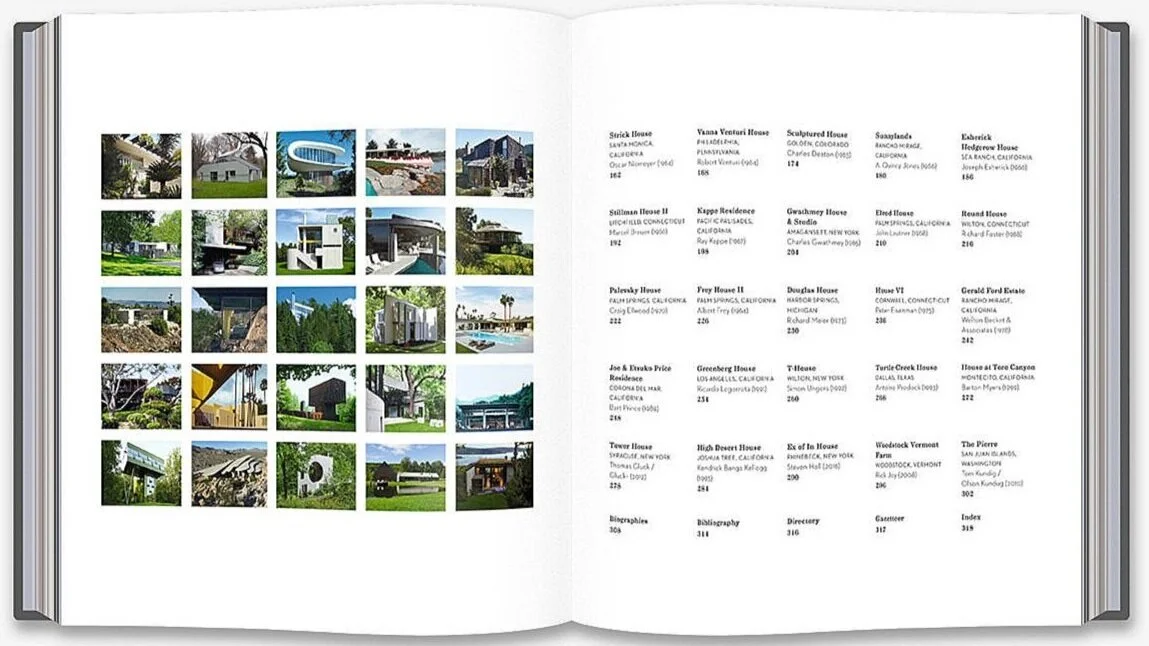
Shown below are the book’s Contents pages, with a grid of photos of the 50 houses which the authors chose to include—and above is a portion of one of those pages, showing Rudolph is in very good company with Frank Lloyd Wright, Eero Saarinen, the Ea…

Shown below are the book’s Contents pages, with a grid of photos of the 50 houses which the authors chose to include—and above is a portion of one of those pages, showing Rudolph is in very good company with Frank Lloyd Wright, Eero Saarinen, the Eames, Alden B. Dow…

first%252Bcontents%252Bspread.jpg
contents%2Bspread.jpg

Rudolph And His Architectural Photographers — PART TWO

P. J. McDonnell’s photograph of the Burroughs Wellcome building, in its current state, shows how great architecture has the power to always maintain its dignity. Photograph courtesy of © PJ McDonnell, The Paul Rudolph Heritage Foundation Archives

P. J. McDonnell’s photograph of the Burroughs Wellcome building, in its current state, shows how great architecture has the power to always maintain its dignity. Photograph courtesy of © PJ McDonnell, The Paul Rudolph Heritage Foundation Archives

In the first part of this study, Paul Rudolph And His Architectural Photographers—PART ONE, we looked at some of the most important architectural photographers of the 20th Century—Stoller, Kidder Smith, Molitor…—ones whose work had included a focus on the architecture and interiors of Paul Rudolph.

PART TWO—this article—will look at architecture & interiors photographers of the current era (almost all of whom are now very active!) whose work has also focused upon Rudolph. While this is not an exhaustive review of every photographer who has taken on that fascinating subject, it does show that an impressive range of talents have turned their attentions to Rudolph.

Above: Paul Rudolph’s bedroom, within his penthouse apartment. Below: an interior of the Modulightor Building. Photographs © Peter Aaron / OTTO, Archives of the Paul Rudolph Heritage Foundation

Above: Paul Rudolph’s bedroom, within his penthouse apartment. Below: an interior of the Modulightor Building. Photographs © Peter Aaron / OTTO, Archives of the Paul Rudolph Heritage Foundation

Aaron%2BModulightor%2Bbuilding.jpg

PETER AARON

Peter Aaron writes of his work: “I have been shooting architecture and interiors for thirty-five years. I started my career as a cinematographer, but consistently found myself more attracted to still photography. After working for designers Ward Bennett and Joseph d’Urso as they developed their High Tech style, I began a transformational apprenticeship with the great architectural photographer Ezra Stoller. After two years I began working on my own, adopting Ezra’s strong compositional approach while developing an individual style through the use of dramatic camera angles, theatrical lighting, and cinematic techniques. Since that time I have photographed structures by many of the most influential and groundbreaking architects of the last thirty years, including Robert A.M. Stern, Rem Koolhaas, Charles Gwathmey, Michael Graves, Peter Eisenman, Robert Venturi, Skidmore, Owings and Merrill, and Raphael Vinoly. I have been a contributing photographer for Architectural Digest and my images frequently appear in other magazines and books.” You can see an extensive selection of his work here, and learn about his recent book here.

AARON AND PAUL RUDOLPH: In 2018, the Paul Rudolph Heritage Foundation created two exhibits to celebrate Rudolph’s centenary, and also published corresponding catalogs for each. In preparation for these exhibits, while researching within our archives, we came across a beautiful image of Rudolph’s own bedroom within his Beekman Place Quadruplex penthouse—and that photograph was by Peter Aaron. We contacted Mr. Aaron and he graciously gave us permission to use the photograph. This opened up a dialogue with him, the result of which is that he has gone on to make light-filled photographs of the interiors of Paul Rudolph’s Modulightor Building (which you can see on that building’s project page.) Mr. Aaron has written of his goals: “As a photographer, my mission is to provide an image that’s a sort of ‘Platonic ideal’ of each structure, to show the building as the architect originally envisioned it…” —and we believe that his photographs of the work of Paul Rudolph are superb examples of the achievement of that aim.

One of the spectacular interiors of Paul Rudolph’s Deane Residence. Photograph © John Dessarzin

One of the spectacular interiors of Paul Rudolph’s Deane Residence. Photograph © John Dessarzin

JOHN DESSARZIN

Mr. Dessarzin is a professional photographer of many decades experience, whose work has hardly been restricted to architectural subjects. As his impressive portfolio shows, his photography has focused on the human form, nature, news events, the famous and the anonymous, the foreign and the domestic—as well as architecture. Of that subject, he says: “At times [he pictures] the ineffable splendor in modern architecture as a haunting, commercial phantom among the iconic, storied skyscrapers of profit. In other instances, he presents ancient stone singularities as a charismatic existence that amply forges, but also devours human character in shades of ambivalence suggesting confused or decadent aspects of civilization.” Clearly, this is a photographer who is using his visual work to reach beyond the tangible to the ineffable—a commendable goal for any artist. You can learn more about him, and see his artistry in light and color, here.

DESSARZIN AND PAUL RUDOLPH: Paul Rudolph’s Deane Residence—a design he commenced at the end of the 1960’s—is known for its empathic use of structure, with geometrically composed framework expressed on both the exterior and interior. We came across a suite of photos of this dramatic design—images of spectacular color and drama—and it was the work of John Dessazin. He has graciously allowed us to include them on the Paul Rudolph Heritage Foundation’s project page for this house.

FDR cover.jpg

ED CHAPPELL

Ed Chappell, based in Florida, is a photographer with a special eye for the splendor of color in shooting architecture, fashion, landscape, and other subjects. He says of his work “I capture images. Make visions visible. Bring concepts to light. . . .I’m faced with challenges of every description—each of which calls for a unique solution, and all of which present the same demand: make it work. . . .You have to know the rules to break the rules, which may be exactly what is required. Experimentation and thinking ahead always pays off.” His website, here, displays a great range of his work.

CHAPPELL AND PAUL RUDOLPH: Paul Rudolph’s home in New York City, his “Quadruplex” penthouse, has been photographed a number of times. Perhaps the best article (with the most complete set of pictures) that has ever been published on it—as it looked the way that Rudolph had occupied and furnished it—was in a 2007 issue of Florida Design Review (and it was the cover story.) Richard Geary, a great admirer of Rudolph, wrote the text; and Ed Chappell did the photographs. The article conveys the sensual-layered composition of the spaces which Paul Rudolph created and in which he lived. Unfortunately, the Florida Design Review is no longer published, but you can still get a copy of that issue here.

A view of the opening spread of an article in an issue of Architectural Digest, in which Rudolph’s Deane Residence is profiled—with photographs by Cervin Robinson.

A view of the opening spread of an article in an issue of Architectural Digest, in which Rudolph’s Deane Residence is profiled—with photographs by Cervin Robinson.

CERVIN ROBINSON

(1928-) One of the most celebrated of the second generation of great architectural photographers, Mr. Robinson was born in Boston, and started photographing at the age of 12. He attended Harvard University and in the 1950’s worked as an assistant to one of America’s most distinguished photographers, Walker Evans. He has said that “pictures of buildings seem to me as satisfying as pictures of people were frustrating”—and architectural photography became the focus of his long, creative, and prolific career. He traveled widely and has worked in a freelance capacity as a photographer for architects and design magazines since 1958—as well as himself being the author and illustrator of several books. Robinson’s work has been shown in many gallery and museums, including the Brooklyn Museum, the Ammon Carter, and the Philadelphia Museum. His website can be found here.

ROBINSON AND PAUL RUDOLPH: In a career that created some of the most dramatic formal solutions in Modern architecture, Paul Rudolph’s Deane Residence is among the most striking that he designed—famous for its rhythm of polygonal structural frames. Cervin Robinson photographed it for an article in Architectural Digest (with text by the late architect, Frank Israel). This master photographer was able to capture the variety of experiences inherent in this the house’s multi-level organization of overlapping spaces, and complex exterior geometries.

annie book cover.jpg

ANNIE SCHLECHTER

Ms. Schlechter says of herself and her work that she is “. . . .a native New Yorker who has been working as a photographer since 2000. Her clients include House Beautiful, New York Magazine, Better Homes & Gardens, Veranda, CN Traveler, The World of Interiors. Her commercial work ranges from hotel groups such as The Bowery Hotel and The Greenwich Hotel Group to designers and architects such as Marianna Kennedy, Chiarastella Cattana, Joe Serrins Studio, Inc Architecture & Design among others.” You can see Annie Schlechter’s splendid work here.

schlechter+book+spread.jpg

SCHLECHTER AND PAUL RUDOLPH: Ms. Schlechter collaborated with well-known writer Polly Devlin to create a book on amazing interiors in New York City—but, being largely private, these were spaces which the public had rarely or never known about or seen. The result was a book rich in story and color, “New York: Behind Closed Doors". They approached Ernst Wagner, the owner of the Paul Rudolph-designed Modulightor Building, about including it in the book—to which he not only agreed, but he also worked with them to provide the full background story, including Paul Rudolph’s intent for building, as well as Wagner’s reflections on it. Ms. Schlechter has graciously allowed the Paul Rudolph Heritage Foundation to include her photographs of the building and its interiors on their project page for the Modulightor Building.

The Modulightor Building—as seen in the evening, within its urban context. Photograph © Joe Polowczuk, The Paul Rudolph Heritage Foundation Archives

The Modulightor Building—as seen in the evening, within its urban context. Photograph © Joe Polowczuk, The Paul Rudolph Heritage Foundation Archives

JOE POLOWCZUK

Among the younger generation of design-focused photographers, those who have a sensibility that makes for great architectural images, is Joe Polowczuk. We may say “younger,”, but to look at his portfolio—which is full of variation in subject and varieties of visual delight—is to see someone with great experience and an exceptional eye for the possibilities of light. You can learn more about Joe, and see a beautiful selection of his work here—and you can read our article about him here (in which you can also see some of the photos he took of the exterior and interiors of Rudolph’s Modulightor Building).

POLOWCZUK AND PAUL RUDOLPH: In 2019, in cooperation with the Paul Rudolph Heritage Foundation, Joe made some luminous photographs of Paul Rudolph’s Modulightor Building, as well as the Rolling Chair that was also designed by Rudolph for use in his own penthouse home.

Ms. Broder captured the sense of deep space and spreading light, within one of the upper floors of the Modulightor Building. Photograph © Anne Broder, The Paul Rudolph Heritage Foundation Archives

Ms. Broder captured the sense of deep space and spreading light, within one of the upper floors of the Modulightor Building. Photograph © Anne Broder, The Paul Rudolph Heritage Foundation Archives

ANN BRODER

Anne Broder is a photographer who works both in the professional world, making photographs of interiors with an unerring eye for composition and color, and also uses photography to create moving artistic images of architecture, sculpture, and abstract forms. Of her work, she says “Today, I freelance as a real estate photographer and work the camera for architects, interior designers, retail shops, portraiture and for my own joy of photography.” You can see her beautiful work here.

BRODER AND PAUL RUDOLPH: Ann. Broder had become aware of the light-filled and varied spaces of Paul Rudolph’s Modulightor Building in New York City—a project that Rudolph had commenced in 1988. She approached us about photographing the building, and we were delighted to have Ms. Broder bring her eye and skills for recording this amazing building (especially, but not limited to, the recently finished uppermost floors of the building.)

An interior of Paul Rudolph’s penthouse apartment, in its current state. Photograph © Francis Dzikowski / OTTO, Archives of the Paul Rudolph Heritage Foundation

An interior of Paul Rudolph’s penthouse apartment, in its current state. Photograph © Francis Dzikowski / OTTO, Archives of the Paul Rudolph Heritage Foundation

FRANCIS DZIKOWSKI

Mr. Dzikowski writes of his himself and his work that he “. . . .attended Virginia Polytechnic Institute’s foundation program in architecture and studied photography at the University of the Arts in Philadelphia Pennsylvania. He spent a decade living and traveling abroad photographing historical restoration projects and archaeological excavations. While photographing in Egypt’s Valley of the Kings for the Theban Mapping Project, Francis also taught photography at the American University in Cairo. He currently lives in Brooklyn, New York working as an architectural and interiors photographer. In 2009 he completed publication of a book titled, Public Art New York. . . .” You can see his work here, and learn more abut his book here.

DZIKOWSKI AND PAUL RUDOLPH: Paul Rudolph’s own home in New York City, his “Quadruplex”, has been photographed at various times over the decades. But it has been relatively inaccessible in recent years—so it was a great delight when the building’s current owners allowed the Paul Rudolph Heritage Foundation to visit it at the beginning of 2020. Francis Dzikowkski was present during that visit, creating a vivid portfolio of images to document the current state of that fascinating set of spaces.

A middle-distant view of a side elevation of the Burroughs Wellcome building, stately sitting within North Carolina’s landscape. Photograph © PJ McDonnell, The Paul Rudolph Heritage Foundation Archives

A middle-distant view of a side elevation of the Burroughs Wellcome building, stately sitting within North Carolina’s landscape. Photograph © PJ McDonnell, The Paul Rudolph Heritage Foundation Archives

P. J. McDONNELL

Mr. McDonnell, who is based in North Carolina, says of himself: “I am a photographer, originally from New Jersey. I came across the Burroughs Wellcome building while browsing maps of the Research Triangle. Learning about the building is what sparked my interest and appreciation for Paul Rudolph's work.” You can see more of his photography—which certainly displays his strong interest in architecture, but which also embraces other visually fascinating subjects—on his Instagram page, here.

McDONNELL AND PAUL RUDOLPH: We came to really appreciate the work of P. J. McDonnell during our current campaign to save the Burroughs Wellcome building in North Carolina. The building had been the US headquarters and research center of the pharmaceutical giant, but it is now under threat of demolition. While the most familiar and frequently published published images of the building show it pristine and new, P. J. McDonnell’s photographs—made much more recently—show it in its current state. These powerful images share with us a building which, while needing work, also shows that great architecture can always maintain its power and dignity. McDonnell states “Like all of his work, the Burroughs Wellcome building is otherworldly, awe inspiring, and a one-of-a-kind building that could never be replaced.”

Rudolph And His Architectural Photographers — PART ONE

A compelling photo by G. E. Kidder Smith of Paul Rudolph’s Burroughs Wellcome US headquarters and research center, shown near the time of the building’s completion. Here, the photographer gives us an image which simultaneously captures the architect…

A compelling photo by G. E. Kidder Smith of Paul Rudolph’s Burroughs Wellcome US headquarters and research center, shown near the time of the building’s completion. Here, the photographer gives us an image which simultaneously captures the architecture’s play of volumes, structural and geometric adventurousness, aspects of its siting, and scale. Photo courtesy of the Massachusetts Institute of Technology

PHOTOGRAPHIC POWER

What’s more important: a great building -or- a great photograph of it?

It’s an impossible question to answer—not because of its difficulty, but rather: because the question itself attempts to compare such different entities. The “actuality” of architecture—the way one would come to know a building, in-person, by entering and moving through it and experiencing the spaces sequentially (truly a four-dimensional phenomenon), and also through other senses (sound and touch)—is wholly different from the way that one takes-in the information embodied in a two-dimensional photograph.

Then how are architectural photographs important?

The answer: in their potential for influence.

ENDURING AND WIDESPREAD INFLUENCE

No matter how many people see a building in-person, an uncalculable greater number can see it in photographs—-and those viewings continue onward, even if the building ceases to exist.

Probably the most famous case is Mies van der Rohe’s Barcelona Pavilion. It was built for a 1929 international exposition, and—from the time of its inauguration-to- its demolition—it only existed for less than a year. Since then, it has been known from a handful of photographs and its plan.

Mies’ Barcelona Pavilion, was built in 1929 and demolished within the following year. Of the handful of photographs recording what it looked like when extant, this is probably the most famous image.

Mies’ Barcelona Pavilion, was built in 1929 and demolished within the following year. Of the handful of photographs recording what it looked like when extant, this is probably the most famous image.

Mies van der Rohe’s Barcelona Pavilion of 1929 was built for an international exposition. It is preponderantly known only through a handful of photographs and two drawings (the plan, above, and a detail of a typical column.) Yet on the strength of t…

Mies van der Rohe’s Barcelona Pavilion of 1929 was built for an international exposition. It is preponderantly known only through a handful of photographs and two drawings (the plan, above, and a detail of a typical column.) Yet on the strength of this small group of images, it gained—and retains!—world-class status as one of the ultimate icons of architectural Modernism.

Of that small group of photographs, the most famous image is probably the one shown above. Those photos, combined with the plan drawing, have been included in countless books, articles, lectures, curricula—-and, even more important: they’ve become integrated into the thinking of every Modern architect. [We’ve written here about Rudolph’s own interest in the Barcelona Pavilion, and also here about his relationship to Mies’ work.] Now, coming-up on a century since it’s demolition, this iconic building continues to resonate through architectural education, scholarship, and practice— mainly because of photographs.

Further: try as we may to visit the great, iconic examples of architecture, they are just too dispersed. So even a devoted architectural traveler could spend decades just trying to see most of them. So, practically speaking, we have to experience and learn about most of of the world’s architecture from photographs.

THE GREAT PHOTOGRAPHERS OF MODERN ARCHIECTURE—CREATING THE ICONS WE REMEMBER

The 20th and early 21st centuries have been graced with architectural photographers that can be considered “artists-in-their-own-right”. That’s because they’ve not only been able to capture the formal essence of architectural works, but—like visual alchemists—they have also created images which (through their choices of point-of-view, lighting, focus, and composition) have virtually created the vital identities of those buildings.

Prime examples would be the powerful photo that Ezra Stoller took of Paul Rudolph’s Yale Art & Architecture Building—it’s the image we “have in our head” when we think of the building; Yukio Futagawa’s chroma-rich capturing of the interior of Rudolph’s Tuskegee Chapel; and Balthazar Korab’s photos of the soaring wings of Saarinen’s TWA “Flight Center” terminal at Kennedy Airport. To many of us, those images are the building.

Ezra Stoller’s photograph of the exterior of Paul Rudolph’s Yale Art & Architecture Building became the iconic image of it—and it’s included on the cover of his book on that famous building.

Ezra Stoller’s photograph of the exterior of Paul Rudolph’s Yale Art & Architecture Building became the iconic image of it—and it’s included on the cover of his book on that famous building.

Each issue of Futagawa’s journal, GA (Global Architecture) focused on one or two buildings. This one is on Rudolph’s Tuskegee Chapel and Boston Govt. Service Center—and Tuskegee is on the cover.

Each issue of Futagawa’s journal, GA (Global Architecture) focused on one or two buildings. This one is on Rudolph’s Tuskegee Chapel and Boston Govt. Service Center—and Tuskegee is on the cover.

Balthazar Korab photographed a number of designs by Eero Saarinen, including the TWA terminal for Kennedy airport. His photographic work on that project ranged from recording the Saarinen office’s working models, to construction photos (like the one…

Balthazar Korab photographed a number of designs by Eero Saarinen, including the TWA terminal for Kennedy airport. His photographic work on that project ranged from recording the Saarinen office’s working models, to construction photos (like the one above), to the finished building. Even in its construction stage, when it was only raw concrete, Korab was able to capture the drama of the building. Photo courtesy of the Balthazar Korab Photographic Archive, Library of Congress, Prints and Photographs Division.

RUDOLPH AND HIS PHOTOGRAPHERS

Paul Rudolph worked with some of the century’s greatest architectural photographers—the ones who are celebrated for working with the leading figures in the world of architectural Modernism. While Rudolph might have been directly involved with some photographers—commissioning them, or requesting that they focus on certain aspects of a building—in other cases, even without Rudolph’s involvement, great photographers have been engaged (by others) to shoot his work; or have done so just out of their own interest in his oeuvre.

While not exhaustive, we’ll review a round-up of many of the photographers who have been focused on the work of Paul Rudolph—and we’ll do this in two parts:

  • PART ONE (this article) looks at the great architectural photographers of the early-to-late 20th Century, who have worked on Rudolph’s oeuvre.

  • PART TWO will look at photographers—most still very active—who have more recently focused on Rudolph’s work.

florida+houses+book+cover.jpg
ezra%2525252Bstoller%2525252Bbook%2525252Bcover.jpg

EZRA STOLLER

(1915-2004) When one thinks of architectural photography in America, the name—or rather: the images—of Ezra Stoller are what probably first come to mind. For decades, he photographed many of the 20th Century’s most significant new buildings in the US (by the country’s premier architects), thereby creating an archive of the achievements of Modern American Architecture. More than that, Stoller’s views are some of the most iconic images of that era.

STOLLER AND PAUL RUDOLPH: Of the several photographers that Rudolph worked with, Ezra Stoller is probably the one with which he had the most involvement and lasting relationship. Stoller photographed much of his residential work in Florida—including some of Rudolph’s greatest and most innovative houses like the Milam Residence (as seen on the over of Domin and King’s book on the Florida phase of Rudolph’s career—see image at right), the Walker Guest House, the Umbrella House, and the Healy “Cocoon” House—the Yale Art & Architecture Building in New Haven, Sarasota Senior High School, the Temple Street Parking Garage in New Haven, Endo Labs, the UMass Dartmouth campus, Tuskegee Chapel in Alabama, the Hirsch (later: “Halston”) townhouse in New York City , the Wallace House, Riverview High School in Florida, the Sanderling Beach Club in Florida, and numerous others—including the Burroughs Wellcome US headquarters and research center in North Carolina’s Research Triangle Park. One can access the extensive and fascinating archive of Ezra Stoller’s work (including the Rudolph projects that he photographed) here—and an extensive selection from throughout Stoller’s career (including numerous images of Rudolph’s work) can be viewed in the book “Ezra Stoller, Photographer” (see cover at right).

The first monograph on Rudolph which featured extensive color photography, all of which was done by Futagawa.

The first monograph on Rudolph which featured extensive color photography, all of which was done by Futagawa.

YUKIO FUTAGAWA

(1932-2015) The dean of architectural photography in Japan, and with a world-wide reputation, for over six decades Futagawa made magnificent and memorable photos of important buildings (new and traditional) around the world. Interestingly, he created his own “platform” to publish his work: he founded GA (“Global Architecture”), GH (“Global Houses”), and published other series and individual books. Those contained not only of photography, but also architectural drawings and full project documentation of distinguished works of architecture.

FUTAGAWA AND PAUL RUDOLPH: Futagawa traveled the US to make the photographs for the monograph, “Paul Rudolph” (part of the Library of Contemporary Architects series published by Simon and Schuster)—and the archives of the Paul Rudolph Heritage Foundation posseses a note by Rudolph, testifying to his appreciation of Futagawa’s work. In the GA series, he published one on the Tuskegee Chapel and the Boston Government Service Center. Futagawa extensively photographed the work of Frank Lloyd Wright and, as part of the GA series, he asked Rudolph to contribute the introductory essay to the issue on Wright’s Fallingwater. He also published the large monograph on Rudolph’s graphic works (copiously including his famous perspective drawings): Paul Rudolph: Architectural Drawings.

Kidder Smith’s two-volume “A Pictorial History of Architecture in America,” published in 1976, includes Rudolph’s work. Below: one of his photographs of the Niagara Falls Central Library, taken near the time of its completion. Photo courtesy of the …

Kidder Smith’s two-volume “A Pictorial History of Architecture in America,” published in 1976, includes Rudolph’s work. Below: one of his photographs of the Niagara Falls Central Library, taken near the time of its completion. Photo courtesy of the Massachusetts Institute of Technology

Niagara%2BKidder%2BSmight.jpg

G. E. KIDDER SMITH

(1913-1997) Along with the other ultra-prominent names we’ve been mentioning, in the world of architectural photography, we must include G. E. (George Everard) Kidder Smith. Trained as an architect, Kidder Smith was not only a photographer of architecture, but also an historian-writer, exhibit designer, and preservationist (helping to save/preserve the Robie House and the Villa Savoye.) His numerous books are still important resources for anyone doing research on the architecture of America and Europe His series of “Build” books (“Brazil Builds” “Italy Builds” “Switzerland Builds” “Sweden Builds”) provide abundant images and information about the rise of Modern architecture in each of those countries.

KIDDER SMITH AND PAUL RUDOLPH: Kidder Smith’s A Pictorial History of Architecture in Americais a 2-volume work that was published in 1976, and—utilizing the photographs that Kidder Smith had made—it covers all eras of American architectural history, region-by-region. Kidder Smith must have admired Paul Rudolph’s work, for it shows up throughout this major, encyclopedic work, and includes: Rudolph’s Boston Government Service Center, Tuskegee Chapel, Niagara Falls Central Library, UMass Dartmouth, the Orange County Government Center—and Burroughs Wellcome (whose double-page spread image is the photographic climax at the end of Volume One.). This set of buildings are of particular poignance and and meaning to us, as they include a major Rudolph building that has been altered/disfigured (Orange County); and three which are currently threatened (Boston, Niagara Falls, and Burroughs Wellcome.)—and we are using Kidder Smith’s images to help fight for their preservation.

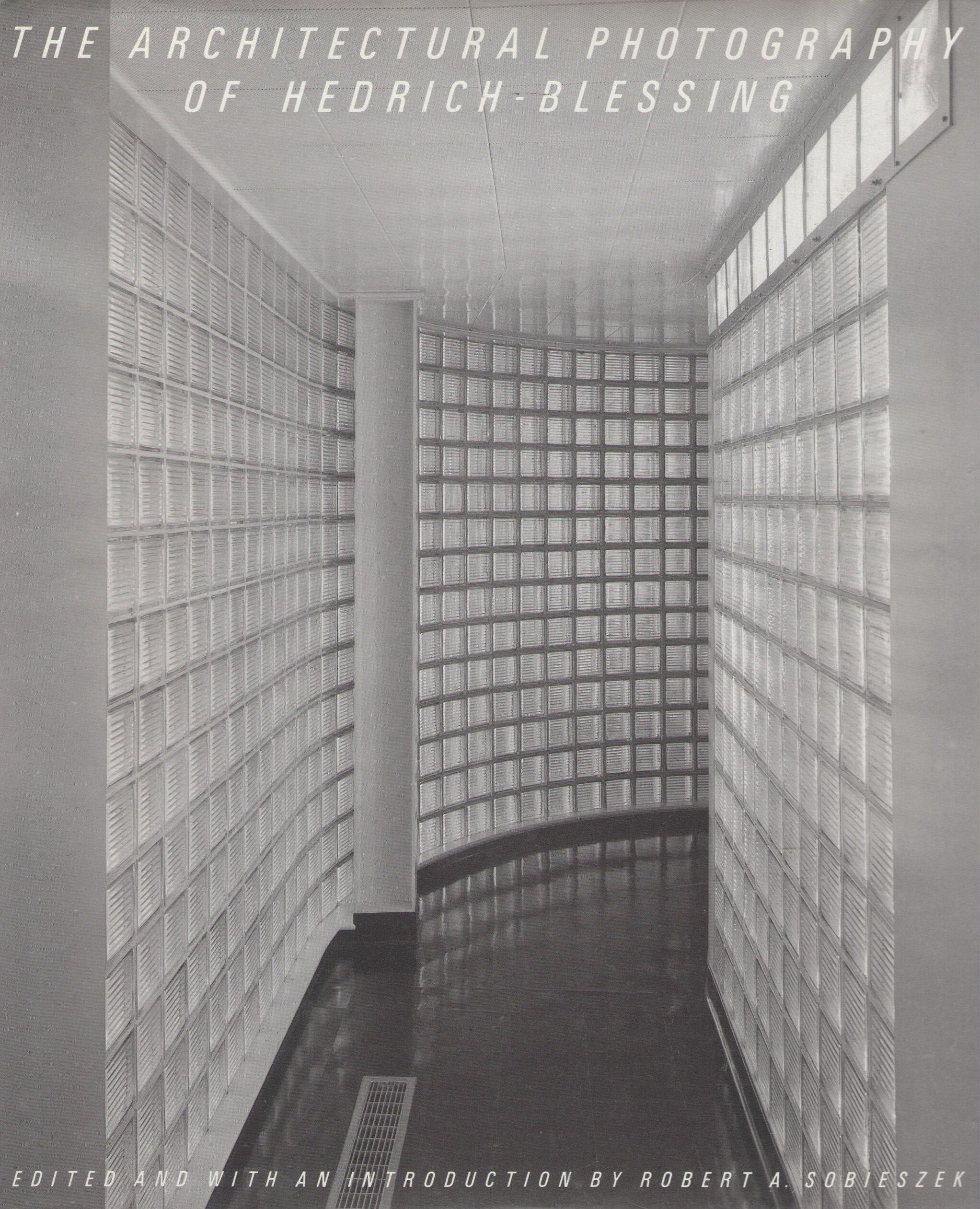
This monograph from 1984 shows work from the several generations of photographers who have worked for Hedrich-Blessing, and  the book includes an image of Paul Rudolph’s Christian Science Student Center. An even larger monograph of Hedrich-Blessing’…

This monograph from 1984 shows work from the several generations of photographers who have worked for Hedrich-Blessing, and the book includes an image of Paul Rudolph’s Christian Science Student Center. An even larger monograph of Hedrich-Blessing’s work was published in 2000, which also included that photo of Rudolph’s building.

HEDRICH-BLESSING

(1929-Present) The other photographers of Rudolph’s work, mentioned in this article, were primarily based on or towards the US’ East Coast. But for the middle of the country, the kings of architectural photography were Hedrich-Blessing. The firm was founded in 1929 by Ken Hedrich and Henry Blessing and—though based in Chicago and famous for photographs of buildings in that region—they have done work all over. Among the distinguished architects, whose work they photographed, were: Wright, Mies, Raymond Hood, Keck and Keck, Albert Kahn, Adler & Sullivan, SOM, Harry Weese, Breuer, Saarinen, Gunnar Birkets, Yamasaki, and Alden Dow. Since its founding, the firm has employed several generations of photographers, and is still very much active today.

HEDRICH-BLESSING AND PAUL RUDOLPH: To our present knowledge, Hedrich-Blessing did not photograph many of Paul Rudolph’s buildings. [Perhaps because Rudolph did not build much in their part of the country. That may have been different had Rudolph become dean of IIT’s School of Architecture in Chicago—an offer he briefly considered.] We do know of at least one superb photo Hedrich-Blessing took of his Christian Science Student Center. This building, which Rudolph designed in 1962 near the University of Illinois Champaign-Urbana, was unfortunately demolished in the mid-1980’s. So it is important that we have Hedrich-Blessing’s photograph, which was taken by their staff photographer Bill Engdahl in 1966: it shows the building at night: dramatically shadowed on the outside, but enticingly glowing from within.

Above: Shulman’s extensive oeuvre is documented in a three-volume monograph published by Taschen.   Below: One of Shulman’s photographs of Rudolph’s Temple Street Parking Garage. © J. Paul Getty Trust. Getty Research Institute, Los Angeles (2004.R.1…

Above: Shulman’s extensive oeuvre is documented in a three-volume monograph published by Taschen. Below: One of Shulman’s photographs of Rudolph’s Temple Street Parking Garage. © J. Paul Getty Trust. Getty Research Institute, Los Angeles (2004.R.10)

shulman+temple+street+perspective.jpg

JULIUS SHULMAN

(1910-2009) Shulman was an almost exact contemporary of some of the other legendary architectural photographers on this list (i.e.: Stoller and Kidder Smith), and his professional career extended over 7 decades—from the 1930’s into the 2000’s. The body of work for which he is most well known is the large set of photographs he took of Modern architecture in California—centered in Los Angeles, but extending to cover buildings in other parts of the state. His clients included some of the most famous makers of Modern architecture: Pierre Koenig (for whom he took a night time photo of the Stalh House which became the iconic emblem of modern living in Southern California,) Neutra, Wright, Soriano, the Eames, and John Lautner. Christopher Hawthorne, of the Los Angeles Times, said of his work: “His famous black-and-white photographs. . . .were not just, as [Thomas] Hines noted, marked by clarity and high contrast. They were also carried aloft by a certain airiness of spirit, a lively confidence that announced that Los Angeles was the place where architecture was being sharpened and throwing off sparks from its daily contact with the cutting edge.” Shulman also had commissions in other parts of the country, as in: his photographs of Lever House in New York, a house by Paolo Soleri in Arizona, and work by Mies in Chicago—and he worked internationally, for example: photographing a residence by Lautner in Mexico. He authored 7 books, participated in 10 others, and his extensive archive is in the Getty Research Institute.

SHULMAN AND PAUL RUDOLPH: While Julius Shulman is identified with the photography of key examples of architectural Modernism in California, he also took assignments for other locations, and his images of Paul Rudolph’s works in New Haven are strong examples of Shulman’s image making. Several can be seen on the Paul Rudolph Heritage Foundation’s project pages for the Temple Street Parking Garage, and the Yale Married Students Housing. The photographs of the garage are intense with visual drama, highlighting its scale and sculptural qualities.

Above: Molitor’s photo of UMass Dartmouth. Below: Niagara Falls Central Library. Images courtesy of Columbia University, Avery Architectural and Fine Arts Library, Joseph W. Molitor Photograph Collection

Above: Molitor’s photo of UMass Dartmouth. Below: Niagara Falls Central Library. Images courtesy of Columbia University, Avery Architectural and Fine Arts Library, Joseph W. Molitor Photograph Collection

Molitor%252BNiagara%252Btwo.jpg

JOSEPH W. MOLITOR

(1907-1996)  We are fortunate that the the Joseph W. Molitor Photograph Collection is now part of the Avery Architectural & Fine Arts Library, where it is made available to scholars, researchers, writers, and students. The Avery Library describes Molitor and his career: “Joseph Molitor, recognized as a peer of such leading 20th-century American architectural photographers as Hedrich-Blessing, Balthazar Korab, Julius Shulman, and Ezra Stoller, documented the work of regional and national architects for fifty years. Trained as an architect, he practiced for twelve years before briefly working in advertising. Molitor turned exclusively to architectural photography in the late 1940s, maintaining his studio in suburban Westchester County, New York. Working primarily in black and white, Molitor's images appeared in Architectural Record, The New York Times, House & Home, and other national and international publications.”

MOLITOR AND PAUL RUDOLPH: Avery’s text also mentions “His iconic photograph of a walkway at architect Paul Rudolph’s high school in Sarasota, Florida, won first place in the black and white section of the American Institute of Architects’ architectural photography awards in 1960.” You can find Joseph Molitor’s photographs on several of the project pages within the Paul Rudolph Heritage Foundation’s website, including the pages devoted to the Milam Residence in Florida, and the Niagara Falls Central Library—and his book, Architectural Photography, published in 1976, features an abundance of images of Rudolph’s work. Recently, the Paul Rudolph Heritage Foundation has been focused upon Molitor’s work because of the endlessly intriguing set of photographs he made of the Burroughs Wellcome building—showing them with a crispness and sense of drama that few other photographers have approached.

Above and Below: two of Henry L. Kamphoefner’s photographs of interiors within the Burroughs Wellcome building in North Carolina—both images displaying the striking geometries which Rudolph used in the design.

Above and Below: two of Henry L. Kamphoefner’s photographs of interiors within the Burroughs Wellcome building in North Carolina—both images displaying the striking geometries which Rudolph used in the design.

BW+interior.jpg

HENRY L. KAMPHOEFNER

(1907-1990) Unlike the above figures, Henry Leveke Kamphoefner is not primarily known as an architectural photographer—but he was well-known in the South as a champion of Modern architecture, especially in North Carolina. Graduating from the Univ. of Illinois with a BS degree in architecture in 1930, in the following years he received a MS in architecture from Columbia and a Certificate of Architecture from the Beaux Arts Institute of Design in New York. From 1932 until 1936, he practiced architecture privately, and one of his most well-known works is a municipal bandshell Sioux City (which was selected by the Royal Institute of British Architects as one of "America's Outstanding Buildings of the Post-War Period.") In 1936 and 1937, he worked as an associate architect for the Rural Resettlement Administration, and during summers after that he was was employed as an architect for the US Navy. He had an ongoing and significant involvement with architectural education: in 1937 he became a professor at the Univ. of Oklahoma and during 1947 was also a visiting professor at the Univ. of Michigan. In 1948 Kamphoefner became the first dean of the North Carolina State College School of Design, creating strict admissions policies and instituting a distinguished visitors program which brought in architects such as Frank Lloyd Wright. He remained dean until 1973, but continued teaching until 1979. From 1979 to 1981 he served as a distinguished visiting professor at Meredith College. Kamphoefner’s importance has been highlighted in a new book, Triangle Modern Architecture, by Victoria Ballard Bell.

KAMPHOEFNER AND PAUL RUDOLPH: The Paul Rudolph Heritage Foundation has included several of Kamphoefner’s photographs of the Burroughs Wellcome US headquarters and research center on its project page for that building. It is natural that, as a resident of North Carolina, and as an advocate for Modern architecture, that he would be focused on that building. His photographs of the interiors highlight the striking diagonal geometries that Paul Rudolph incorporated into the project. We have included his images of Burroughs Wellcome in several of our blog articles, as part of our fight to preserve this great work of architecture.

COMING SOON: PART TWO

Be sure to look for PART TWO of this study of Paul Rudolph And His Architectural Photographers. It which will look the more recently active photographers, each of whom have focused on the work of Paul Rudolph.

The GIFT GUIDE for Architecture Lovers (and especially for Rudolph fans!)

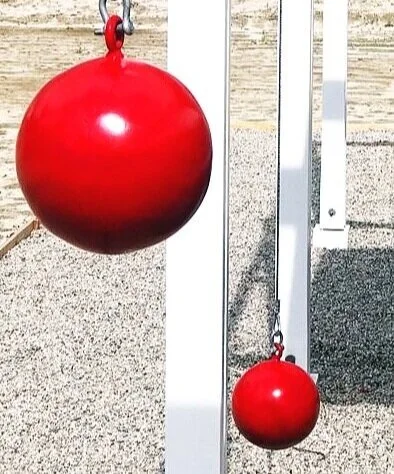
Even the counterweights at Paul Rudolph’s Walker Guest House seem to have the festive, holiday spirit! Glory Curtis Williams took this intriguing detail photograph of the replica of the building, when it was on display during the 2019 Palm Springs M…

Even the counterweights at Paul Rudolph’s Walker Guest House seem to have the festive, holiday spirit! Glory Curtis Williams took this intriguing detail photograph of the replica of the building, when it was on display during the 2019 Palm Springs Modernism Week.

Philip Johnson—a long-time friend of Rudolph—most famous work is his own home: the Glass House. Even this building—a work of architecture of world-wide renown—has become “giftable” in the form of this snow globe, offered by National Trust for Histor…

Philip Johnson—a long-time friend of Rudolph—most famous work is his own home: the Glass House. Even this building—a work of architecture of world-wide renown—has become “giftable” in the form of this snow globe, offered by National Trust for Historic Preservation.

With the arrival of the Holiday Season, our thoughts turn to gifts. For the very young, it’s the the anticipation of receiving them—but for the rest of us, the focus (and sometimes agony) is on search, selection, and shopping for presents that are simultaneously available, affordable, and appropriate—and, we hope, something that’s un-anticipated: a real and pleasurable surprise.

How hard can that be? Very—if the intended recipient is a design-savvy architect or fan of architecture. They’re probably already aware of most of the design/building-themed books, accessories, and “lifestyle” tools. But help is available…

That assistance is in the form of the gift guides. Published annually, this proliferating phenomenon proffers guides for almost every interest, from those who obsessed with cooking -to- those who (like in our group) are aficionados of concrete. More than ever, one can find annually-issued gift guides for architects—and this year, so far, we’ve encountered at least four that are abundant with attractive ideas:

“Concrete After Lightning”—a concrete-scented candle to light up the holidays.

“Concrete After Lightning”—a concrete-scented candle to light up the holidays.

ARCHITECT MAGAZINE

Architect is the official journal of the American Institute of Architects, and they have issued their “Gift Guide 2020

It offers numerous choices, and included is a shirt which highlights the contributions of women in architecture, a set of modular lights that pulsate with different colors, Lamy’s Safari fountain pen (always a favorite among designers), the beautiful series of Ruth Asawa stamps issued by the United States Postal Service, and some colorful bowls made from recycled skateboards.

The items that will no doubt delight Rudolphians most are a concrete-scented candle made by D.S. & Durga; and the two cleverly shaped, architecturally-themed concrete planters from Rosenwood Studio.

Borson’s list of “essential” books includes monographs on Corb, Scarpa, Lutyens, and Saarinen, several volumes by Frank D. K. Ching, and key works by Christopher Alexander and on Dieter Rams.

Borson’s list of “essential” books includes monographs on Corb, Scarpa, Lutyens, and Saarinen, several volumes by Frank D. K. Ching, and key works by Christopher Alexander and on Dieter Rams.

LIFE OF AN ARCHITECT

Bob Borsons’s always interesting blog (in which he shares about the realities of the profession) has an established track record for issuing annual gift guides—ones in which he is quite articulate about what would make each suggested gift meaningful and useful.

This year, his “Holiday Gift Guide For Architects” is his 11th such entry. It has some of the things that one might already have guessed could be included (like an Aalto vase or the Vignelli wall calendar—both staples in the homes and offices of the tasteful demographic), and something delightfully outrageous: a $55,000 utility vehicle. Best for this year, he gives us a selection of 40 books—and what makes that book list distinctive is that they’re volumes which are in his own personal collection. Borson tells us that he’s been building up his library for decades—and these are the books which he personally recommends as “essentials”.

The Architray, which can hold pens, pencils, and other such items—and makes them easily accessible.

The Architray, which can hold pens, pencils, and other such items—and makes them easily accessible.

ARCHITECTURE LAB MAGAZINE

Their list, “47 of the Best Gifts for Architects in 2020,” has a large number of Alessi products—particularly ones designed by Zaha Hadid. Her centerpiece, composed of 5 repositionable parts, captures the adventurous form-making of that architect—as does another Alessi suggestion: a rattan centerpiece by the Campana brothers.

The other kind of gift which is prominent in this list are various types of “blocks” construction sets: not just Lego (though they are included), but also two different ones in the Blockitecture series, as well as a house from Wise Elk (which is composed of parts made from real plaster and ceramic.) Concrete-o-philes will appreciate the “Brutalist Concrete Architray” which was designed by 7thFl Studio.

The “My Little Architect” set, with it’s colorful and flexible system, might well intrigue all age groups.

The “My Little Architect” set, with it’s colorful and flexible system, might well intrigue all age groups.

GIFTHEM

Gifthem is a site that specializes in creating gift lists for different professions and interests—a practical and useful service. Thus they have lists for almost any domain of practice or interest, including Judges, Dentists, Basketball Enthusiasts, Minecraft Fans, Barbers, Quilters, Doctors…—and yes, Architects. This year’s list starts by acknowledging that “…architects are too picky and investigative in everything due to the nature of their field so finding the gifts for architects is a bit tricky”—and one will not find a more honest assessment of the situation!

They do come up with some unique suggestions, like a pair of socks whose pattern suggests avantgarde architectural plans from Italy in the 1960’s, a wallet whose exterior faces are printed with a residential floor plan, frameable prints that show patent drawings for traditional drafting tools, and—for the younger members of the profession—a “My Little Architect” building set, composed of colorful, transparent plastic tiles which assemble via a clever system of magnets.

The Paul Rudolph Heritage Foundation includes a “SHOP” page on it’s website—which is useful year-round, but especially for the holiday shopper.

The Paul Rudolph Heritage Foundation includes a “SHOP” page on it’s website—which is useful year-round, but especially for the holiday shopper.

A BETTER CHOICE: GIVE RUDOLPH tHIS HOLIDAY!

With all the suggestions contained in the above gift guides, one might think that the possibilities have been exhausted. True, a number of the choices in those lists include items that are cleverly made of concrete—and whose interest, in part, rely on the power of surprise, as such objects rarely use that herculean material.

But if the person you’re shopping for has tastes and interests which lean in the direction of the work of Paul Rudolph, there are gifts which are more focused on him—his life and career—and the great body of work he created.

The Paul Rudolph Heritage Foundation’s website has a “SHOP” page, which offers a variety of items which will illuminate the vast range of creation that emerged from Rudolph’s innovative and prolific career. During his half-century of practice, he was engaged in architecture, interior design, product design, furniture design, lighting design, education, issues of urbanism, mentorship, and the invention of systems of construction. Rudolph—for those who look into the prodigious number of projects he took on—is an endless resource of interest and inspiration.

The books, offered through our SHOP page, highlight and investigate his many contributions. Here are four studies which are prime sources for leaning about Rudolph’s multiple talents and accomplishments.

Celebrating Rudolph’s 100th birthday, this pair of catalogs are the official publication of the centennial exhibitions: “Paul Rudolph: The Personal Laboratory” -and- “Paul Rudolph: The Hong Kong Journey.” The former exhibit looked at how Rudolph use…

Celebrating Rudolph’s 100th birthday, this pair of catalogs are the official publication of the centennial exhibitions: “Paul Rudolph: The Personal Laboratory” -and- “Paul Rudolph: The Hong Kong Journey.” The former exhibit looked at how Rudolph used his own residences as places for experimentation with space, materials, and light—truly as “laboratories” of design. Though Rudolph was based in the US, he was called upon by clients in Asia to design a variety of projects, both commercial and residential. In the latter exhibit there was a focus on Rudolph’s work in Hong Kong, with an emphasis on the Bond Centre: the double-skyscraper towers which he designed, that are prominent on the Hong Kong’s skyline. The set of catalogs are available HERE.

Paul Rudolph’s creative & prolific half-century career extended to nearly the end of the 20th century—and this book focuses on the work from the latter part of his oeuvre. It includes: buildings for many parts of the US, fascinating ambitious pr…

Paul Rudolph’s creative & prolific half-century career extended to nearly the end of the 20th century—and this book focuses on the work from the latter part of his oeuvre. It includes: buildings for many parts of the US, fascinating ambitious projects for Asia, the Modulightor Building (the headquarters for the lighting business which he co-founded, and whose lines of light fixtures he designed), and the design of his own intriguing residence (his “Quadruplex” penthouse on Beekman Place in New York City). Hand-picked by Rudolph himself, the 27 projects profiled in Roberto de Alba’s book are shown through a broad selection of drawings, sketches, photographs, plans, and perspective views. The book includes illuminating introductory texts by Roberto De Alba, Mildred F. Schmertz, and Robert Bruegmann; as well as a fascinating in-depth interview with Rudolph by Peter Blake. It is available HERE.

On of Paul Rudolph’s most interesting later projects is the “Quadruplex” penthouse which he built for himself in New York City, with dramatic views of the East River. That residence was the cover story of this issue of “FDR: The FLORIDA DESIGN REVIE…

On of Paul Rudolph’s most interesting later projects is the “Quadruplex” penthouse which he built for himself in New York City, with dramatic views of the East River. That residence was the cover story of this issue of “FDR: The FLORIDA DESIGN REVIEW”, and the article included the most complete photographic documentation ever published of the rich set of spaces within that project. Copies of this rare publication are available HERE.

Moleskine, in collaboration with Princeton Architectural Press, has brought out a series of books focusing on the drawings and sketches of innovative designers—-including this volume on Paul Rudolph. It features an insightful introduction by John Mo…

Moleskine, in collaboration with Princeton Architectural Press, has brought out a series of books focusing on the drawings and sketches of innovative designers—-including this volume on Paul Rudolph. It features an insightful introduction by John Morris Dixon. It is available HERE.

OTHER GIFT BOOKS FROM oUR SHOP

While the monographs on Rudolph, above, are exceptional gifts, also available through the SHOP page are several other works of profound interest. These studies are impressive in the depth of their research, and stimulating in their insights and revelations.

R.D. Chin is an architect who worked for Paul Rudolph, and knew him well. Mr. Chin’s career has included working on numerous building types—and he then trained to become a Feng Shui master (whose practice includes consulting on a variety of architec…

R.D. Chin is an architect who worked for Paul Rudolph, and knew him well. Mr. Chin’s career has included working on numerous building types—and he then trained to become a Feng Shui master (whose practice includes consulting on a variety of architectural projects.) In this well-illustrated and colorful volume, he shares the wisdom of that system, and how it can be applied to the practical challenges of architecture and interior design. It is available HERE.

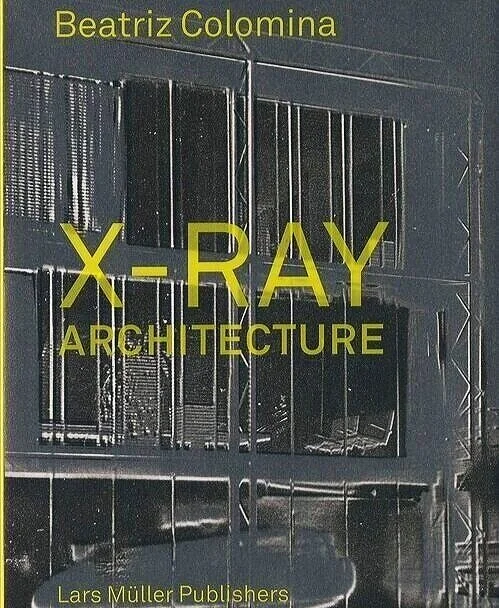
Beatriz Colomina explores the enormous impact of medical discourse and imaging technologies on the formation, representation and reception of twentieth-century architecture. It challenges the normal understanding of modern architecture by proposing …

Beatriz Colomina explores the enormous impact of medical discourse and imaging technologies on the formation, representation and reception of twentieth-century architecture. It challenges the normal understanding of modern architecture by proposing that it was shaped by the dominant medical obsessions of its time—and traces the psychopathologies of 20th century architecture, suggesting that if we want to talk about the state of architecture today, we should look to the dominant obsessions with illness and the latest techniques of imaging the body. It is available HERE.

Caroline Rob Zaleski’s “Long Island Modernism 1930-1980” belongs in the library of anyone interested in the history of Modernism in America. It has eye-opening archival photographs and surprising discoveries about pioneering architecture by visionar…

Caroline Rob Zaleski’s “Long Island Modernism 1930-1980” belongs in the library of anyone interested in the history of Modernism in America. It has eye-opening archival photographs and surprising discoveries about pioneering architecture by visionary architects, such as Rudolph, Breuer, Wallace Harrison, Wright, and Albert Frey with A. Laurence Kocher. The Architects Newspaper praised It, saying: “Zaleski rises to the occasion, as architectural writers so often don’t, when pressed into play to give social context to builders and their buildings.” It is available HERE.

Celebrating Modernism in North Carolina (the home of Burroughs Wellcome)

Victoria Ballard Bell’s new book, TRIANGLE MODERN ARCHITECTURE. Her well-illustrated and deeply-researched history covers the movement to bring Modern architecture to the “Triangle” region of North Carolina. The book shows Modernism’s flourishing—an…

Victoria Ballard Bell’s new book, TRIANGLE MODERN ARCHITECTURE. Her well-illustrated and deeply-researched history covers the movement to bring Modern architecture to the “Triangle” region of North Carolina. The book shows Modernism’s flourishing—and the generations of architects who have practiced in that area.

ARCHITECTURAL MODERNISM iN NORTH CAROLINA— INCREASING (AND WELL-DESERVED) ATTENTION

The Carolinas have always attracted significant architectural scholarship: from Plantations of the Carolina Low Country, Samuel Galliard Stoney’s study of the great antebellum mansions and their estates -to- Charleston Architecture 1670-1860 by Gene Waddell—and, of course, the books by that comprehensive historian of the buildings of the Old South: Mills Lane. All are magisterial studies, but they focus on the architecture of earlier eras. It is only in recent years that the richness and range of Modern architecture in North Carolina has received the attention which it deserves.

NC+modernist+logo.jpg
US%2Bmodernist%2Blogo.jpg

Pioneering the appreciation of Modern architecture in the state was the organization founded in 2007 by George Smart. Originally named Triangle Modernist Houses, it was renamed North Carolina Modernist (also known as NCMODERNIST) in 2013. It has grown to be active on many fronts, including: tours, preservation, archiving, education, providing technical and legal assistance, and encouraging scholarship—in all ways moving to open people’s eyes to the excellence and depth of Modern architecture in North Carolina. In 2016 they created USModernist, an award-winning educational organization for the documentation, preservation, and promotion of residential Modernist architecture. With their archive, podcasts, tours, and an unparalleled on-line magazine library (making available nearly 3,000,000 pages of architecture journals,) USModernist is America's largest open digital archive of Modernist houses and their architects—an accessible and treasured resource for all researchers.

Up to now, there’s been no book-length study which focuses, in-depth, on the beginnings and flourishing of Modern architecture in state. Such a book, Triangle Modern Architecture, has recently been published—and we report on (and welcome) it here. But first: a little background on what’s meant by “Triangle.”

THE NORTH CAROLNA “TRIANGLE”

You’ll hear references to the Triangle—indeed, the word was part of the original name of NCMODERNIST. The Tringle term has two primary uses:

  • A region within the state of North Carolina: approximately defined by a triangle with three cities at its points: Durham, Chapel Hill, and Raleigh.

  • Research Triangle Park: the celebrated research development—founded in 1959, and still flourishing today—which is the site of many of the country’s most dynamically innovative companies and research centers. It is located within the above, geographically larger triangle.

There’s a strong relationship between these two senses of the term, as the "Triangle" name was cemented in the public consciousness in the 1950’s with the creation of Research Triangle Park, home to numerous tech companies and enterprises. Although the name is now used to refer to the geographic region, the “Triangle" originally referred to the universities—whose research facilities, and the educated workforce they provide, has historically served as a major attraction for businesses to locate in the region.

The North Carolina “Triangle”—a triangular region roughly defined by Durham, Chapel Hill, and Raleigh.

The North Carolina “Triangle”—a triangular region roughly defined by Durham, Chapel Hill, and Raleigh.

41ILNM9i4tL._SX331_BO1%2C204%2C203%2C200_.jpg
LEFT: Alex Sayf Cummings fascinating history of Research Triangle Park: the US’s largest research development—located within North Carolina’s “Triangle” region. Read our article about the book here.   ABOVE: Paul Rudolph’s Burroughs Wellcome buildin…

LEFT: Alex Sayf Cummings fascinating history of Research Triangle Park: the US’s largest research development—located within North Carolina’s “Triangle” region. Read our article about the book here. ABOVE: Paul Rudolph’s Burroughs Wellcome building (shown circled), within North Carolina’s Research Triangle Park. Only a portion of Research Triangle Park is shown here, but even this partial view captures some of Burroughs Wellcome’s distinguished neighbors: IBM, Cree, Toshiba, RTI, the North Carolina Biotechnology Center, United Therapeutics, and the National Humanities Center.

THE “TRIANGLE” AS A HOME FOR MODERNISM

Catalano%252Bhouse%252Bcover.jpg

All the above is prologue to celebrating the publication of a new book, TRIANGLE MODERN ARCHITCTURE by Victoria Ballard Bell. A licensed architect and writer who has lived in North Carolina for decades, she is the author (with Patrick Rand) of two other architecture books: Materials for Design and Materials for Design 2.

Bell recounts:

“When we first moved here. . . .I heard snippets about architects and Kamphoefner. I wondered: ‘Why has someone not written a book?’ Nobody’s told the story.”

record%2Bhouses%2B1957.jpg

And tells it she has! Bell is referring to Henry Kamphoefner, and architect who—primarily in role of a long-time, dynamic educator—was key to the seeding and growth of Modern architecture in the Triangle region of North Carolina. He, and architects he brought to the School (now College) of Design at North Carolina State University, and other architects who came to settle and/or work in the region, created a body of buildings which are diverse and elegant, caring in their detailing and contextual in their character.

Milton%2BSmall%2Bbuilding%2BDec%2B1969%2BArch%2BRecord.jpg

Architects of international stature (Frank Lloyd Wright, Matthew Nowicki, Buckminster Fuller, Paul Rudolph) are, in varying degrees, part of the story. But where the book excels is how it reveals, though depthful research and careful telling, the overall story of the migration into the culture of what must have originally seemed like radically modern design (when contrasted with the existing design traditions of the region.)

Bell shows how lesser-known designers brought forth a wealth of work that can now be proudly considered part of the the state’s (and country’s) cultural heritage.

Several of the excellent works of that are included in TRIANGLE MODERN ARCHITECTURE:TOP-TO-BOTTOM: Architect Eduardo Catalano’s own residence, in Raleigh, as featured on the cover of the August, 1955 issue of House + Home magazine;  Architect George…

Several of the excellent works of that are included in TRIANGLE MODERN ARCHITECTURE:

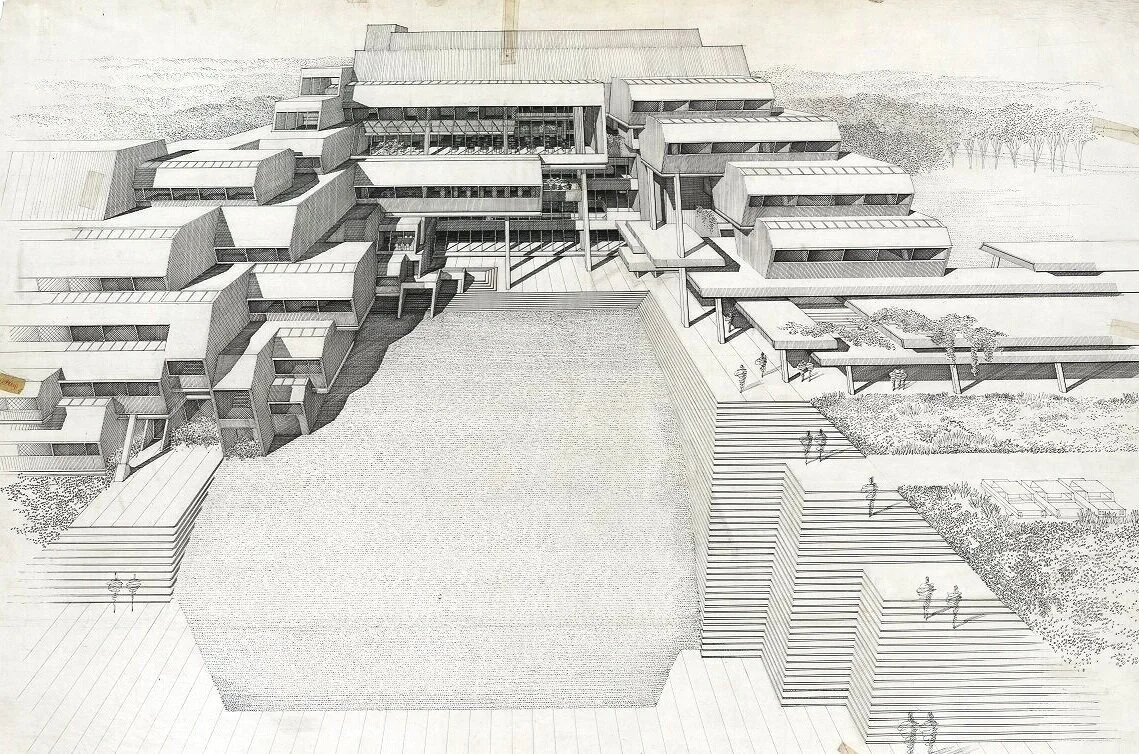
TOP-TO-BOTTOM: Architect Eduardo Catalano’s own residence, in Raleigh, as featured on the cover of the August, 1955 issue of House + Home magazine; Architect George Matsumoto’s own house, in Raleigh, was on the cover of 1957’s Record Houses (the annual issue in which Architectural Record published what they considered to be each year’s most significant residential designs); Architect G. Milton Small’s own architectural office building in Raleigh, which was included in a Architectural Record’s 1969 article on the design of architect’s offices; Paul Rudolph’s perspective rendering of Burroughs Wellcome, situated within Research Triangle Park.

These architects, who practiced in the Triangle region, should be better-known and studied, but they have not had the attention they deserve. A few, like Catalano and Harris, did achieve recognition in during their career, but have fallen out of the “repertoire” of recent architectural historians’ thinking. Others never had more than a very local renown. All deserve to be commemorated, and Triangle Modern Architecture brings salutary attention to the work of this group, among them—

  • G. Milton Small

  • George Masumoto

  • Eduardo Catalano

  • Harwell Hamilton Harris

  • Arthur Cogswell Jr.

  • Jon Andre Condoret

—and several others.

The latter half of the book profiles contemporary firms who are carrying on in this tradition. There is certainly some diversity among them—via their affinity for varying palettes of materials, uses of color, and their choices about the proportion of glazed to solid areas, as well as the different building types (residential/institutional/commercial) with which they’re each engaged. But they all are clearly working within the formal vocabulary established by the first generation of Modern architects who worked in North Carolina’s Triangle region. Among the architects in this section is Frank Harmon, who wrote the book’s preface—and that’s book-ended by George Smart, who writes this volume’s moving epilogue.

TRIANGLE MODERN ARCHITECTURE has a profusion of illustrations, both in black & white and color. Unlike many architecture books, this one is not afraid of including drawings, ranging from Rudolph’s perspective drawing of Burroughs Wellcome -to- a colorful pastel by Nowicki -to- Macon Strother Smith’s study-sketch for a building corner detail. Photos are abundant, including lively snapshots of Frank Lloyd Wright visiting the area, architectural models, and mid-century Modern interiors.

Marlon Blackwell, FAIA, recipient of the 2020 AIA Gold Medal, has said of the book:

“Triangle Modern Architecture provides us a timely insight into the rich history and bold future of modern architecture in North Carolina, reminding us that the modernist project here is alive and well and most vital in its interpretations and adaptations to local places and typologies.”

We congratulate Victoria Ballard Bell, and her publisher, for bringing out TRIANGLE MODERN ARCHITECTURE, her new (and much needed) book on the origin and growth of Modern architecture in that region.

BURROUGHS WELLCOME —THE TRIANGLE’S MOST IMPORTANT MODERN BUILDING— IS THREATENED

Above and Below:  the Burroughs Wellcome building, designed by Paul Rudolph, and located within North Carolina’s Triangle Research Park

Above and Below: the Burroughs Wellcome building, designed by Paul Rudolph, and located within North Carolina’s Triangle Research Park

P.%252BJ.%252BMcDonnell%252Bgreen%252Bphoto.jpg

YOU CAN HELP SAVE IT!

The Burroughs Wellcome building is threated with imminent demolition.

Its loss would be a disaster—a titanic waste of our nation’s cultural heritage. Remember:

When a great building is destroyed, there are no second chances.

NOW— THERE ARE TWO THINGS YOU CAN DO:

  • Sign the petition to save Burroughs Wellcome— Please sign it HERE.

  • We can keep you up-to-date with bulletins about the latest developments—

    To get them, please join our foundation’s mailing list: you’ll get all the updates, (as well as other Rudolphian news)—you can sign-up at the bottom of this page.


IMAGE CREDITS

North Carolina Triangle map: U.S. Geological Survey; Aerial view of a part of Research Triangle Park: courtesy of Google Maps; House + Home (Catalano House), Record Houses (Matsumoto House), and Architectural Record (Small office building): courtesy of US Modernist Library; Burroughs Wellcome perspective rendering by Paul Rudolph: © The Estate of Paul Rudolph, The Paul Rudolph Heritage Foundation; Photograph of Burroughs Wellcome building (black and white): photograph courtesy of Columbia University, Avery Architectural and Fine Arts Library, Joseph W. Molitor Photograph Collection ; Photograph of Burroughs Wellcome building (color): photograph courtesy of © PJ McDonnell, The Paul Rudolph Heritage Foundation Archives

DOCOMOMO's “Auction For Modernism” (and we’re donating something you’ll definitely want to bid on!)

PRHF%252B-%252Bauction.jpg

DOCOMOMO US HAS A CLEAR AND COMPELLING MISSION:

Enriching our communities and our culture through the understanding, appreciation and preservation of modern architecture and design.

better%2Bnews%2Bexample.jpg

DOCOMOM US does that through advocacy, education, documentation, and providing leadership and knowledge to demonstrate the importance of modern design principles for these important parts of American history and culture.

They’re energetic, creative, resourceful—and they never stop!

Whether it’s fighting to preserve significant buildings, advising on adaptive reuse, or serving as a resource for local groups and activists, they’re always ready to generously share their knowledge and positive energies. At right you can see part of their recent newsletter, with some updates on what they’ve been involved with—including our fight to save Paul Rudolph’s Burroughs Wellcome building.

THE AUCTION FOR MODERNISM (IT’S STARTING NOW)

Full+auction+logo.jpg

To keep their DOCOMOMO US’ work going forward, they’re having the most amazing fundraising auctionThe Auction For Modernism—and we’re proud that the Paul Rudolph Heritage Foundation is participating.

What can you bid for? Superb examples of Modern Design: furniture, architect’s original drawings, rare books, architectural prints and photos, private tours, original artworks, jewelry, ceramics, overnight or weekend stays in modern masterworks (and even an I.M. Pei doll!)

BID FOR: A VIP TOUR OF A PAUL RUDOLPH MASTERWORK

We’re helping: the Paul Rudolph Heritage Foundation is donating—for you to bid on—a private tour of the Paul Rudolph-designed Modulightor Building, and the winning bidder will also receive two books on Rudolph’s life and legacy.

At the top of this post and below you can see photos of some of the richly layered private interiors in the Modulightor Building. You and your guests will get a VIP tour, and have time to explore these intriguing, intimate spaces in a building designed by Rudolph at the height of his powers.

Broder%252Bimage%252Bof%252Bdining%252Barea.jpg
broder%2Bgeneral%2Bview%2Bof%2B5th%2Bfloor.jpg
broder%252Bobjects%252Bwall.jpg
Modulightor%2Bat%2Bnight.jpg

To see all of auction’s many tempting items, go here.

But if you want to go directly to bid for your Modulightor Building tour and book package, go here.

Auction%252Blogo%252Bedited.jpg

PHOTO CREDITS:

Evening view of the exterior of the Modulightor Building: Photograph © Joe Polowczuk, The Paul Rudolph Heritage Foundation Archives

Interiors of the Modulightor building: Photographs © Anne Broder, The Paul Rudolph Heritage Foundation Archives

Auction page view (at top) of an interior of Modulightor Building with Picasso sculpture and staircase: Photograph by Donald Luckenbill © The Paul Rudolph Heritage Foundation Archives


Burroughs Wellcome: Let the CRITICS & USERS speak!

Entry court of the Burroughs Wellcome building. Image courtesy of Joseph W. Molitor architectural photographs. Located in Columbia University, Avery Architectural & Fine Arts Library, Department of Drawings & Archives

Entry court of the Burroughs Wellcome building. Image courtesy of Joseph W. Molitor architectural photographs. Located in Columbia University, Avery Architectural & Fine Arts Library, Department of Drawings & Archives

NOW IT’S THE CRITICS’ & USERS’ TURN TO SPEAK…

In a recent post, we shared the various views, assessments, and judgements, made by several architectural historians, of the Burroughs Wellcome building. Historians have several roles, and one of the main thrusts of their work is to take “the long view”—striving to show how any one building can be understood within broader context of the architect’s overall career (and the architectural culture of the time). But there are other viewpoints which call for our attention:

  • Critics have a different role. Yes, architectural journalists/critics/bloggers also seek to share deeper understandings of a work of architecture. But their writings are usually more of-the-moment—a result of their immediate interaction with building (and of news about it.)

  • Users are the ultimate critics. The actual occupants of the building (those who lived or worked there, day-after-day—but also including visitors) have an intimacy with the architecture which cannot be exceeded. Their voices must be heard.

Here, we present the examples of architectural criticism/journalism from the era when the Burroughs Wellcome’s design was first presented (and the building finished), as well as more recent thoughts by members of the architectural-critical community. The last example, below, includes copious comments from people who worked for Burroughs Wellcome—those who had an ongoing experience of the building, and warm memories of being there.

Arch+Recored%2C+November+1970+-+first+page.jpg

PAUL RUDOLPH: WORK IN PROGRESS

Architectural Record, November, 1970

This article, by Architectural Record’s distinguished editor-writer Mildred Schmertz, showcased three new projects by Rudolph: a large central library, to be built in Niagara Falls (and the article leads off with his tour de force isometric drawing of the building, shown at right); a housing development which was partially built in Buffalo (“Shoreline”); and the Burroughs Wellcome building. The article begins with an articulate assessment of Rudolph’s design concerns & commitments—and then it provides text about each project. Below are excerpts from both sections.

It has been said before that Rudolph's superb drawings so enchant the eye that one is diverted from the designs themselves into contemplation of the wonders of his draftsmanship. To counteract this tendency, it may be useful to set forth those attributes of his work which form its essential design content and which Rudolph himself considers most characteristic.

For him the site is a key consideration. His design is a response to the site and its environment. Where a strong environmental ambiance exists, he reinforces it. Where it does not, he creates it.

His concern with the environmental aspects of design leads him to freshly restate the design problem each time, and causes him to utilize a great variety of forms, scales and materials. His buildings are designed to be read from varying distances and from the air. Buildings are often dramatically articulated from story to story. Clearly expressed and essentially simple structural systems are juxtaposed to specific elements such as stairs, elevators and mechanical and toilet shafts which have been elaborated as forms. ln general, fixed elements are juxtaposed to more flexible generalized uses. The fixed elements often play a dual role acting as "hinges" and "joints" as his buildings sinuously move to follow a street pattern, turn a corner or form a plaza. Frequently these elements are used to lead the eye around the building. Such elements are essential means by which Rudolph manipulates scale. They take many shapes, thus a small conference room might be circular, elliptical, square, a rectangle or a triangle. Often the choice of shape becomes a highly personal one and leads to qualities which Rudolph realizes are easily misinterpreted as arbitrary.

Rudolph designs buildings which simultaneously defer to the past, yet accommodate the future. He creates definable exterior spaces which relate to existing buildings which are to remain, but he indicates the future by open-ended concepts, infinitely expansible in every direction. His buildings always embody broader design concerns than those represented by the building itself. They are conceived as interventions in behalf of tomorrow—the walls, gates, landmark towers and bridges of a higher urban order to come. Rudolph's interiors are characterized by the flow of space-horizontally, vertically and diagonally. Again his primary principle is one of juxtaposition—agitated space is opposed to quiet, contented space, tight coves of space flow into multistoried central space, diagonal space passes through vertical space. The control of natural light within the interior is a major concern of Rudolph's. ln most cases it is indirect, admitted by almost invisible skylights and reflected from broad sloping planes.

A final characteristic by which Rudolph's work may be readily recognized is his use of space modules as integral elements forming the building complex. . . . Those projects by Rudolph in which space modules are clearly articulated, although not totally prefabricated, can be considered prototypes being developed to hasten the arrival of this technological advance.

Burroughs Wellcome

This building may be considered a summation of the characteristics by which Rudolph's architecture may be identified. The site has been a key consideration and the building is essentially topographical, single stories are clearly articulated to define scale, specific elements are elaborated within a clear and regular structural system, the plan is infinitely expansible in each of its three major blocks, and great attention has been paid to the flow of interior space as well as to the handling of reflected light. The building, although it doesn't actually consist of totally prefabricated space modules inserted within a structural frame, almost looks as though it does, and thus it prefigures and helps lay the groundwork for future technological development.

Architercural+Record+-+June+1972+-+Cover.jpg

SCULPTURAL FORMS FOR PHARMECEUTICAL RESEARCH

Architectural Record, June, 1972

This cover story was the major presentation of the finished building in US architectural journals. Below are excerpts from the unsigned article: these were chosen because they focused on the critic’s/journalist’s assessment of the design.

Springing in inclined forms from the summit of a long ridge in North Carolina's Research Triangle Park, the laboratory and corporate headquarters of the Burroughs Wellcome Co. is marked by the sculptural invention that has long made Paul Rudolph's work so arresting. It is also filled with the characteristic complexities that make his work, in some quarters, controversial.

The client wanted a building that was shaped to his needs but remained architecturally distinctive-a building that would leave a forceful after-image in the minds of all who see it. Rudolph wanted the building to be a man-made extension of the ridge. He also wanted an opportunity to explore the variety of spatial relationships that diagonal framing could produce.

With only minor reservations, both owner and architect are well pleased with the final product.

Flexibility was a primary programmatic goal. Each major area in Rudolph's plan-laboratories, administration and support services-can be expanded by simple, linear addition. To prepare for this eventuality, the architect left the expansible ends of the building expressed in a somewhat random pattern of flattened hexagons. Any of the elements can be extended horizontally without disturbing the building's visual order. This device, combined with an elaborate articulation of parts, complicates the elevations considerably but gives the building an agreeable scale and plunges it squarely into the realm of dynamic architectural sculpture. The complications of the exterior assert themselves inside with no less force. The three-story lobby space closes dramatically overhead in a turbulent and visually compelling spatial composition. The administrative offices are shaped at the exterior wall to receive skylights that admit daylight from an unseen and unexpected source. The board room, over the cafeteria, opens out through a canted window wall to one of the fairest scenes in North Carolina: a timbered Piedmont plain with the spires of Chapel Hill in the distance.

The spaces are particularized and personal; as much the opposite of universal space as Rudolph could make them. A simple and consistent vocabulary of finishes gives the administrative areas an easy continuity and flow.

The Burroughs Wellcome building is not for those who are disturbed by departures from the norm. The sharp-eyed visitor may find details that are not completely resolved. But if there is bravura here, it is more than balanced by solid accomplishment. The building is functional—probably no more and no less so than similar facilities of more routine design. What is best about Burroughs Wellcome is the sense of exhilaration and spatial excitement it awakens. That it achieves so much of each is a tribute to both architect and owner.

The+Architect%27s+Newspaper+-+Liz+comment.jpg

PAUL RUDOLPH’S BURROUGHS WELLCOME HEADQUARTERS BUILDING IN NORTH CAROLINA THREATENED WITH DEMOLITION

Architect’s Newspaper, September 11, 2020

Matt Hickman, associate editor of The Architect’s Newspaper, wrote one of the first major articles about the current threat to the Burroughs Wellcome building. In it, he quotes from Liz Waytkus of Docomomo US.

“Burroughs Wellcome is a significant design of architecture that rises to the level of exceptional. There is absolutely nothing else like it and it would be devastating to Paul Rudolph’s canon of built works to lose it,” said Liz Waytkus, executive director of Docomomo US, when reached for comment. “While Rudolph’s homes continue to be highly valued, many of his civic and commercial designs have been severely compromised, threatened and destroyed. Docomomo US has advocated for years if not decades for the preservation of many of his major projects and we are frustrated as to what it will take for this country to recognize this true American Master of modernism.”

topics+of+Meta+article.jpg

INTO THE SPACESHIP: A VISIT TO THE OLD BURROUGHS WELLCOME BUILDING

Tropics of Meta, June 13, 2016

Alex Sayf Cummings is an associate professor and director of graduate studies in the History Department at Georgia State University. Dr. Cummings, who is senior editor of the history blog, Tropics of Meta, recently published a study of Research Triangle Park (in which the Burroughs Wellcome building resides): Brain Magnet: Research Triangle Park and the Idea of the Idea Economy. In June, 2016, she was part of a tour of the Burroughs Wellcome building—which is currently unoccupied—and below are excerpts from her post, reporting on the visit. Her post elicited numerous responses: many from people who, having worked Burroughs Wellcome, knew the building well and had warm memories of being there—and we also include a selection of those comments.

No longer supplied with power, the building becomes a dark warren of workspaces and hallways, occasionally illumined by natural light from outside. Undoubtedly [the building] felt different when it was electrified and occupied, with the presence of people and the trappings of business, work, and research. . . . tour participant Cynthia de Miranda—an architectural historian whose father was a scientist at Burroughs Wellcome—averred that the building always struck her as warm and pleasant during her visits as a child.

As scholars and lovers of architecture, we look forward to the day when the building’s remainder is restored to its former greatness, an emblem of the wild aesthetic ambitions of modernism in its late heyday and the information economy at the moment of its emergence. Love it or hate it, Rudolph’s design remains an impressively audacious creative gesture and an important part of the history of both architecture and Research Triangle Park.

COMMENTS:

Simply amazing, I worked in this building for many years, very fond memories of it.

I never found it claustrophobic during my 25 years. The building was alive with interesting people.

I will never forget the first time I drove up and saw this “out of this world spaceship!” I spent many good years there, and was fortunate to be employed in such an incredible building, with incredible people. I still feel honored to have been part of the Burroughs Wellcome family.

. . . .all of us who recall the vibrancy of this building . . . .I count myself very fortunate to have worked there. It was an amazing structure. We were young, and life was full of hope and promise. We were all witnesses, if not direct contributors, to amazing scientific discoveries and their promotion, during an exciting time for medical research.

I spent 32 years with [Burroughs Wellcome]. . . .and helped work on the layout of the labs to fit the 22.5 degree sloping walls of bright orange and blue. At that time, if any space was conceived to bring out the creative, inspirational, thoughts—this was it, in my opinion. I loved working there. We invented and developed more pharmaceutical products in those years. . . .We were “family” but more to the point we were colleagues who were allowed to trust the expertise of each other.

I have such special memories of my time at Burroughs-Wellcome. . . .Every Christmas there was a huge Christmas Tree in the lobby that almost reached the ceiling and the bottom was covered with several rows of the most beautiful poinsettia plants. With only about 400-500 employees in the entire building, it felt like a large family. The colors in the building were bold and bright, mostly dark blue and orange. As you entered the research area the carpet was orange and the administration side of the building had blue carpet. On the top floor of the administration wing the custom seats that ran around the walls were covered in a dark tan suede leather. The conference table in the boardroom was huge. The bottom was thick plexiglass and the top was covered in tan leather strips that were woven together. . . . it was a fabulous experience to work at Burroughs-Wellcome and one that I will never forget. The people I worked with changed my life and I have nothing but fond memories.

This is fascinating! When I was 9, my parents took me to the opening of the building, and for many years I wanted to be an architect because of it.

According to the Historic American Building Survey’s report the building (from which this image comes): “Archival records reveal that a softball field was positioned behind the Burroughs Wellcome building for leisure activities.”

According to the Historic American Building Survey’s report the building (from which this image comes): “Archival records reveal that a softball field was positioned behind the Burroughs Wellcome building for leisure activities.”

YOU CAN HELP SAVE BURROUGHS WELLCOME !

Burroughs Wellcome’s loss would be a disaster—a titanic waste of our nation’s cultural heritage.

When a great building is destroyed, there are no second chances.

NOW, THERE ARE TWO THINGS YOU CAN DO:

  • Sign the petition to save Burroughs Wellcome. You can sign it here.

  • We’ll send you bulletins about the latest developments. To get them, please join our foundation’s mailing list: you’ll get all the updates, (as well as other Rudolphian news.)—you can sign up at the bottom of this page.

The Burroughs Wellcome building presents multiple impressive facets. Image courtesy of the Massachusetts Institute of Technology, photograph by G. E. Kidder Smith

The Burroughs Wellcome building presents multiple impressive facets. Image courtesy of the Massachusetts Institute of Technology, photograph by G. E. Kidder Smith

Burroughs Wellcome: Let the Historians Speak!

Photograph courtesy of © PJ McDonnell, The Paul Rudolph Heritage Foundation Archives

Photograph courtesy of © PJ McDonnell, The Paul Rudolph Heritage Foundation Archives

GREAT BUILDINGS: FROM BIOGRAPHY -TO- HISTORY

In our first earlier posts about the Burroughs Wellcome Building, we’ve looked at it from multiple viewpoints: its most significant features, its overall history, its use in Film and Television, and as an example of the creative process in architecture (from concept-to-details).

Buildings have biographies—just like people—and those articles could be said to be primarily “biographical”. But, just like any a person’s life story, a building is also subject to assessment—the judgement of discerning historians, as well as it’s occupants, visitors, critics, and journalists. This process starts from the time the design is unveiled, and continues through the years of its existence and memory.

Here, we’ll let several architectural historians speak: offering their insights into the building’s design, physical presence, spatial-sensual qualities, and its relation to the users’ needs and experiences.

better+tony+monk+cover.jpg

THE ART AND ARCHITECTURE OF PAUL RUDOLPH

By Tony Monk

“Stretching expansively across a wooded hillside ridge in North Carolina, this large corporate headquarters and laboratory complex for the intranational Burroughs Wellcome company typified Paul Rudolph’s dramatically sculptural style. In response the the client’s need for a distinctive image to represent the company’s performance, Rudolph designed a building which was intended to be a forceful extension of the hillside itself. Inside he created a spatial and structural solution that was uniquely original and possessed ultra-modern space-age characteristics.”

“The most dramatic feature of this design was the all-pervading characteristics that were created by the sharply angular slopes to the walls and columns. Surprisingly these were built at 22-1/2 degrees to the vertical, a device which Rudolph said echoed step inclines of the hills around the site. These interesting geometric forms were repeated extensively around the building—in windows angled downward, in the sloping seats and solid balustrades. Even the cupboards and service doors in the corridors . . . . were all built at this very steep angle.”

“A decade after this development was completed (in 1972), Paul Rudolph as asked to extend the premises to incorporate medical offices and a large dining room for the staff. He continued the theme of the angled supports, but this time used V-shaped twin columns, which created a crystalline rhythm throughout the extension. The sizeable restaurant was generally single-storey around the perimeter but then rose up dramatically to five storeys in the middle to provide roof lighting at the center with various mezzanine levels skirting this interesting space.”

“Together, the soaring internal areas, punctuated by the balconied walkways, and multi-level offices, pierced with unexpected floods of light, all contribute to make this one of Paul Rudolph’s best works.”

“The headquarters is both a credit to and a reward for the enlightened client who commissioned and then recommissioned Paul Rudolph to design this amazingly original modern building. . . .” — excerpted from: The Art and Architecture of Paul Rudolph, by Tony Monk, West Sussex, Wiley-Academy, 1999

colorful%2Bde%2Balba%2Bcover.jpg

PAUL RUDOLPH: THE LATE WORK

by Roberto de Alba

The “new wing” of the Burroughs Wellcome building (with V-shaped frames), referred to by historian Roberto de Alba. Image © the estate of Paul Rudolph, The Paul Rudolph Heritage Foundation

The “new wing” of the Burroughs Wellcome building (with V-shaped frames), referred to by historian Roberto de Alba. Image © the estate of Paul Rudolph, The Paul Rudolph Heritage Foundation

“…Rudolph devised an elongated hexagonal module that gives the building a strong horizontal reading on the long elevations. The module reveals its hexagonal geometry in the short elevations., pulling out of the building in interesting ways to express its ability to expand.”

“The interior spaces are a direct by-product of the diagonal structural geometry and are simply stunning. The entry lobby is a thing of the future. The space soars, exposing three levels of balconies, which maintain the diagonal lines of the A-frame. The lab spaces are unusual in their high ceilings and natural illumination (by skylights). It is not surprising that the futuristic interiors of the building were the setting for the movie Brainstorm.”

“The new wing adopts some of the themes of the original building, transforming them in interesting ways. The hexagonal module reappears in the long elevation, reinforcing the linearity of the wing. The A-frame of the original turns into a V that is exposed and repeated in parallel along the length of the wing.” — excerpts from: Paul Rudolph: The Late Work, by Roberto de Alba, New York, Princeton Architectural Press, 2003

The “ziggurat” character of the building, mentioned by Stimpson, is captured in this photograph. Image courtesy of Joseph W. Molitor architectural photographs. Located in Columbia University, Avery Architectural & Fine Arts Library, Department o…

The “ziggurat” character of the building, mentioned by Stimpson, is captured in this photograph. Image courtesy of Joseph W. Molitor architectural photographs. Located in Columbia University, Avery Architectural & Fine Arts Library, Department of Drawings & Archives

A FIELD GUDE TO LANDMARKS OF MODERN ARCHITECTURE IN THE UNITED STATES

by Miriam f. Stimpson

“A dynamic and expressive design was created for this administrative headquarters. Rhythm and space are achieved through the use of strong external forms arranged in a contemporary “ziggurat fashion.” Lighting within the interior spaces effectively adds to the building’s design. The interaction of bold forms with the rolling hillside is intriguing as well as harmonious. The building is one of its kind in the nation.” — adapted from: A Field Guide to Landmarks of Modern Architecture in the United States, by Miriam F. Stimpson, Englewood Cliffs, Prentice Hall, 1985

HABs+logo.jpg

HABS: THE HISTORIC AMERCAN BUILDINGS SURVEY

The Historic American Buildings Survey (HABS), founded in 1933, is part of the Historic Documentation Programs administered under the National Parks Service. HABS is charged with documenting America's architectural heritage. Their report on Burroughs Wellcome (Report No. NC-418), written by architectural historian Vyta Baselice, is currently the most comprehensive survey and assessment of of the complex.

The full report can be accessed here. It is well worth quoting extensively—and it is our pleasure to present a selection of excerpts from it:

“The Burroughs Wellcome Corporation Headquarters in Research Triangle Park, North Carolina was designed by Paul Rudolph starting in 1969 and completed by the Daniels Construction Company in 1972. Planned as an “M.I.T. of North Carolina” this area between Raleigh and Durham was developed starting in the 1950s as a center for high-tech corporate research to attract and keep a highly educated, white-collar population in a Jim Crow state. Research Triangle’s ability to lure the pharmaceuticals giant Burroughs Wellcome, a company with roots in nineteenth century England, away from their suburban New York headquarters solidified the area’s status as a significant economic center no longer merely on the regional, but now also on the national scale. The design and construction of the new Wellcome Headquarters building was a significant affair and was meant to make a statement regarding the company’s new modern image and illustrate the advanced state of laboratory research and pharmaceutical work in the Research Triangle. Paul Rudolph worked with the corporation to design facilities that would accommodate a wide range of functions. . . .”

“The building is notable for its futuristic design, frequently described as Brutalist, marked by an exposed concrete and aggregate exterior and slanted steel columns that intersect in V-shapes and give the structure its distinctive appearance.”

“The structural system employed in the building also showcases the architect’s interest in industrial construction methods and the use of prefabricated panels for exterior and interior partitions. Rudolph likewise experimented with the integration of novel materials and exterior treatments. . . .”

“In terms of interior design, the building offers expansive multi-story gathering spaces with spot lighting exposing the irregular structural system. Bright carpets that blended red, orange, and pink colors were installed in communal areas to add to the drama of the headquarters. Other spaces that received extensive attention include research laboratories with state of the art equipment and custom-fitted cabinetry. . . .”

“. . . . raised in the South, the architect had the ideal background to design a world-class building in North Carolina that was global and radical in its approach yet sensitive to local work and life patterns. In addition to his professional expertise and reputation, Rudolph brought excellent customer service. Burroughs Wellcome leadership noted the architect’s “bedside manner of a sympathetic physician” and his ability to “cushion us against the shock-waves of certain mundane realities that have a habit of looming larger and larger.”

“Despite the challenging construction process, Burroughs Wellcome was nonetheless completed in 1972 and applauded instantly for its bold appearance. The structure’s distinctive architectural character is most clearly visible at the entrance to the building. The façade is a playful arrangement of angular forms that appear to grow out of the core structure. While visually provocative, the façade fails to reveal its organizational logic. It instead suggests that the sculptural complex must serve an intrinsically futuristic and forward-thinking function whose true nature cannot be fully comprehended from the exterior. One therefore must enter the structure and learn about its activities in order to understand the architectural arrangement. In this way, Rudolph’s design contradicts the famous “form follows function” rule, first suggested by Louis Sullivan in the nineteenth century. The exterior’s formal gymnastics are accomplished through a careful arrangement of exposed structural members. Indeed, the bold white columns that sit at a 22.5-degree angle are particularly important in breaking up the building’s forceful horizontality. Other design elements, like the white window beams, repetition of the concrete panels, and even the flag pole, echo the slanted verticality of the structural columns and add to the productive tension of the design.”

“In addition to the structure, Rudolph’s careful selection of construction materials, which were limited primarily to metal, glass, and concrete, add to the building’s distinctive appearance. As discussed above, the metal superstructure, comprised of A-frames that are painted white, breaks up the building’s horizontality. Rudolph did not treat the building’s windows in a conventional manner – instead, they appear as entire surfaces that follow and accentuate the building’s shape. At times, they wrap around the structure, much like Le Corbusier’s ribbon windows at Villa le Lac. The glass is also tinted and the scale and positioning of the windows follows a rhythm established by the concrete panels. Finally, the precast concrete panels with a carefully selected medium-size grey tint gravel contribute most significantly to the design’s distinctive character. And the concrete mix is employed not only on the façade, but all throughout the building’s interior as well as some of the sidewalks that are immediately adjacent to the structure. Most notably the aggregate was also used for the reception desk.”

“Although the building is visually compelling, Rudolph’s interest in curating the visitor’s experience by playing with scale and volume is significant and typically understated, especially in photographic representations. However, this is an important aspect of the overall architectural experience, particularly the entrance, and reflects the influence that Frank Lloyd Wright had upon Rudolph’s work. Upon climbing up a set of concrete stairs up to the level of the structure (or by exiting one of the two executive carports), the visitor will encounter the large structural columns. The first columns and space encountered are distinctly smaller and compressed. As the visitor proceeds to the entrance, both the volumes and columns progressively increase in scale until the first major gathering space opens up to reveal the grand scale of the building. The third-floor balcony, which hovers over this front plaza, adds to the drama and spectacle of the design. Archival photographs reveal that the main plaza was used as an events space with seating arranged facing the glazed wall. The door to the building is notably missing from this grand space and instead is situated to the side out of sight, underneath a sizeable horizontal plane. “

“Upon entering the building, the visitor’s movement and experience are once again carefully curated in a familiar arrangement of volumes that progressively increase in size, finally revealing an impressive lobby whose height extends three levels. While undoubtedly striking, the lobby appears to be taller than it actually is due to Rudolph’s design of openings that employ the 22.5-degree angle and decrease progressively thus heightening the visitor’s sense of verticality. The lobby is an architecturally distinctive space, notably different in character from the exterior forms, that creates a cave-like environment. The laboratory wing of the structure contains a similarly open multi-level communal space.”

“Modernist architects often hoped that unusual architecture that challenged common work and living practices would encourage greater creativity and efficiency. Paul Rudolph and Burroughs Wellcome were not an exception. The design integrated some novel solutions for creating multi-purpose spaces. For example, the large auditorium located off the lobby had a mechanism that would have brought about partitions to bifurcate the large space into two for smaller viewing audiences. While actual creative output is difficult to measure, the company’s attitudes were clearly displayed in photographs of workers and their daily activities. For example, company photographs commonly featured the building as a framing device, which in one case took up more of the portrait than the workers themselves. Similarly, when advertising one of the company’s products, employees were shown interacting with the building in a creative way, climbing atop the different layered roofs and hanging out with their colleagues. Even when engaging in other types of work-unrelated leisurely activities, like participating in company-sponsored health programs or playing softball, workers could not avoid the presence of the distinctive structure. The building’s design therefore served as a tool to maintain company presence throughout the workers’ daily experiences.”

Pages from the HABS report on Burroughs Wellcome, like the one shown above, have intriguing illustrative material, generally not found outside of archives.

Pages from the HABS report on Burroughs Wellcome, like the one shown above, have intriguing illustrative material, generally not found outside of archives.

This page from the report includes a drawing produced by Rudolph’s office: a sketch showing how offices would be arranged along the building’s angled window walls.

This page from the report includes a drawing produced by Rudolph’s office: a sketch showing how offices would be arranged along the building’s angled window walls.

Heyer+american+architecture+cover.jpg

AMERICAN ARCHITECTURE: IDEAS AND IDEOLOGIES IN THE LATE TWENTIETH CENTURY

By Paul Heyer

“The dynamics of diagnonal, tapered space are further explored in the more complex program for the corporate headquarters of Burroughs Wellcome. Here, within the diagonal movement of interior space, Rudolph says that “growth and change is implicit in the concept. It is the idea of a building never finished where one can pull out parts.” Architecturally it is a delineated and tightly resolved attitude that, in spirit at least, somewhat parallels that of [John] Johansen’s more “as built,” loosely conceived and less seemingly-manipulated and open-ended approach. The building’s diagonal volume is an upward extension of the crest of a ridge on which it is built. The set back floors allow for a continuous system of skylights at each floor to pull light deep into interior spaces while enabling ceiling heights to be raised to fifteen feet at the building’s exterior edges, increasing the sense of space in movement with the interiors. As the linear planes of the building are bunched in an end expression of solid, shifting, tubelike elements, they visually evoke the idea of modular elements, although in fact they are the product of conventional steel frame construction. The groping and combining of modular elements as and expression of a technological capability, a sound idea if one not so economically possible in reality, is a notion that continues to preoccupy Rudolph and in many ways give impetus to the shifting planes that impinge upon rather than elementally define space.” — excepted from: American Architecture: Ideas and Ideologies in the Late Twentieth Century, by Paul Heyer, New York, Van Nostrand Reinhold, 1993

NORMAN FOSTER

Finally, since Rudolph’s drawings for the Burroughs Wellcome building are so compelling, here is a quote from Norman Foster. He has the advantage of a long perspective on Paul Rudolph—an historical viewpoint—going all-the-way back to the time when he had been a student and employee of Rudolph’s, while studying at Yale.

“Many of the these drawings, especially the perspective sections, would encapsulate in a single image the range of Rudolph’s concerns as an architect. There was his quest to define and model space with light and planar surfaces; his interest in climate and the relationship between structure and services; his exploration into modularity and the potential of prefabrication—a later interest in high density urban mega-structures.” — Norman Foster, from the foreword to: The Art and Architecture of Paul Rudolph, by Tony Monk, West Sussex, Wiley-Academy, 1999

Rudolph’s perspective-section drawing through the body of the building (with its famous entry lobby), indicating the dynamic spaces within. Image © the estate of Paul Rudolph, The Paul Rudolph Heritage Foundation

Rudolph’s perspective-section drawing through the body of the building (with its famous entry lobby), indicating the dynamic spaces within. Image © the estate of Paul Rudolph, The Paul Rudolph Heritage Foundation

YOU CAN HELP SAVE BURROUGHS WELLCOME !

Burroughs Wellcome’s loss would be a disaster—a titanic waste of our nation’s cultural heritage.

When a great building is destroyed, there are no second chances.

NOW, THERE ARE TWO THINGS YOU CAN DO:

  • Sign the petition to save Burroughs Wellcome. You can sign it here.

  • We’ll send you bulletins about the latest developments. To get them, please join our foundation’s mailing list: you’ll get all the updates, (as well as other Rudolphian news.)—you can sign up at the bottom of this page.

A good example of the powerful drawings, in which Rudolph explored and conveyed his vision—as spoken of in Norman Foster’s quote above. This is his perspective rendering of the dining area (about which historian Tony Monk wrote)—a dynamic space whic…

A good example of the powerful drawings, in which Rudolph explored and conveyed his vision—as spoken of in Norman Foster’s quote above. This is his perspective rendering of the dining area (about which historian Tony Monk wrote)—a dynamic space which was constructed as part of the 1976 extension. That addition has been demolished, and now the main part of the building is under threat too. Image © the estate of Paul Rudolph, The Paul Rudolph Heritage Foundation

McMansion Hell's Kate Wagner on Open Plans vs. Walls [And its resonance with Paul Rudolph's spatial archetypes]

The floor plan of Paul Rudolph’s Revere Quality House, used as an example of residential open-space planning in Kate Wagner’s article. The house was built in 1948 in Siesta Key, Florida, and was widely published. © The Estate of Paul Rudolph, The Pa…

The floor plan of Paul Rudolph’s Revere Quality House, used as an example of residential open-space planning in Kate Wagner’s article. The house was built in 1948 in Siesta Key, Florida, and was widely published. © The Estate of Paul Rudolph, The Paul Rudolph Heritage Foundation

KATE WAGNER STRIKES AGAIN

Everyone loves Kate Wagner’s site, McMansion Hell—well, almost everyone, for we can imagine the chagrin of being subject to her clear-eyed assessments of “McMansions” which have saturated the housing market. We’ll skip showing a picture of the house which was the focus of one of her analyses—but here’s a sample text from Kate Wagner and one can get a clear idea of her tone:

“If you combine all of the insipid elements of the other houses: mismatched windows; massive, chaotic rooflines; weird asphalt donut landscaping; pompous entrances, and tacked on masses; you’d get this house. The more one looks at this house the more upsetting it becomes . . . . What sends this one over the top is its surroundings: lush trees and clear skies that have been desecrated in order to build absolute garbage.”

More—much more—can be seen at her site, as well as the site’s archives. But it’s important to know that her work is not just about take-downs of dimwitted design and comatose construction. Ms. Wagner has delved into other design-related topics of significance—like land use, urbanism, and the history of architectural styles—and she’s one of the few writers on design to give a fascinating (but accessible) look at the intersection of acoustics and residential design. Nor is her work published only on her own website—Wagner has been a featured writer in Architectural Digest, The Atlantic, Curbed, and other venues.

It is an article by her, on the ever-fascinating CITYLAB website, that has our attention, as it intersects with a aspects of Paul Rudolph’s work and philosophy—and, as noted at the top of this post, a Rudolph house plan was used as one of the article’s illustrations.

“THE CASE FOR ROOMS”

Her post, The Case for Rooms is subtitled: It’s time to end the tyranny of open-concept interior design.

A screen-shot of the opening of “The Case for Rooms”, an article by Kate Wagner on the CITYLAB website. The illustration—showing diverse activities through the house—makes a case for the usefulness of separate rooms.

A screen-shot of the opening of “The Case for Rooms”, an article by Kate Wagner on the CITYLAB website. The illustration—showing diverse activities through the house—makes a case for the usefulness of separate rooms.

She opens by clarifying the definition of her topic:

“Much has been written about the open floor plan: how it came to be, why it is bad (or good), whether it should or shouldn’t be applied to existing housing. The open floor plan as we currently understand it—an entry-kitchen-dining-living combination that avoids any kind of structural separation between uses—is only a few decades old.”

She then gives a history of the [pre-“open concept”] development of separate rooms for different functions and family members—a significant evolution in residential design—and then covers the reasons (historic, social, economic, industrial, and aesthetic) why there has been a departure from such spacial differentiation. That departure is manifest in the open concept arrangement of so many houses and apartments today: where living-dining-cooking spaces meld into each other.

The Revere Quality House, a 1948 design by Paul Rudolph, was widely published—and is used in the article as an illustration of “open concept” home planning which began to permeate residential design in the housing boom after World War II.

While Rudolph’s elevations for the Revere Quality House are not included in the article, it is worth looking at them to see that design’s large expanses of “see-through” areas (at the Porch, Living Room, and Dining Room)/ They confirm the characteri…

While Rudolph’s elevations for the Revere Quality House are not included in the article, it is worth looking at them to see that design’s large expanses of “see-through” areas (at the Porch, Living Room, and Dining Room)/ They confirm the characterization of the house as an open plan (or “open concept”) design. Those rooms are examples of Rudolph’s “fishbowl” spaces. By contrast, the Kitchen, Bedrooms, and Bath use more solid walls and partitions—conferring on them the protective spatial quality of what Rudolph called “caves.” © The Estate of Paul Rudolph, The Paul Rudolph Heritage Foundation

Today—to judge from the floor plans, photos, and renderings seen in real estate advertising, the “open concept” approach prevails in the layout of houses and apartments.

The article goes on to question open concept planning on practical terms:

  • whether houses laid-out this way can give their residents the visual, acoustic, and mental privacy that is useful and healthy

  • whether they promote (or get in-the-way of) communication

  • whether they are energy-wise

  • whether the fixes that have been invented to compensate for their problems (like having a separate “mess kitchen” which is visually hidden from the open-plan areas) are just masking an overall planning mistake

Another Paul Rudolph design, from the post-World War II building boom era: the Lamolithic House of 1948, built in Siesta Key, Florida. As shown in Rudolph’s perspective rendering, the Living Room, Dining Room, and Kitchen merge into each other, and …

Another Paul Rudolph design, from the post-World War II building boom era: the Lamolithic House of 1948, built in Siesta Key, Florida. As shown in Rudolph’s perspective rendering, the Living Room, Dining Room, and Kitchen merge into each other, and are primarily bounded by large (and openable) glazing. This arrangement is a manifestation of the open planning approach which was becoming increasingly popular—and also worked well to allow for cross-ventilation in a hot region like Florida (and a pre-AC era). The Bedrooms and Bath are more conventionally enclosed with walls and shuttable doors. These two sets of rooms adhere to Rudolph’s differentiation of “fishbowl” and “cave” spaces. © The Estate of Paul Rudolph, The Paul Rudolph Heritage Foundation

The article provides a deep (and wonderfully-illustrated) dive into these issues, the emergence of the open plan approach, and its permutations through the 20th (and now 21st) Centuries.

Kate Wagner’s right, as always: open plans can have problems—and this has been observed not only in residential design, but also about the quality-of-life within open plan offices (though a recent study is beginning to challenge that), schools, health facilities, restaurants, and architecture/design/art studios. In all of these, the lack of acoustical privacy and its evil twin—noise—are prime offenders. But so is the absence of visual privacy. Moreover, in a set of joined open plan spaces, missing are the strong visual cues which gives that sense of security that helps occupants feel situated in the world. Peninsula shaped built-in seating and conversation pits try to make up (though not always completely) for absent walls and doors.

FINDING A BALANCE

As with many design problems, perhaps the real issue is disproportion—a lack of balance in the various forces and approaches: plans which rely almost exclusively on open planning will have the above-mentioned problems. But plans which only include closed-off spaces—having one door-shuttable-room-after-the-other—are doomed to architectural claustrophobia, and maybe induce a kind of over-privacy that is also destructive.

RUDOLPH ARTICULATED THE POLARITY (AND VARIETY) OF SPATIAL NEEDS

It’s one of Paul Rudolph’s most provocative quotes:

“We desperately need to relearn the art of disposing our buildings to create different kinds of space: the quiet, enclosed, isolated, shaded space; the hustling, bustling space, pungent with vitality; the paved, dignified, vast, sumptuous, even awe-inspiring space; the mysterious space; the transition space which defines, separates, and yet joins juxtaposed spaces of contrasting character. We need sequences of space which arouse one’s curiosity, give a sense of anticipation, which beckon and impel us to rush forward to find that releasing space which dominates, which acts as a climax and magnet, and gives direction.”

There, Rudolph was challenging the aridity of mainstream Modernism’s approach to city planning—but he might as well have been talking about the need for such variety within residences—and, as his career went on, he’d practice what he preached.

Distilling this even further, Rudolph spoke of the two archetypal spaces which humans create and need—the poles on the range of spaces that we inhabit. He called them The Fishbowl and conversely, The Cave.

We can describe and give examples for each:

THE FISHBOWL is the open/exposed space. Sometimes it is the type of residence where a Living Room flows into a Dining Room and then into the Kitchen (the planning approach for homes, which is the topic of Kate Wagner’s article)—but it could describe places as civically grand as the podium of the Pantheon or the balcony from which the Pope addresses the crowd in St. Peter’s square. The most frequent way that the entry spaces of an opera house are characterized are as “places to see and be seen”—a perfect example of this spatial type! You’ve probably seen the way the offices of a newspaper newsroom or a police precinct interior are depicted in films and on TV: there’s a glazed-in office within which sits the editor or police captain (observing and directing the action—but also being the object of observation).

THE CAVE is the enclosed space—maybe cozy, maybe fortress-like in its defensibleness—but above all protective and evoking security. A place where one is not exposed, but where one can be (and share) one’s private self. The most frequently cited room-type would be a bedroom—and every child who has ever built a “sofa cushion fort” will know the sought-after feeling of security of such spaces. But ‘the Cave” would also apply to other kinds of spaces: entry vestibules where potential visitors are vetted (and, if necessary, warded-off), rooms for medical examinations and healing, offices and studios for quiet creation, library spaces for study, chapels for contemplation, galleries for art appreciation, and restaurant booths for sharing confidences.

Rudolph knew (and preached) that well-planned residences, workplaces, museums—indeed whole cities, and all the places we live—need to have both.

A RUDOLPH DESIGN WHICH ACHIEVES BOTH

Early in his career (in his first independent commission) Rudolph designed a house which allows the owner to have either the character of a Fishbowl -or- a Cave—and every graduation in-between. His Walker Guest House—a work from 1952 which was built in Sanibel, Florida—had adjustable flaps on most of the house’s perimeter, and they provided almost infinite options for achieving a sense of enclosure -or- openness.

Paul Rudolph’s drawings of his Walker Guest House, showing how the exterior flaps work: the hinged panels (balanced by a simple counterweight system) swing open and closed, and can be set at almost any angle. This allows for flexibility in dealing w…

Paul Rudolph’s drawings of his Walker Guest House, showing how the exterior flaps work: the hinged panels (balanced by a simple counterweight system) swing open and closed, and can be set at almost any angle. This allows for flexibility in dealing with changes in sun, wind, and rain, and desire for privacy or openness. © The estate of Paul Rudolph, The Paul Rudolph Heritage Foundation

RUDOLPH’S DEPARTS FROM THE OPEN PLANNING APPROACH

It is interesting that, as Rudolph’s career progressed, the open concept approach appears less frequently in his residential designs. This may have been due to several factors:

  • The more complex programs for which he was asked to design

  • The increased budgets he was given to work with

  • Much of his early work was in Florida was designed & built well before air conditioning was widely and economically available—so open plans that allowed for cross-breezes were a practical (and “green”) way to work within that subtropical climate. As Rudolph did less work in Florida (and as AC became more affordable) open layouts were less needed.

  • The evolution of his own thinking about the Modern movement in architecture. Rudolph made his first trip to Europe at the end of the 1940’s. His experiences of the spatial and formal variety of traditional cities and buildings spurred him to seek for a a richer approach to the making, shaping, and modulation of spaces.

Paul Rudolph’s axonometric-plan drawing for the Edersheim Apartment in New York. which was built in the early 1970’s. Separate spaces for the Dining Room, Living Room, and Library-Office occupy the right-most third of the plan—and Bedrooms and other…

Paul Rudolph’s axonometric-plan drawing for the Edersheim Apartment in New York. which was built in the early 1970’s. Separate spaces for the Dining Room, Living Room, and Library-Office occupy the right-most third of the plan—and Bedrooms and other spaces are each accessed off a central corridor. In contrast to his early residential works in Florida, the spaces here are almost hyper-differentiated by function—and privacy is readily available to each family member. © The Estate of Paul Rudolph, The Paul Rudolph Heritage Foundation

In Paul Rudolph’s civic work, he used a range of spatial archetypes (including the Cave and the Fishbowl) to create spaces appropriate for each of a building’s functions. A building with as varied a program as Rudolph’s Boston Government Service Center is a prime example of this—and in their July, 1973 issue, Architectural Record published an article which highlighted this way of analyzing the complex.

The cover of Architectural Record’s July 1973 issue, on which is shown a staircase within Rudolph’s Boston Government Service Center. That area’s enveloping shape, the organic curves, and its warm lighting come together to create a space which can b…

The cover of Architectural Record’s July 1973 issue, on which is shown a staircase within Rudolph’s Boston Government Service Center. That area’s enveloping shape, the organic curves, and its warm lighting come together to create a space which can be characterized as belonging to the “Cave” spatial archetype. Image courtesy of US Modernist Library

The article on the Boston Government Service Center, in Architectural Record, analyzed the building complex in terms of a range of spatial archetypes. Using text by Carl John Black, photographs, and Rudolph’s renderings and sketches, it culminated w…

The article on the Boston Government Service Center, in Architectural Record, analyzed the building complex in terms of a range of spatial archetypes. Using text by Carl John Black, photographs, and Rudolph’s renderings and sketches, it culminated with “The Cave”—as exemplified by the building’s chapel. Image courtesy of US Modernist Library

THE OPEN PLAN REMAINS MANIFEST IN RUDOLPH’S WORK

But Rudolph did not totally abandon the open plan approach. He could (and did) deploy it in some projects—but with increased spatial variety, and a more developed sophistication than in his early Florida work. In these buildings’s public areas, he often used changing levels (as well as varied ceilings) to delineate different spaces. This provided the occupants a sense of spatial grounding—a sense of “here-ness” (if not always complete acoustical privacy.)

A prime example of his use of open planning—but with intense spatial variation through level and ceiling changes—would be his Deane Residence, a house design from the late 1960’s. The house’s rooms may flow into each other, but the occupant is made aware of the shift in uses—Living Room, Dining, Library, Music, and various Sitting Areas—by a banquet of level and ceiling changes (and articulations), almost unrivaled in Rudolph’s oeuvre.

An architectural model of the Deane Residence—a residence designed by Paul Rudolph in the late 60’s and built in Long Island, NY. It shows the volumetric and compositional complexity that he was achieving in his buildings—and contrasts with the more…

An architectural model of the Deane Residence—a residence designed by Paul Rudolph in the late 60’s and built in Long Island, NY. It shows the volumetric and compositional complexity that he was achieving in his buildings—and contrasts with the more platonic forms he used near the beginning of his career (like the two houses in Florida, that were cited earlier in this article). But even the sumptuousness of its exterior forms only hints at the richness of the spaces inside. © The Estate of Paul Rudolph, The Paul Rudolph Heritage Foundation

Paul Rudolph’s section-sketch for the Dean Residence more than hints at the variety of levels he used to differentiate the house’s various spaces—and Rudolph’s scale figures (which he sprinkled throughout the drawing) assist in perceiving his intent…

Paul Rudolph’s section-sketch for the Dean Residence more than hints at the variety of levels he used to differentiate the house’s various spaces—and Rudolph’s scale figures (which he sprinkled throughout the drawing) assist in perceiving his intentions. © The Estate of Paul Rudolph, The Paul Rudolph Heritage Foundation

Paul Rudolph’s floor plan of the Deane Residence’s main interior area—or rather, areas-plural: the spaces for various functions—Living Room, Library, Dining Room, and various nooks and areas for study, music, and sitting—flow together, but are also …

Paul Rudolph’s floor plan of the Deane Residence’s main interior area—or rather, areas-plural: the spaces for various functions—Living Room, Library, Dining Room, and various nooks and areas for study, music, and sitting—flow together, but are also delineated by multiple changes in level and ceiling heights. Plan © The Estate of Paul Rudolph, The Paul Rudolph Heritage Foundation

John Dessarzin’s lushly photographed view of the Living Room of the Deane Residence gives as sense of the house’s spatial variety—and that’s a quality which allows it to use open planning, while not giving up a sense of distinction between the space…

John Dessarzin’s lushly photographed view of the Living Room of the Deane Residence gives as sense of the house’s spatial variety—and that’s a quality which allows it to use open planning, while not giving up a sense of distinction between the spaces (and the sense of that some of them are “fishbowls” and some spaces are “caves.”) Photograph by John Dessarzin - Copyright Reserved

Halston meets tom ford - what is being done at 101 east 63rd

The great fashion designer Halston, enthroned in his living room—within the famous “101”, the townhouse in New York’s Upper East Side neighborhood in Manhattan . Photo by Harry Benson, from a feature on Halston in Life Magazine.

The great fashion designer Halston, enthroned in his living room—within the famous “101”, the townhouse in New York’s Upper East Side neighborhood in Manhattan . Photo by Harry Benson, from a feature on Halston in Life Magazine.

A House with a History

Paul Rudolph designed the original residence at 101 East 63rd street for Mr. Alexander Hirsch in 1966. He created a Modernist oasis for his client, an intensely private person who wanted a place to escape to while still being in the heart of Manhattan. As Rudolph later described the project in Sibyl Moholy-Nagy’s 1970 book, The Architecture of Paul Rudolph:

A world of its own, inward looking and secretive, is created in a relatively small volume of space in the middle of New York City. Varying intensities of light are juxtaposed and related to structures within structures. Simple materials (plaster, paint) are used, but the feeling is of great luxuriousness because of the space. The one exposed facade reveals the interior arrangement of volumes by offsetting each floor and room in plan and section.

The house later went from being a private refuge to a celebrity hot spot known for its notorious parties when it was sold to the fashion designer Halston in the 1970’s. Halston himself spoke about the space in a recent documentary about his life that was featured on CNN:

I’m Halston and this is my home. The architect was Paul Rudolph and the day I saw it, I bought it. Its the only real modern house built in the city of New York since the second world war. Its like living in a three dimensional sculpture.

A video portion of Halston walking through 101 East 63rd from the CNN documentary. Halston’s description of the house begins at 0:46:50.

A video portion of Halston walking through 101 East 63rd from the CNN documentary. Halston’s description of the house begins at 0:46:50.

His lawyer upon visiting the house quipped, “I’m going to enjoy making money for you Halston because you know how to spend it.”

For more information about the house, you can find drawings and photos of it on our project page here.

Perspective Section Rendering. © The Estate of Paul Rudolph, Paul Rudolph Heritage Foundation

A Buyer as Famous as the House

As we reported in a previous blog post back in March, the house was finally sold to fashion designer Tom Ford after being on the market for a number of years. The sale, first reported in an article in Women’s Wear Daily after being the subject of rumors for a few weeks, was reported across social media and the design community. Articles appeared in Garage, Vogue, GQ, Mansion Global, the Daily Mail and New York Times.

Halston had hired Rudolph to renovate the space when he bought it. Wall to wall grey carpet, mirrored and Plexiglas furniture and chain-mail curtains were installed as a result. Members of the design community were pleased to learn that Tom Ford intended to restore the interior to the glamour that many remembered.

A Restoration, or Renovation?

Shortly before the sale was announced, The Paul Rudolph Heritage Foundation was approached by Mr. Ford’s architect, Atmosphere Design Group, to obtain copies of Rudolph’s original drawings. We were told ‘the client’ wanted to restore the interiors.

Paul Rudolph’s Mezzanine Floor Plan. © The Estate of Paul Rudolph, Paul Rudolph Heritage Foundation

Paul Rudolph’s Third Floor Plan. © The Estate of Paul Rudolph, Paul Rudolph Heritage Foundation

We asked the architect to consider consulting with the Paul Rudolph Heritage Foundation during the design process to ensure the design was faithful to Mr. Rudolph’s original vision. They said they would consider it and were never heard from again. Given the architect is generally known for Mr. Ford’s retail store design, we were concerned when we learned a demolition permit was issued in August, 2019.

Our request was not without precedent - the Paul Rudolph Heritage Foundation has given advice, free of charge, to owners of Rudolph-designed properties in the past. We were part of the design review of proposed replacement windows at the Mary Jewett Arts Center. We also helped a home owner in New Jersey find an architect to design an addition. In the end, he was able to hire Rudolph’s original project manager to construct the addition in way that fit into the original design.

A Cautious Optimism

We continued to hold out hope that - despite not hearing from the architect - the project was ‘in good hands.’ From online comments and at our public events, people were relieved to hear Mr. Ford had purchased the property as he was known for taking care of homes designed by significant architects, such as Richard Neutra.

Following the CNN documentary, Netflix announced that it too was going to do a story about Halston and were scouting locations to use for filming. Netflix location scouts visited us in the Rudolph-designed apartment at Modulightor and we spoke to them about Mr. Ford’s proposed changes and they said they would call us after seeing the original home for themselves. That was followed by the New York Times publishing the Halston interior as #19 on its ‘25 Rooms that Influence the Way We Design

As the iconic interior continued to be in the news, we waited to see what was being done to the space.

Then we got a call - “The space is gutted, Its unrecognizable.

What Will Change and What Will Stay the Same

The foundation immediately made phone calls and was able to obtain a set of the permit drawings. The following is what we learned about the work:

First Floor - Existing Plan. © The Estate of Paul Rudolph, Paul Rudolph Heritage Foundation

First Floor - Demolition Plan. Drawing by Atmosphere Design Group, from the NYC DOB.

First Floor - Construction Plan. Drawing by Atmosphere Design Group, from the NYC DOB.

Second Floor - Existing Plan. © The Estate of Paul Rudolph, Paul Rudolph Heritage Foundation

Second Floor - Demolition Plan. Drawing by Atmosphere Design Group, from the NYC DOB.

Second Floor - Construction Plan. Drawing by Atmosphere Design Group, from the NYC DOB.

What’s different:

  • All of the bathrooms are being gutted and some are combined to become larger. Looking at the elevations, we are pleased to learn it will include floor to ceiling mirrors with chrome vanities and toilets in some of them.

Mirrors, mirrors everywhere… reminds us of the note ‘melamine everything’ that was found during a renovation of Rudolph’s own 23 Beekman Place. We especially love the polished chrome toilet and vanity with undercounter lighting. Drawing by Atmosphere Design Group, from the NYC DOB.

  • The Kitchen will be enlarged (presumably for a menu greater than just ‘baked potatoes’)

Mirrors used for the kitchen back-splash are reminiscent of the kitchen designed by Paul Rudolph at the Modulightor’s duplex apartment. Drawing by Atmosphere Design Group, from the NYC DOB.

  • The Master Bedroom’s walk in closet is being removed and turned into a separate bedroom

What’s the same:

  • The main space for the most part is left alone. While this is a relief, it will disappoint anyone who was hoping the hardwood flooring, installed by a previous owner, would be replaced by Halston’s signature grey wall-to-wall plush carpeting.

The iconic living room will be left mostly as is. The furniture layout suggests it may be recreated to match Halston’s Rudolph-designed originals. Drawing by Atmosphere Design Group, from the NYC DOB.

The living room floor and stair treads are now wood. According to the plans, they will remain wood. Photo by Carl Bellavia, Archives of the Paul Rudolph Heritage Foundation.

The original funriture layout designed by Paul Rudolph for Halston. Photo by Harry Benson, from a feature on Halston in Life Magazine.

The original funriture layout designed by Paul Rudolph for Halston. Photo by Harry Benson, from a feature on Halston in Life Magazine.

What could be a concern:

  • Despite being in a landmark district - and signed off by the Landmark’s Commission as having no affect on the building exterior - the drawings show the original garage door will be removed and replaced.

Note the garage door is dotted on the demolition plan, with a note calling for it to be replaced. Drawing by Atmosphere Design Group, from the NYC DOB.

garage door 03.jpg
  • The drawings call for renovations of the landscaping and roof to be filed separately

The Fourth Floor construction plan, showing no work to be done on the roof, but calling for new roof tree planters. Drawing by Atmosphere Design Group, from the NYC DOB.

The Paul Rudolph Heritage Foundation will continue to watch for future applications to see what is planned for these areas that fall under landmarks review and protection.

A HALF-CENTURY LATER—AND RUDOLPH IS STILL AVANT GARDE

Underground Interiors, published in 1972, showcased some of the world’s most unique, quirky, and creative new interior designs—tangible manifestations of that experimental late 60’s/early 70’s era. A work of Rudolph’s was included—of course!.

Underground Interiors, published in 1972, showcased some of the world’s most unique, quirky, and creative new interior designs—tangible manifestations of that experimental late 60’s/early 70’s era. A work of Rudolph’s was included—of course!.

UNDERGROUND—AND FAMOUS

We sometimes speak of Underground Culture: productions by independent makers, groups, and communities, which were created apart from the mainstream—and often in pointed challenge to it. The most well-known application of the term underground is in “Underground films”—like the kind originally associated with Andy Warhol and other independent filmmakers. Calling them “underground” allegedly came about because of where such films were first screened: literally, in basements—though the association of “underground” with secrecy and daring (and even Dostoevsky) may have given them some cachet.

Poster advertising several underground films, featuring one by Andy Warhol’s, for a showing in 1967. Poster courtesy of the Underground Film Journal.

Poster advertising several underground films, featuring one by Andy Warhol’s, for a showing in 1967. Poster courtesy of the Underground Film Journal.

The use of the term spread, and—while it certainly had a political face—”underground” was applied to all kinds of new and experimental things happening in the 60’s and 70’s:

  • Underground Press

  • Underground Music

  • Underground Comics (of which Robert Crumb is the most famous practitioner)

  • Underground Clubs

  • And even a popular guide to offbeat restaurants, The Underground Gourmet

An example of “underground” culture extending into wider use: the great designers, Milton Glaser and Jerome Snyder, had a column in New York Magazine about restaurants that were out of the mainstream. Their recommendations were collected into a book…

An example of “underground” culture extending into wider use: the great designers, Milton Glaser and Jerome Snyder, had a column in New York Magazine about restaurants that were out of the mainstream. Their recommendations were collected into a book, which used the zesty graphic style which they had pioneered. Image: Design of the book: by Glaser and Snyder

Even if you were labeled “underground”, that didn’t mean you couldn’t become famous—and Warhol, Pink Floyd, and Crumb are probably the most recognized example of that. Today marketers speak of an “underground brand” —and it’s a useful association (especially when promoting to the mainstream) to connect ones product with, in Ian Volmer’s superb phrase, “a soupçon of subversion.”

 UNDERGROUND DESIGN?

If films, music,media, and even restaurants could be “underground”, then why not design too?

By the mid-60’s, a spirit of cultural rebellion and lifestyle adventurousness was sprouting in every domain—and in just a few years designs with “experimental” color, layout, materials, and function were beginning to appear in design magazines. Ultimately, this included architecture—but buildings are expensive and clients are, on-the-whole, conservative. So this explosion of colorful creativity first manifest in interiors: after all, they’re more personal, temporary, and (compared to whole buildings) lower-budget—and thus more likely to be the sites, at least initially, for adventurous design.

A collection of these interiors was brought together for a 1972 book, Underground Interiors: Decorating For Alternative Lifestyles. It showed some of the most exciting designs to date, and the book was published by The New York Times.

The book’s writer-editor was Norma Skurka, Home Editor of the New York Times. The photographer, Oberto Gili, has a distinguished career taking photos of a great range of subjects—including interiors.

The book’s writer-editor was Norma Skurka, Home Editor of the New York Times. The photographer, Oberto Gili, has a distinguished career taking photos of a great range of subjects—including interiors.

Oberto Gili—still an active photographer, with a creative portfolio—started the book project for the publisher L’Esperto. When they dropped the venture, it was picked-up by the New York Times’ long-time Home Editor (and prolific author) —who no doubt (having also worked for House Beautiful, Interior Design, and Contract magazines,) was aware of the most exciting interiors then being done—and together they completed the book.

 SURREALIST, RADICAL, POP, SPACE AGE…

Those are not our descriptions of the work they included in the book—they were the author’s, appearing unabashed on their contents page. While some of the designers and artistic personalities they included have fallen into obscurity, a number of them were already gaining prominence.

Before he achieved ultra-stardom in the world of fashion, Karl Lagerfeld was already making fascinating juxtapositions, as in his own apartment:

A spread from the book, showing Karl Lagerfeld’s combination bath-sitting room, and gym-bedroom, for his Paris apartment.

A spread from the book, showing Karl Lagerfeld’s combination bath-sitting room, and gym-bedroom, for his Paris apartment.

Dream, parade, or baking contest?—this Paris home offered them all at once:

A spread showing the Paris home of Antony and Dorothee Miralda offers treats that are visual (and possibly edible)

A spread showing the Paris home of Antony and Dorothee Miralda offers treats that are visual (and possibly edible)

The book came out at in the midst of the US space program’s most active period—and some interiors embodied that futuristic flavor:

A spread from the “Space Age Habitations” section of the book, showing the home Victor Lukens designed for himself.

A spread from the “Space Age Habitations” section of the book, showing the home Victor Lukens designed for himself.

One of the most influential designers included in the book was Gamal El-Zoghby. “Minimalism” does not do justice to the careful thought and planning he brought to each project. His modulated spaces, carpet-covered platforms, deftly-detailed built-ins, and hidden storage (designed to lower the distractions of everyday life) inspired a generation of designers—and helped create the vocabulary for multi-level living spaces.

A page from the book showing an El-Zoghby design: a NY apartment for entertainer Jackie Mason.

A page from the book showing an El-Zoghby design: a NY apartment for entertainer Jackie Mason.

RUDOLPH: AVANT GARDE AND TIMELESS ?

Paul Rudolph, most known for his muscular buildings, was also focused on interiors. He used his own home and office spaces as laboratories, trying out different spatial arrangements, lighting techniques, materials, and details—and, if pleased by the results of those experiments, he’s apply some of those lessons to the work he did for clients. [This was the subject of the Rudolph centennial exhibit, Paul Rudolph: The Personal Laboratory] Rudolph had a significant number of commissions for interior design, most often residential, but sometimes commercial (including an innovative dental office!)

In Rudolph’s design for a home of Mr. & Mrs. Elman in Manhattan, the walls remained unchanged—but he was able to shape the existing spaces through the placement of hanging light fixtures (of his own design) on an unexpectedly low plane, textures that flowed from floors to furnishings, and the creation of a living room that partakes more of landscaping than of traditional notions of room design.

Rudolph’s shows up too: a page in the Underground Interiors book.

Rudolph’s shows up too: a page in the Underground Interiors book.

Here’s the book’s caption, with what the author’s had to say about Rudolph’s interior:

Rudolph capton.JPG

Many of the rooms in the book (a sample of which we’ve shown above) are amusing, but also like they’re “of their time” [and maybe a bit too much so?] If “timelessness” is one of the criteria for good design, It’s hard to imagine—with some exceptions, like El-Zoghby—later designers choosing to create them.

What about Rudolph’s design?

It is nearly 50 years since he received the commission. Yes, back then, it was an era identified with “shag carpets”—and we all make fun of that. So if Rudolph were doing this interior today, he might dial-back the woolly-mammoth textures a bit.

But—

But the room still looks striking, enticing, fun—and quite livable and flexible: a place one would like to visit and hang-out. A place that could accommodate a large party, yet maintains a sense of intimacy. A place to unwind—and a place to be theatrical. A place to shock—and a place to relax. We contend that Rudolph’s design, overall, holds-up rather well, even a half-century after its conception—another sign of a master.

PAUL RUDOLPH’S OWN HOME - HIS FAMOUS “QUADRUPLEX”: THE BEST COVERAGE

The cover of FDR: FLORIDA DESIGN REVIEW, showing the living room of Paul Rudolph’s multi-level apartment in New York City. That issue’s coverage was the most comprehensive (and best photographed) article to ever appear about this most personal of Ru…

The cover of FDR: FLORIDA DESIGN REVIEW, showing the living room of Paul Rudolph’s multi-level apartment in New York City. That issue’s coverage was the most comprehensive (and best photographed) article to ever appear about this most personal of Rudolph’s architectural works. The magazine is now out-of-print, but copies are available through the Paul Rudolph Heritage Foundation’s “Shop” page.

FDR: FLORIDA DESIGN REVIEW was a magazine devoted to architecture, interior design, and the allied arts. Its large format and high-quality photography allowed readers to have a rich and immersive experience of the buildings and spaces upon which they focused.

The magazine didn’t just look at design in Florida. They showed projects in a variety of locations—and in their issue number two (2007), they featured Paul Rudolph’s own home in New York City.

We’re frequently asked about Rudolph’s famous apartment—a design which he experimented with and refined and revised over many years. It contained some of his most spectacular residential spaces, and was certainly his most “personal” project.  It was a “quadruplex”—a magnificent four-story penthouse apartment, facing New York City’s East River. He used it as a “laboratory” for exploring ways to shape space and create dynamic experiences.

While Rudolph’s apartment was widely published, that issue of Florida Design Review is important, because it has an 18 page article on the quadruplex: the most comprehensive coverage ever published of this richly conceived & fascinating residence.

The author, Richard Geary, is himself a distinguished designer. The photographs in the article (often printed full-page) are by Ed Chappell. Also included in the article is a design sketch by Rudolph, as well as two of his famous section-perspective drawings of this multi-level apartment.

The bad news is that Florida Design Review is now out-of-print, and copies can be hard to find. But—

But the good news is that the Paul Rudolph Heritage Foundation has a number of copies of this issue available. It can be purchased through the PRHF’s website, on our “Shop” page (along with a number of other interesting Paul Rudolph publications and items.)

1968: AN AMAZING YEAR (INCLUDING FOR RUDOLPH)

“Earthrise”—probably the most famous photograph to come out of the space program. The photo was taken in 1968 during the Apollo 8 mission—the first time a manned ship had gone to the moon-and-back. Photo by US astronaut William Anders

“Earthrise”—probably the most famous photograph to come out of the space program. The photo was taken in 1968 during the Apollo 8 mission—the first time a manned ship had gone to the moon-and-back. Photo by US astronaut William Anders

THE BIG CHURN

1968 was an amazing year for the US—and the world. A year of firsts, a year of adventure, turbulence, war, creativity, and great sadness. A few examples of what it encompassed:

  • Apollo 8: first manned trip to the moon-and-back

  • First successful heart transplant

  • My Lai massacre in Vietnam

  • Prague Spring in Czechoslovakia

  • Martin Luther King and Robert Kennedy both assassinated.

  • Big Mac goes on sale nationwide

  • Founding of Intel corporation

  • Premiers of films Bonnie and Clyde, Rosemary’s Baby, and Planet of the Apes

  • North Vietnam launches Tet Offensive

  • 911 emergency phone service is initiated

  • Talking Barbie doll introduced

  • Massive student protests on campuses in the US and worldwide

  • London Bridge is sold to the US

  • Installation of first ATM machine in America

  • Chicago Democratic Convention protesters are met with violent police response—which is broadcast nationwide

  • Boeing introduces first jumbo jet

  • the musical Hair opens

 The cultural & domestic scenes were churning as well—wildly!—with pervasive questioning of the establishment in every domain, and extensive exploration of alternatives in lifestyle choices, religion, relationships, health, child-rearing, career, and education.

 The arts—painting, sculpture, dance, film, writing, curation—were especially affected. Nor did design escape, as fashion, display, advertising, graphics, architecture, and interiors saw their share of colorful and untamed experimentation.

MAINSTREAMING THE FAR-OUT

 While the mainstream architecture magazines kept publishing conventional work—plenty of International Style boxes filled their pages, and would do so for years to come!—the magazines also began to do articles on novel ideas and departures in design.

Cover of Progressive Architecture’s October 1968 issue, which dealt with the new adventures in interiors. Image: Courtesy of USModernist Library

Cover of Progressive Architecture’s October 1968 issue, which dealt with the new adventures in interiors. Image: Courtesy of USModernist Library

The October 1968 issue of Progressive Architecture was entirely devoted to looking at this strange new phenomena (as manifest in interiors)—and is a perfect example of the professional journals attempting to grapple with the wild things that were happening in design. The issue was titled:

THE REVOLUTION IN INTERIOR DESIGN: THE BOLD NEW POLY-EXPANDED MEGA DECORATION

 But, as though the editors couldn’t quite believe their eyes (or the sincere intent of the what they called “deviationist” designers), they kicked-off the issue with a meditative editorial asking:

“Is the work presented in this issue “serious”?

What followed were a series of article (each accompanied by a rich selection of designs) with provocative titles like:

  • Chaos As A System

  • Fun-House Architecture

  • The Synthetic Environment

  • Hard-Edge Interiors

  • Soft-Edge Exteriors

And, in a possible tribute to Tom Wolfe, one titled:

  • The Kinetic Electric Environment

RUDOLPH IN THE LATE 60’s

The year of that issue’s publication, 1968 (and the years bracketing it) was an exciting time for Paul Rudolph. They included some of his most interesting projects: Endo Labs, Tracey Towers, the Graphic Arts Center and LOMEX projects in NYC, the Green Residence, a stadium project for Saudi Arabia, Oriental Masonic Gardens (where he attempted to utilize prefabrication for housing units), the Burroughs Wellcome headquarters, the Brydges Library in Buffalo---and he also received the NY AIA’s Medal of Honor.

Paul Rudolph was referenced several times in that issue of Progressive Architecture. Ever the innovator, examples of Rudolph’s own designs were included—specifically in the last article, which was focused on light.

Even the title of that section of the magazine—via its unconventional (for the time) loose hand-lettering) reflected the adventurous nature of the content.

Even the title of that section of the magazine—via its unconventional (for the time) loose hand-lettering) reflected the adventurous nature of the content.

Here are the portions of the issue which showed Rudolph’s work:

Image courtesy of USModernist Library

Image courtesy of USModernist Library

Image courtesy of USModernist Library

Image courtesy of USModernist Library

Image courtesy of USModernist Library

Image courtesy of USModernist Library

In this work, as always, we see Rudolph-the-inventor: experimenting and exploring—and very much a part of that late 60’s hyper-creative era of design. Rudolph’s fascination with light (and light fixtures) would continue, and about a half-decade later he would go on to found a lighting company—Modulightor—in collaboration with Ernst Wagner.

RUDOLPH'S LOUIS SULLIVAN PANEL

An ornamental panel, designed by Louis Sullivan for the Schiller Theater (later known as the Garrick Theater) in Chicago, which opened in 1901. Photograph courtesy of Modulightor.

An ornamental panel, designed by Louis Sullivan for the Schiller Theater (later known as the Garrick Theater) in Chicago, which opened in 1901. Photograph courtesy of Modulightor.

Visitors to the Modulightor Building—and particularly to the Paul Rudolph-designed duplex which is the spatial gem within it—are always curious about one of the objects on display here: a large (nearly 2 feet x 2 feet) panel, with a creamy finish and a complex composition of organic and geometric forms. The panel was designed by Louis Sullivan, and we thought you’d like to hear its interesting story.

ORIGINS: THE WORK OF ANOTHER MASTER

Louis Sullivan (1856-1924) was a renowned American architect, often considered​ one of the creators of the modern concept the skyscraper. Frank Lloyd Wright, who worked for him, asserted Sullivan to have been his greatest mentor, referring to Sullivan as “Lieber Meister” (beloved master)—and for Wright, a towering ego, it says something that he so strongly acknowledged another architect. Sullivan was based in Chicago and worked mainly in the Midwest—although he also designed major buildings as far away as Buffalo and New York City.

Sullivan was famous for his exuberant, lively, and inventive ornament, creatively integrating both natural (generally plant-based) and geometric forms. The ornament was used on the exteriors and interiors of his buildings, and was made from a variety of materials: terracotta, carved stone, plaster, as well as cast and wrought metals such as bronze and iron.

 Adler & Sullivan—the firm he formed with his architectural partner, Dankmar Adler—designed the Schiller Theater (later known at the Garrick Theater) in Chicago, opening in 1901 with 1,300 seats. It was demolished in 1961, amid protests by preservationists. Although the building was not saved, a large number of ornamental elements from the building were recovered—including our ornamental panel made from cast plaster.

The Schiller Theater Building (later known as the Garrick) was designed by Louis Sullivan and Dankmar Adler of the firm Adler & Sullivan. Our “Sullivan panel” was part of the ornament of the theater’s proscenium arch. Image: Historic American Bu…

The Schiller Theater Building (later known as the Garrick) was designed by Louis Sullivan and Dankmar Adler of the firm Adler & Sullivan. Our “Sullivan panel” was part of the ornament of the theater’s proscenium arch. Image: Historic American Buildings Survey copy of a photograph taken circa 1900, Library of Congress Prints and Photographs Division.

Louis Sullivan is also considered to be America’s prime practitioner of Art Nouveau in architectural design. Though often grouped with other Art Nouveau practitioners, Sullivan’s personal “system of architectural ornament” really grew from his individual philosophy, as well as his investigations of patterns, systems of geometric and natural generation and growth, and by plant forms—and one can readily see that in his composition of this decorative panel.

This view, of the theater’s interior, shows that Sullivan used a variety of cast plaster ornament. The proscenium’s design (seen at the upper-right) is composed of a series of recessing, concentric arches, and one can see that those arches are lined…

This view, of the theater’s interior, shows that Sullivan used a variety of cast plaster ornament. The proscenium’s design (seen at the upper-right) is composed of a series of recessing, concentric arches, and one can see that those arches are lined by repeated castings of our “Sullivan panel.” Image: Historic American Buildings Survey copy of a photograph taken circa 1900, Library of Congress Prints and Photographs Division

FROM CHICAGO -TO- YALE

 When the Schiller/Garrick was demolished, at the beginning of the 1960’s, efforts were made to create a comprehensive record of the building (as well as to preserve as many examples of the ornament as possible.) Heroic in this work was Richard Nickel (1928-1972)—the Chicago-based photographer and preservationist. It is to him that we owe much of the documentation and artifacts which survive of Chicago’s lost architecture, as well as his helping to create the preservation movement.

Paul Rudolph took over as Chair of the architecture school at Yale in 1958—and he was to have a long run as head of the school, not leaving the post until 1965. While there, he achieved what is probably the dream of any chair or dean: to design his own school building. The design process began shortly after he started at Yale, and the building—now known as Rudolph Hall in his honor—was completed in 1963, almost instantly becoming one of the most famous Modern buildings in the world.

Although the building rapidly became an icon of the Modern Movement, Rudolph had placed examples of vintage architectural fragments, ornament, and sculpture throughout the building—including examples of Sullivan ornament. We don’t know the exact process whereby the Garrick panels got from Chicago to Yale, but the timing was right: the theater was demolished about the same time that Yale’s school building was being constructed and fitted-out. [Perhaps there was some intersection between Nickel and Rudolph?]

The Yale Art & Architecture Building—Paul Rudolph’s most famous design, and an icon of Modern architecture—was featured in Architectural Record’s February 1964 issue. The cover shows one of the interiors in which, as with many of the building’s …

The Yale Art & Architecture Building—Paul Rudolph’s most famous design, and an icon of Modern architecture—was featured in Architectural Record’s February 1964 issue. The cover shows one of the interiors in which, as with many of the building’s other spaces, Rudolph had incorporated vintage ornament, fragments, and objects. Image: Courtesy of USModernist Library.

Placing these objects into such an educational setting aroused responses of a “How could you!” flavor (as some thought that their inclusion was a betrayal of Modern principles)—most pointedly from Yale teacher, artist (and Bauhaus alumnus) Josef Albers. [The controversy is covered in recent book from Princeton University Press, Plaster Monuments: Architecture and the Power of Reproduction by Dr. Mari Lending, a professor of architectural history and theory at the Oslo School of Architecture and Design.]

FROM YALE -TO- RUDOLPH

Ernst Wagner, founder of the Paul Rudolph Heritage Foundation, tells us that when Rudolph left Yale in 1965, he was told that he could take anything he wanted—and the Sullivan panel was among the things he brought with him to his new home, New York City. In his New York rental apartment, Rudolph used the panel in a unique way: to form the back plane of his living room sofa. Actually, the images we’ve seen of that room show several panels in-a-row, forming that sofa back—so we don’t know if Rudolph owned several original Sullivan panels -or- if he had multiple castings made.

An article in the May, 1967 issue of Progressive Architecture magazine focused on innovative interiors—including Paul Rudolph’s floor-through apartment in a townhouse near the UN. In this view of the living room, the sofa back---made of a series of …

An article in the May, 1967 issue of Progressive Architecture magazine focused on innovative interiors—including Paul Rudolph’s floor-through apartment in a townhouse near the UN. In this view of the living room, the sofa back---made of a series of Sullivan panels—can be seen on the far left. Image: Courtesy of USModernist Library

THE PANEL GOES UPSTAIRS

Later (in collaboration with Ernst Wagner) Rudolph purchased the townhouse in which he’d been renting: 23 Beekman Place—and he went on to create his famous “Quadruplex” penthouse apartment atop the building. The Sullivan panel, placed at the Eastern end of the living room, acted as a strong formal focus point.

Paul Rudolph’s section-perspective of his Beekman Place “Quadruplex” apartment. In this longitudinal section, looking South, one can see the Sullivan panel at the lower-left. Image: Paul Rudolph Archive, Library of Congress – Prints and Photographs …

Paul Rudolph’s section-perspective of his Beekman Place “Quadruplex” apartment. In this longitudinal section, looking South, one can see the Sullivan panel at the lower-left. Image: Paul Rudolph Archive, Library of Congress – Prints and Photographs Division

A view of the Living Room in Rudolph’s Quadruplex apartment, looking East. The Sullivan panel at the end of the room, in front of the main window which looks out over the East River. Photograph by Ed Chappell

A view of the Living Room in Rudolph’s Quadruplex apartment, looking East. The Sullivan panel at the end of the room, in front of the main window which looks out over the East River. Photograph by Ed Chappell

FROM QUADRUPLEX -TO- DUPLEX

When Rudolph passed in 1997, Ernst Wagner was one of his heirs. A number of Rudolph’s possessions—including objets d’art from Rudolph’s Quadruplex apartment, passed to Wagner, and among them was the Sullivan Panel (with the mounting frame which Rudolph had designed for it).

The duplex residential spaces, within the Modulightor Building, were originally designed to be revenue-producing rental apartments, but Ernst Wagner (who’d become the sole owner of the building with Rudolph’s passing) began to occupy those spaces in 2000, opening up the doors between the north and south apartments so that it became one spacious, light-filled duplex. He furnished them with things he’d collected, as well as the legacy of objects and antiques he’d received from Rudolph—including the Sullivan panel—and that’s where the panel resides today.

The Sullivan panel, where it now resides in the living room of the Rudolph-designed duplex within the Modulightor Building. Photograph: courtesy of Annie Schlechter

The Sullivan panel, where it now resides in the living room of the Rudolph-designed duplex within the Modulightor Building. Photograph: courtesy of Annie Schlechter

SEE THE PANEL IN PERSON

The Modulightor Building—including the Rudolph-designed duplex (with the Sullivan panel) can be visited, either by attending our monthly Open House, or by scheduling a private tour. Find out about that through the Paul Rudolph Heritage Foundation’s Visit page on our website.

READ ALL ABOUT IT

This American Life’s Ira Glass, Chris Ware, and Tim Samuelson have produced a densely rich book-DVD set, “Lost Buildings,” which focuses on Sullivan’s work—including the efforts that Richard Nickel made to save that built heritage (and the Schiller/Garrick building receives a lot of the book’s attention).

“Lost Buildings” is a book-DVD set, which focuses on the lost work of Louis Sullivan in the Chicago area. The Schiller/Garrick building—and especially its ornament—is one of the buildings which the book delves into.

“Lost Buildings” is a book-DVD set, which focuses on the lost work of Louis Sullivan in the Chicago area. The Schiller/Garrick building—and especially its ornament—is one of the buildings which the book delves into.

If you’d like to get a copy, you can obtain it directly through This American Life’s website. Copies are also often available through Abebooks or Amazon—and the quickest way to locate them on those sites is by putting these 4 words into those pages’ search box: lost buildings collaboration ware

AND GET THE PANEL!

The Paul Rudolph Heritage Foundation, in collaboration with Modulightor, is also making available full-size reproductions of the Sullivan panel. They are fabricated by an art-casting firm (who also applies a finish which matches the original with great fidelity), and a portion of each sale goes to support the work of the Foundation. [If you’d like to discuss obtaining one of them, please contact us at:  office@paulrudolphheritagefoundation.org ]

Rudolph Reimagined: A New York Family’s Reworking of an Iconic Rudolph Interior

“It’s pretty darn original,” Carolyn Rowan says with a beaming smile as she shows me into the living room of her family’s stunning apartment on Manhattan’s Upper East Side; and indeed it is. Described by Ms. Rowan as a “labor of love,” her apartment’s interior is one of particular note for more than purely aesthetic reasons. Redesigned for banker Maurits Edersheim and his wife Claire in 1970 from its original 1917 form, the interior of the 5th-floor apartment is a noted example of Paul Rudolph’s interior works.

When Ms. Rowan and her husband, Marc—longtime residents of the 6th floor—purchased the apartment, they made a promise to Claire Edersheim, who often spoke about how she and Maurits “built the apartment with Rudolph,” that it would remain largely unaltered and that she and her husband would do little to mar or obscure Rudolph’s mastery. The end result of this promise, which was lovingly undertaken with the assistance of noted interior designer Tony Ingrao, is a sleek and retro space that, while more contemporary, retains the Rudolphian whimsy that makes it so unique.

Pictured: A before shot, taken by Anthony Cotsifas courtesy of 1stDibs.com above an after shot, taken by Ethan Shapiro

The heart of Rudolph’s vision remains, but in an updated form. Original 1970’s features like track lighting have been supplanted by more modern fixtures, and features like the unique “u” shaped couch, which the Rowans remade in the exact same footprint as the one Ms. Edersheim took with her when she sold the unit, has been reupholstered in a more muted fabric.

Pictured: A before shot, taken by Anthony Cotsifas courtesy of 1stDibs.com above an after shot, taken by Ethan Shapiro

Unfortunately, many Rudolph interiors are lost, razed by later homeowners who lack a knowledge of his significance or an appreciation of his works, which is why it’s important to emphasize renovations like the one undertaken by the Rowan family. As pictured above, the Rowans’ transformed the office space from its original seventies feel to one that was better suited to their own taste, while retaining Rudolph’s couch, desk, stair-shelves, and ceiling decoration.

Pictured: A before shot, taken by Anthony Cotsifas courtesy of 1stDibs.com next to an after shot, taken by Genevieve Garruppo courtesy of Tony Ingrao Design’s Intagram

The Rowan renovation shows how an owner of a Rudolph property or interior can still allow for Rudolph’s details to shine through, like the mirrored walls and kidney-shaped sofa seen above.

Pictured: A before shot, taken by Anthony Cotsifas courtesy of 1stDibs.com next to an after shot, taken by Ethan Shapiro

The hallway, pictured above, received the most changes — however, Rudolph’s design is still present in the sloping walls that punctuate the center right of the hallway, which was once the playroom of the Edersheim children (and is now a foyer that leads to the second story of the Rowan duplex).

Pictured: A before shot, taken by Anthony Cotsifas courtesy of 1stDibs.com next to an after shot, taken by Ethan Shapiro

The dining room, seen above, has been repainted in an airy white, and retains the original Paul Rudolph dining table, which cleverly breaks apart into three smaller, circular tables whose connecting leaves fold neatly under the shelving unit against the wall. Though bereft of the delft pottery it was made to showcase, the unique feature wall Rudolph designed still remains in its original form.

Pictured: A before shot provided by Carolyn Rowan next to an after shot taken by Ethan Shapiro

It isn’t easy to be the steward of an iconic property, especially one full of original architectural details. Luckily, there are sensitive owners like the Rowan Family who value such a property and have, throughout their four-year-long renovation, kept the heart and soul of Rudolph alive in their space. Right down to the last mirrored wall pane.