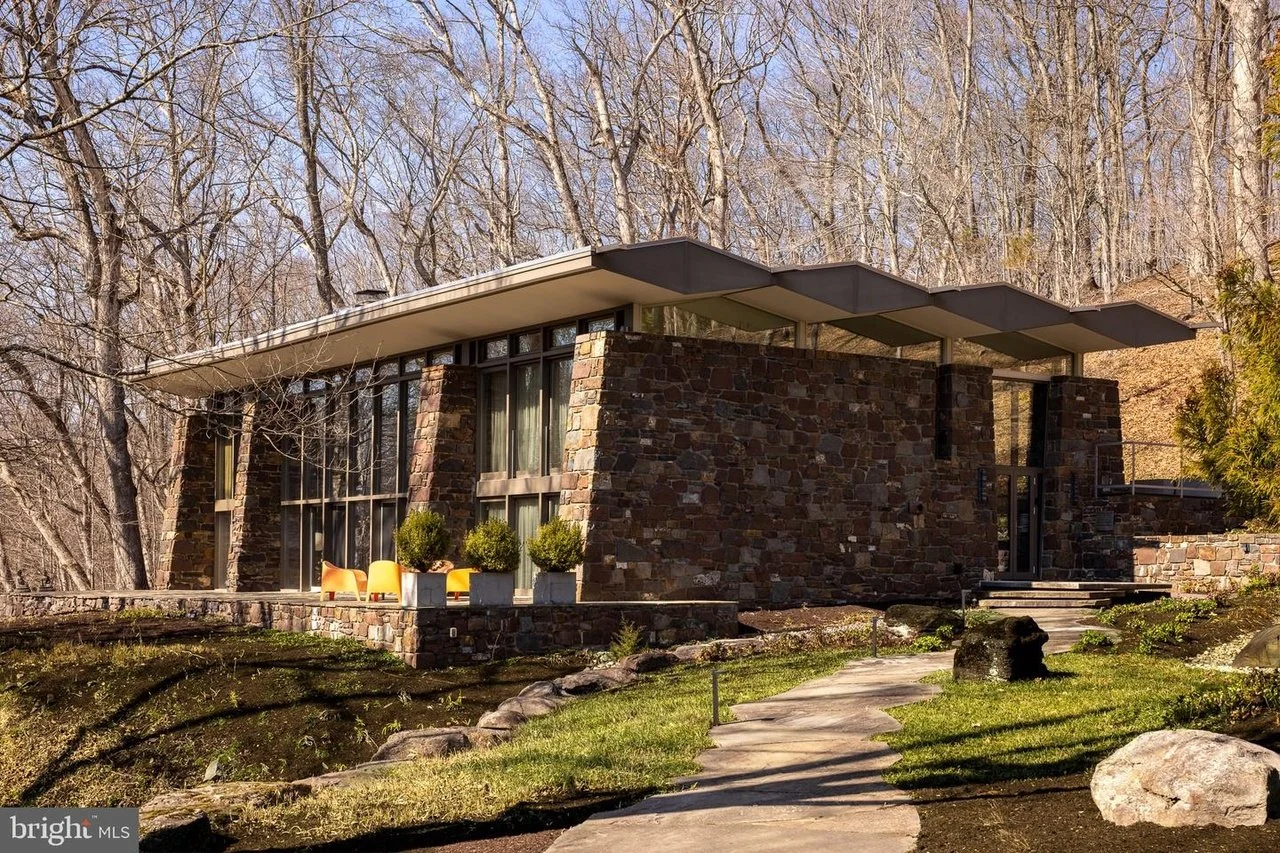
Fullam Residence

Paul Rudolph's Fullam Residence is on the market

All Photos © Daniel Isayeff

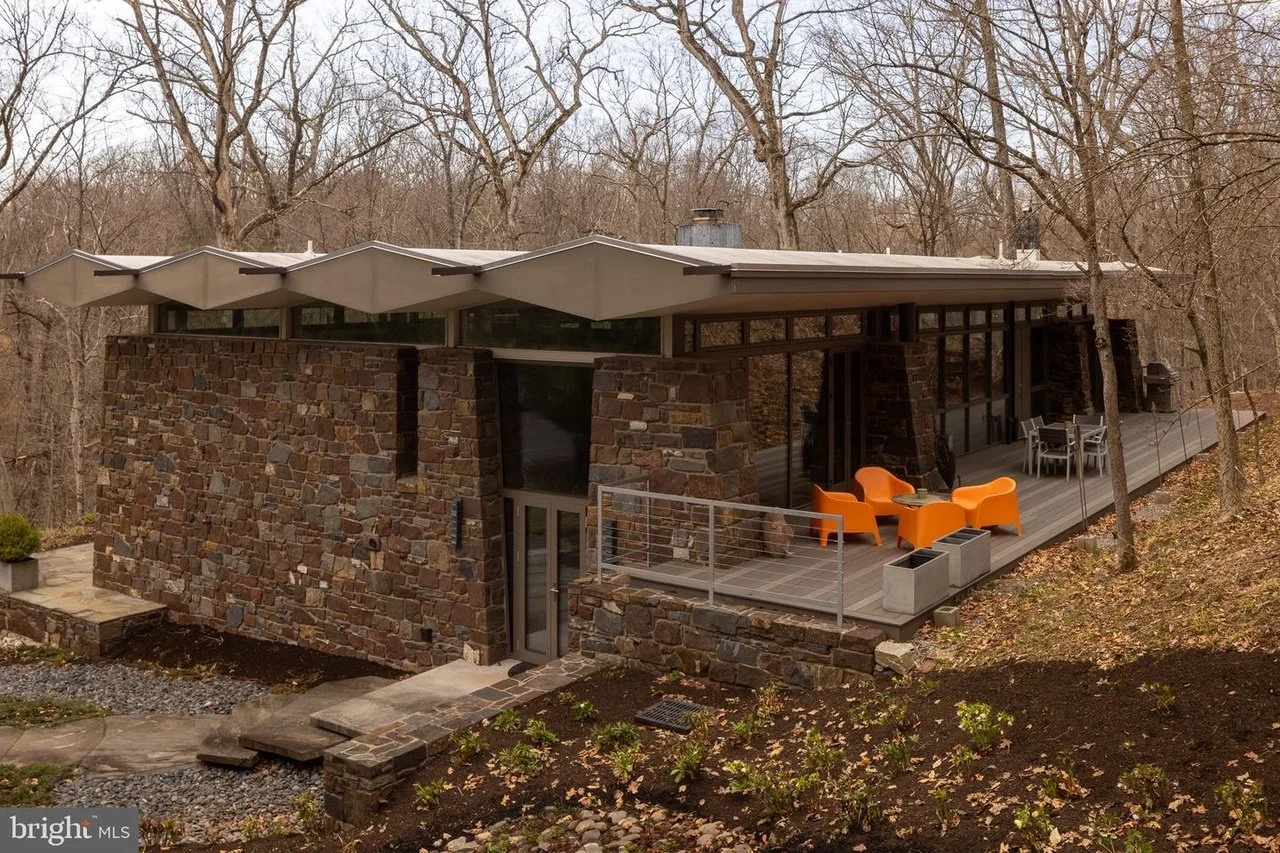
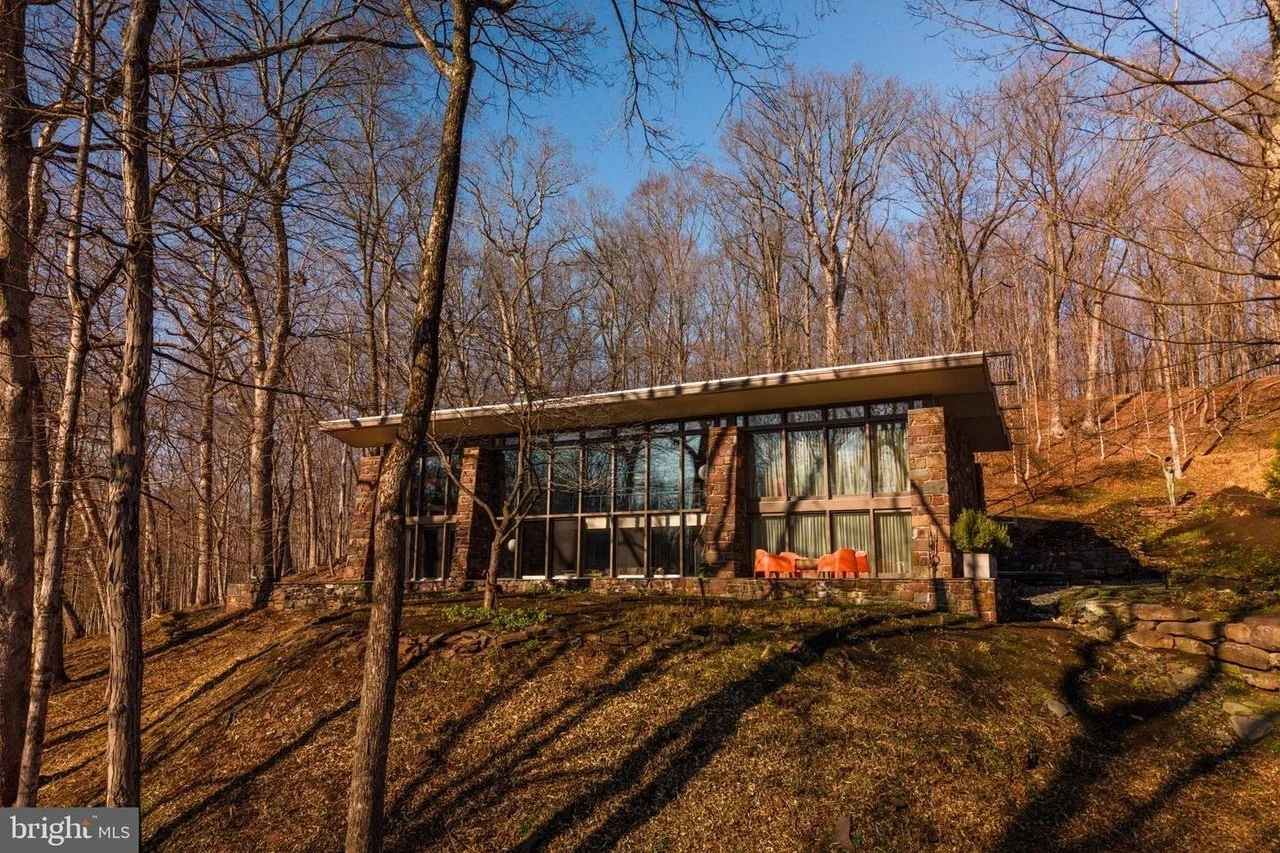
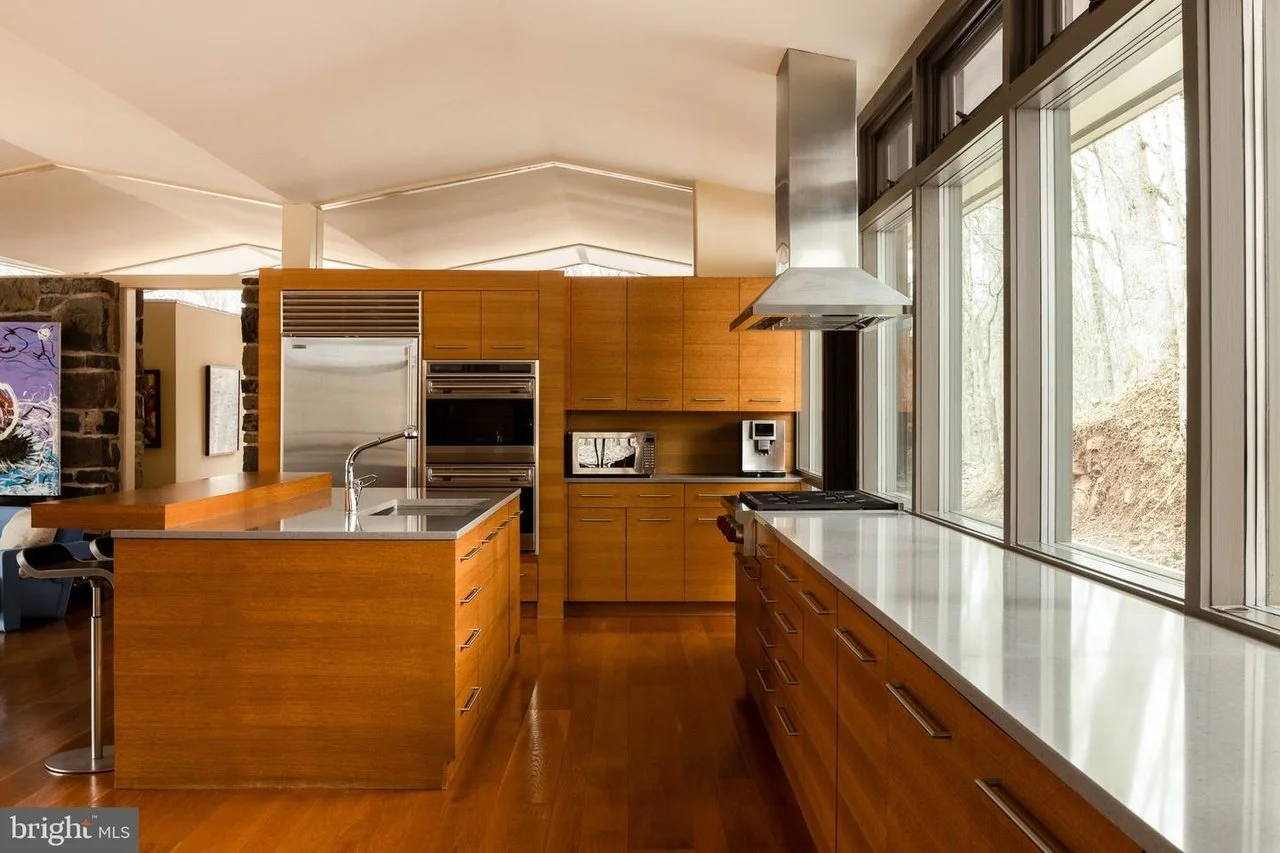
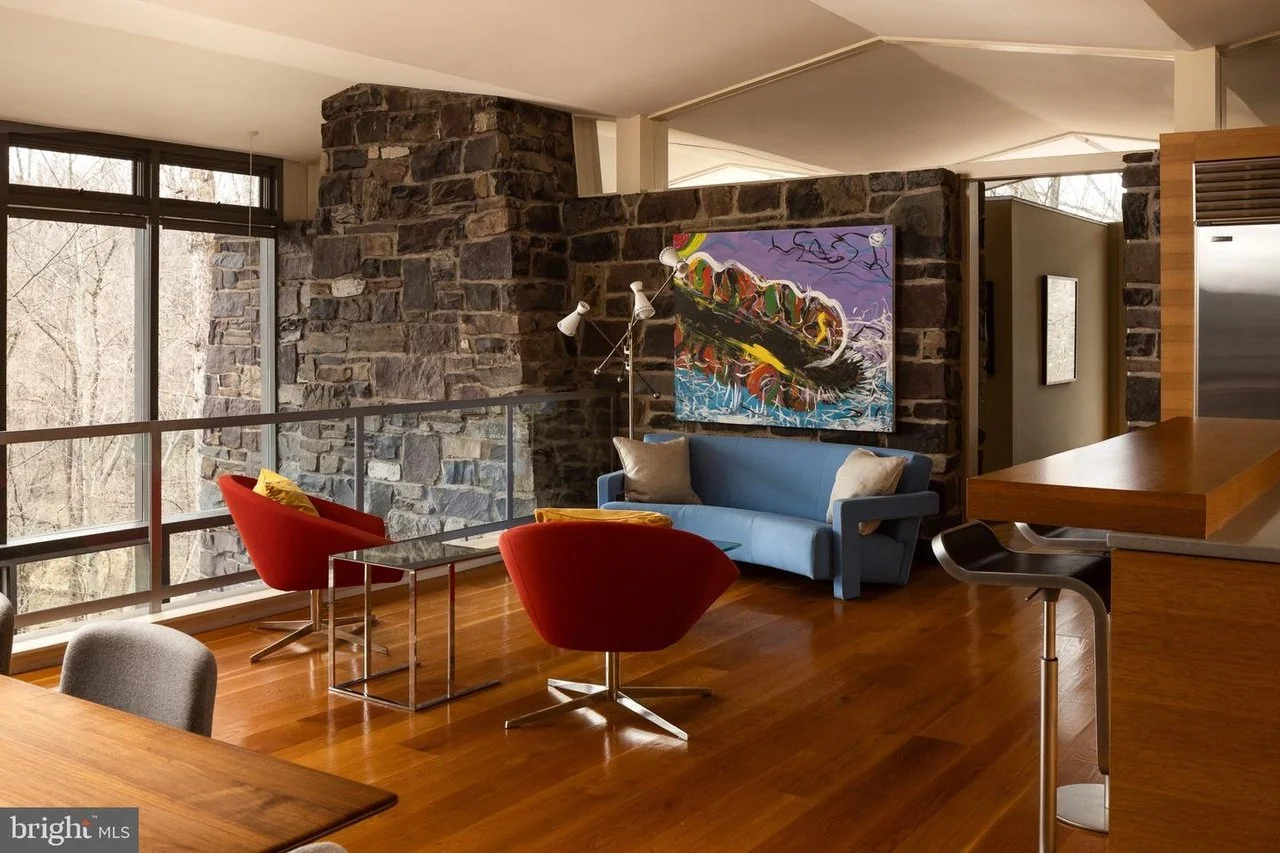
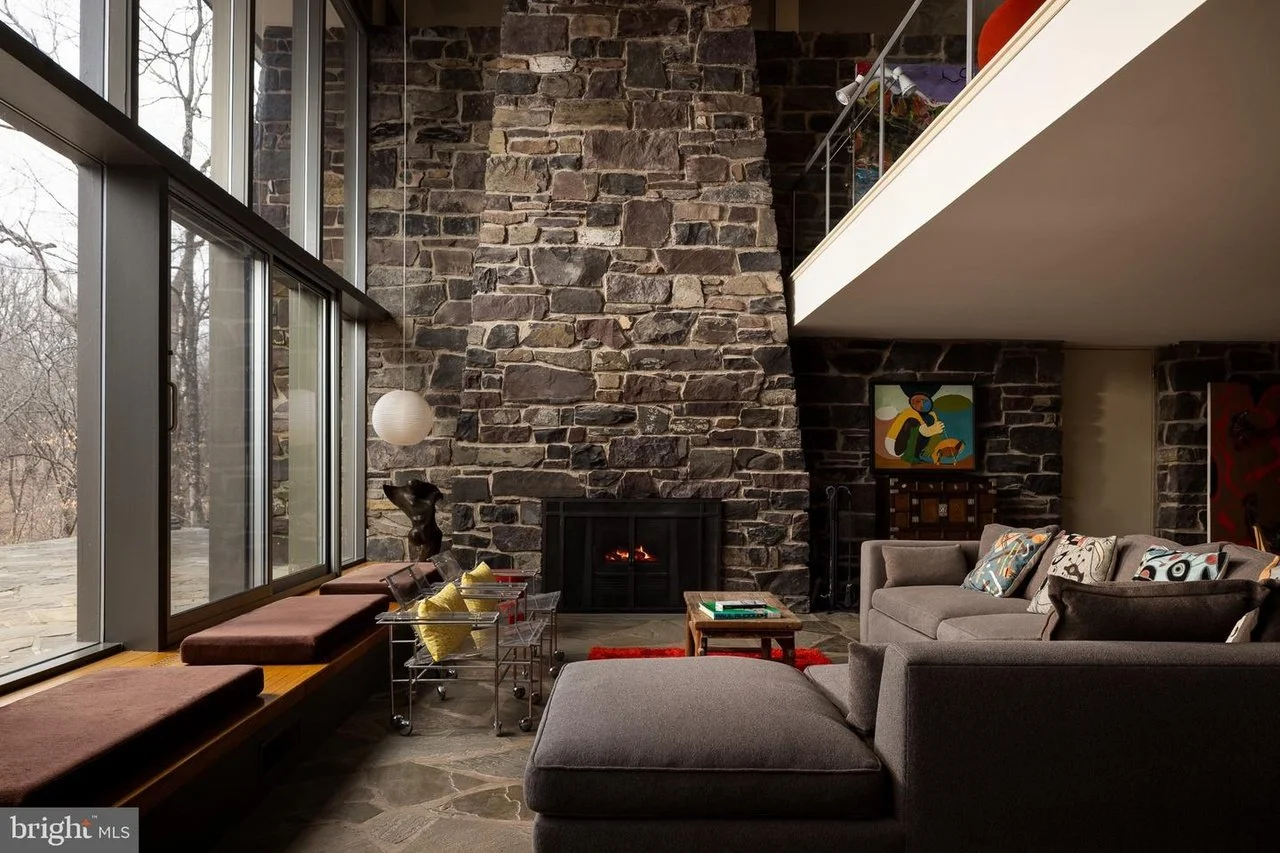
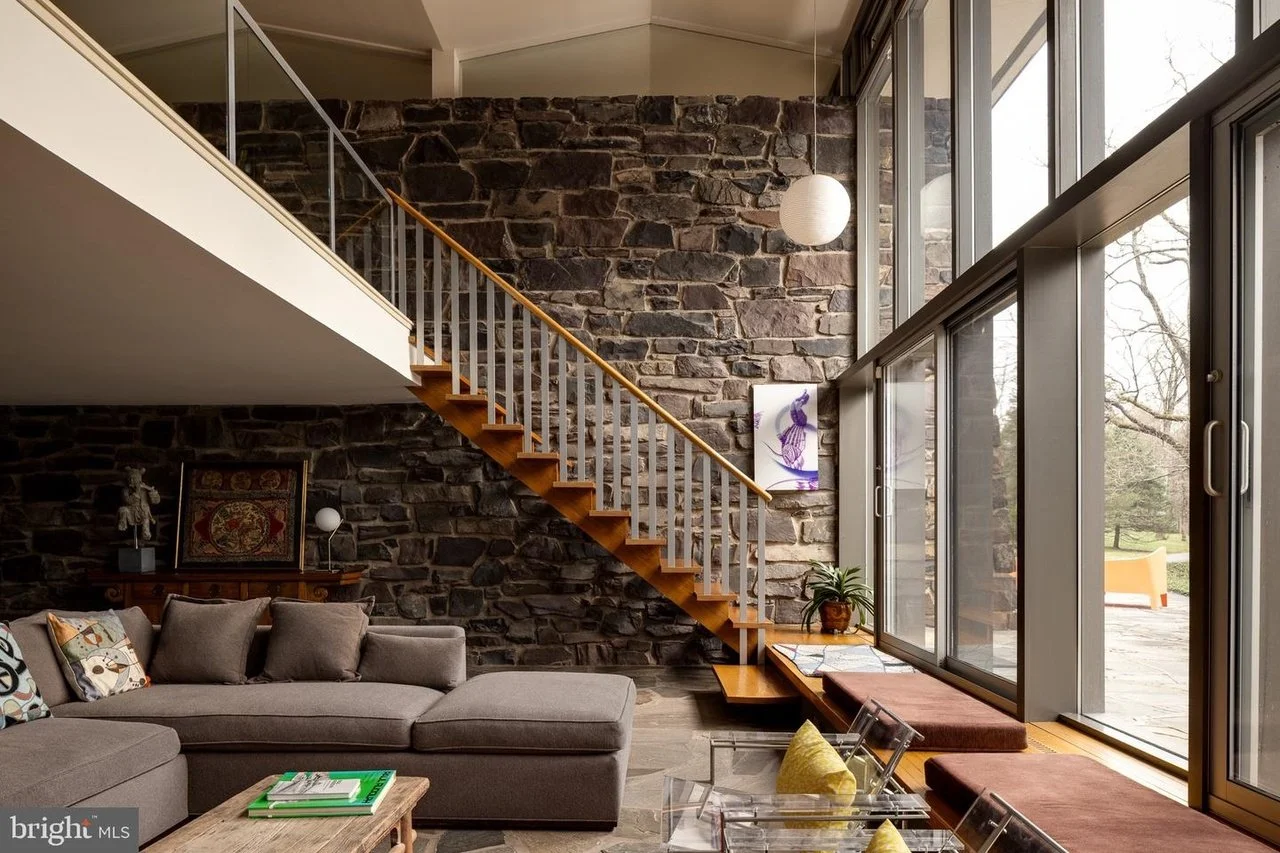
Paul Rudolph’s Fullam Residence at 372 Brownsburg Road in Newtown, Pennsylvania is for sale.

Originally constructed in 1959 and masterfully completed in 2014 following Paul Rudolph’s original architectural vision, The Fullam House stands today as a fully realized and enduring work of design, where historic integrity and modern refinement exist in perfect balance. The completion earned the prestigious AIA Bucks County Design Award for Excellence, recognizing the seamless integration of original architecture with thoughtful modern enhancements.

Conceived by Paul Rudolph, one of the most celebrated architects of the 20th century and former Chair of Architecture at Yale University, this extraordinary residence represents a rare and deeply personal work created during a pivotal moment in his ascent to international prominence. Known for his bold experimentation, sculptural forms, and leadership in the modernist movement, Rudolph’s work helped redefine American architecture in the postwar era.

Created for Judge John Fullam and his wife Alice, the home was born from a lifelong friendship that began during their years at Harvard. This was not a speculative project, but a deeply personal collaboration, where Rudolph was given creative freedom to explore new architectural ideas beyond his well-known Florida works. At the request of the Fullam family, the home was intentionally never published during Rudolph’s lifetime, remaining an unpublished architectural work thoughtfully situated within the Bucks County landscape for decades. This allowed Rudolph to experiment with evolving concepts, including the interplay of mass and void, sculptural geometry, and environmental responsiveness, resulting in a design both ahead of its time and deeply connected to its surroundings.

Set on over 26 private acres, the property is seamlessly integrated into its natural environment, nestled into the hillside and overlooking a dramatic ravine. Constructed with Pennsylvania fieldstone, the residence reflects both Rudolph’s modernist philosophy and a nod to the local Bucks County vernacular.
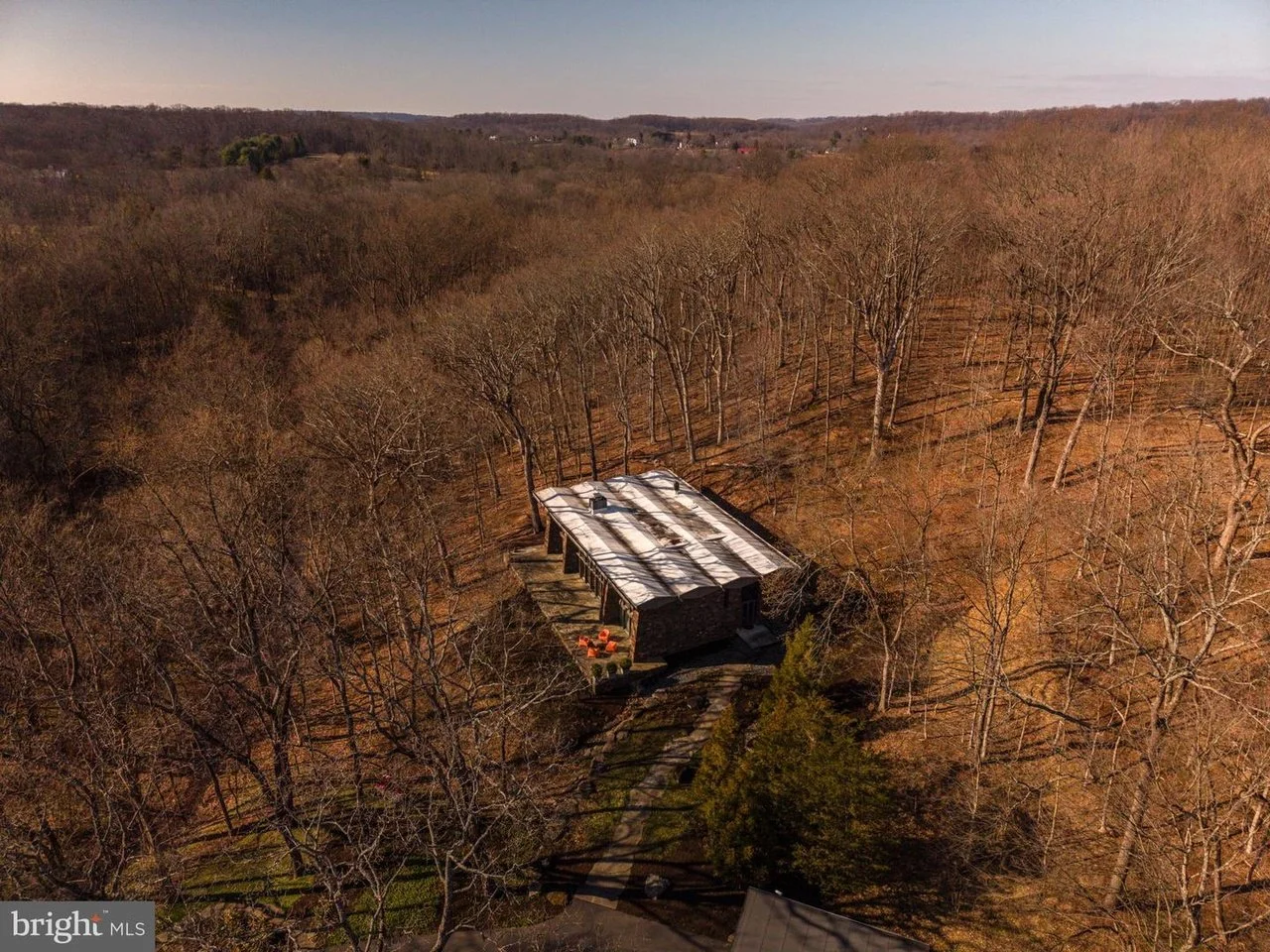
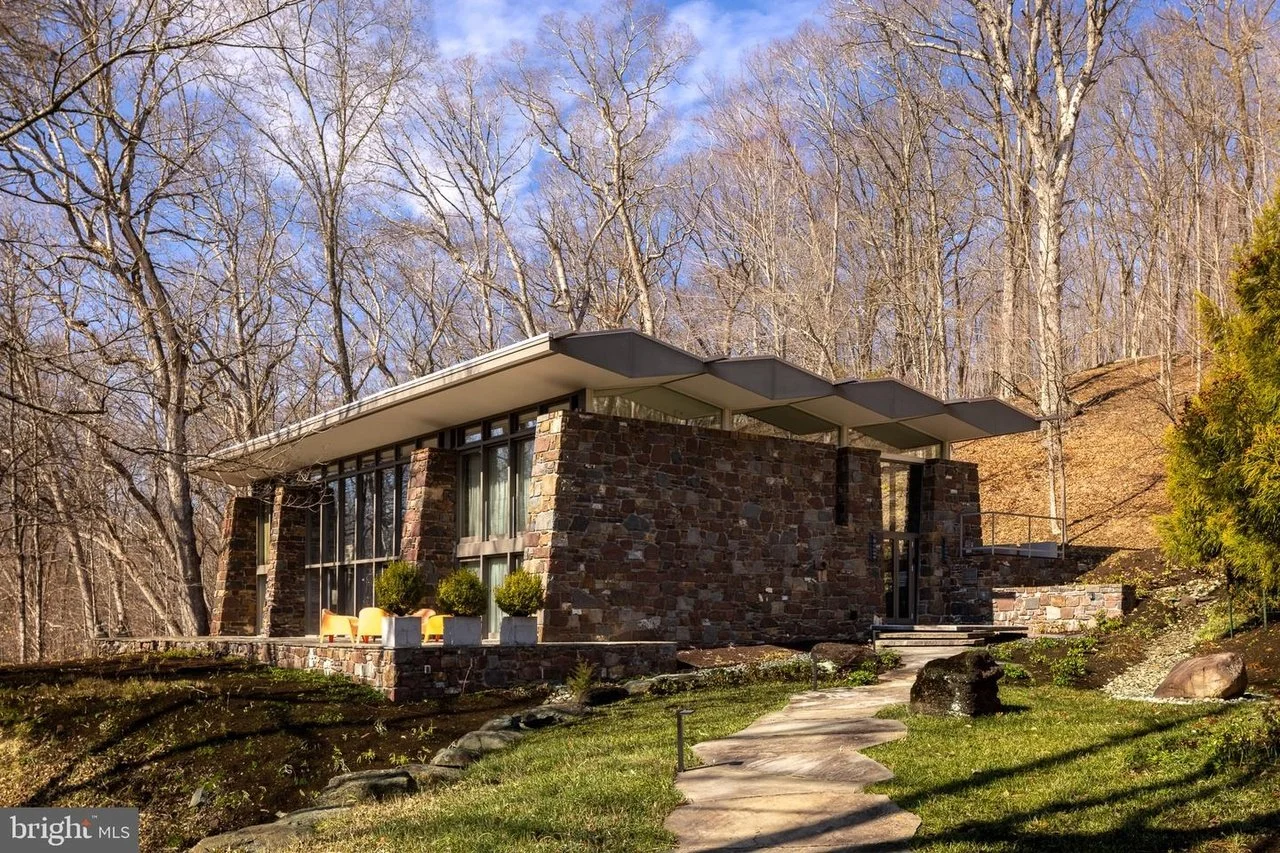
Architecturally, the home is a study in light, structure, and spatial experience. A central open living pavilion forms the heart of the residence, flanked by private wings, creating a deliberate separation between public and private spaces. Floor-to-ceiling window walls, clerestory glass, and a distinctive floating roofline allow natural light to move dynamically throughout the home while framing uninterrupted views of the surrounding landscape.

Rudolph’s forward-thinking approach to environmental design is evident throughout. The sculptural roofline is both visually striking and functional, designed to block high summer sun while allowing winter light to penetrate deeply into the home, naturally warming the thick stone walls which then radiate heat into the space.
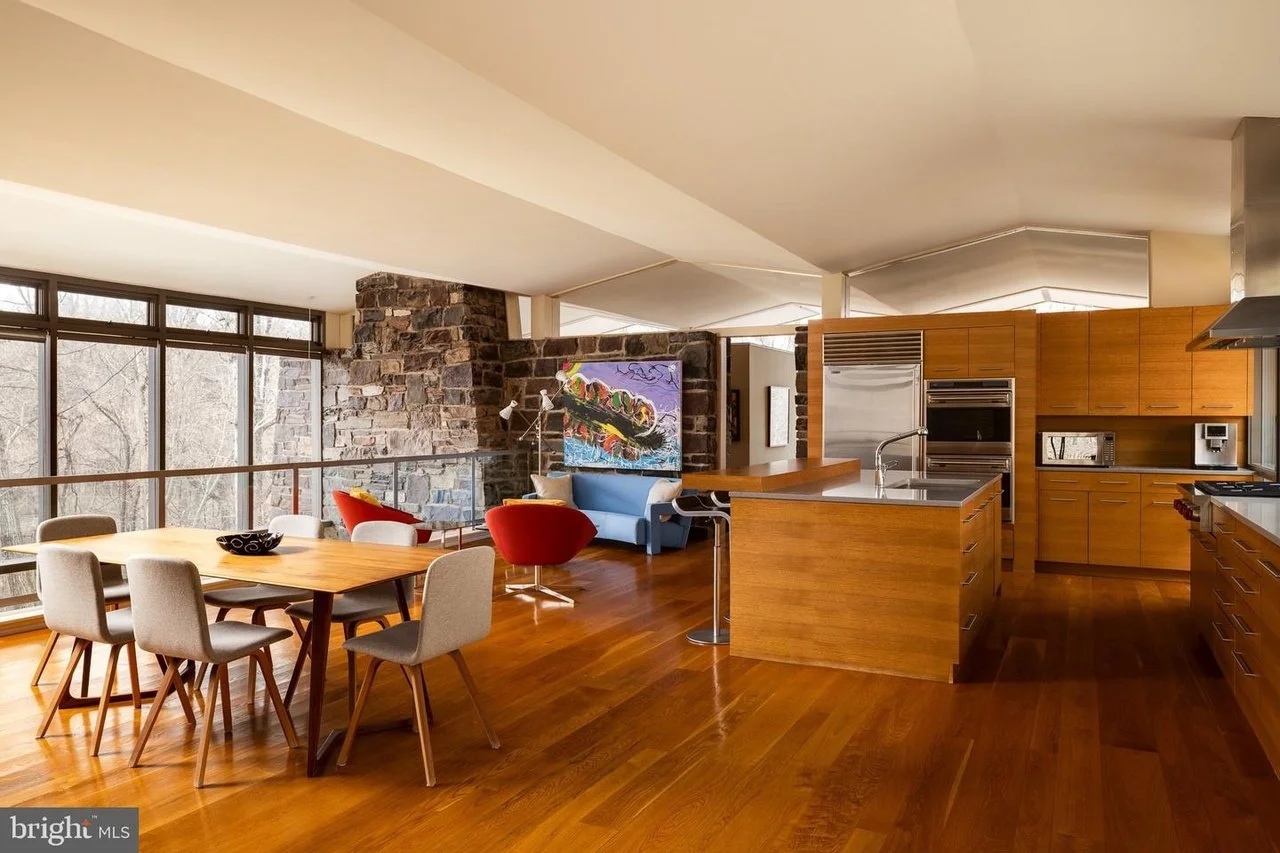
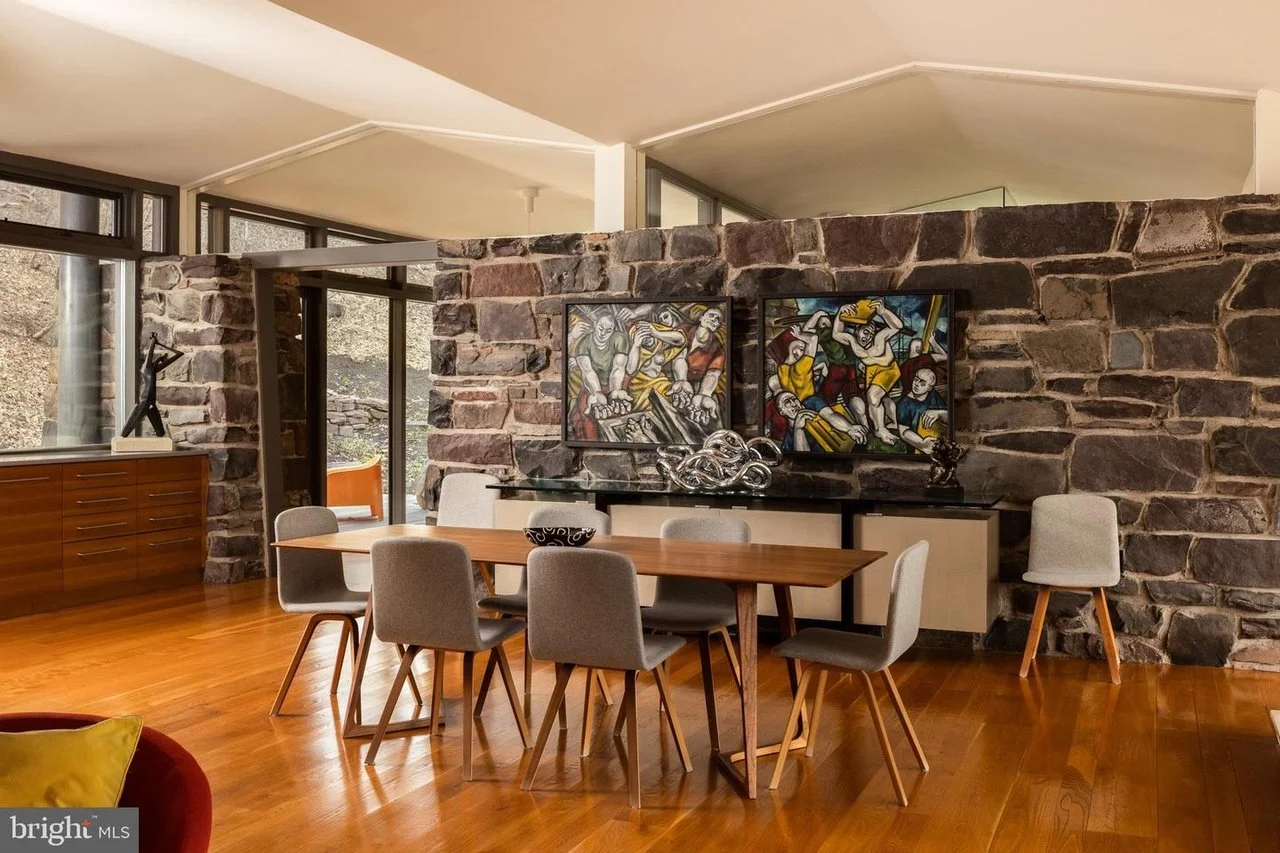
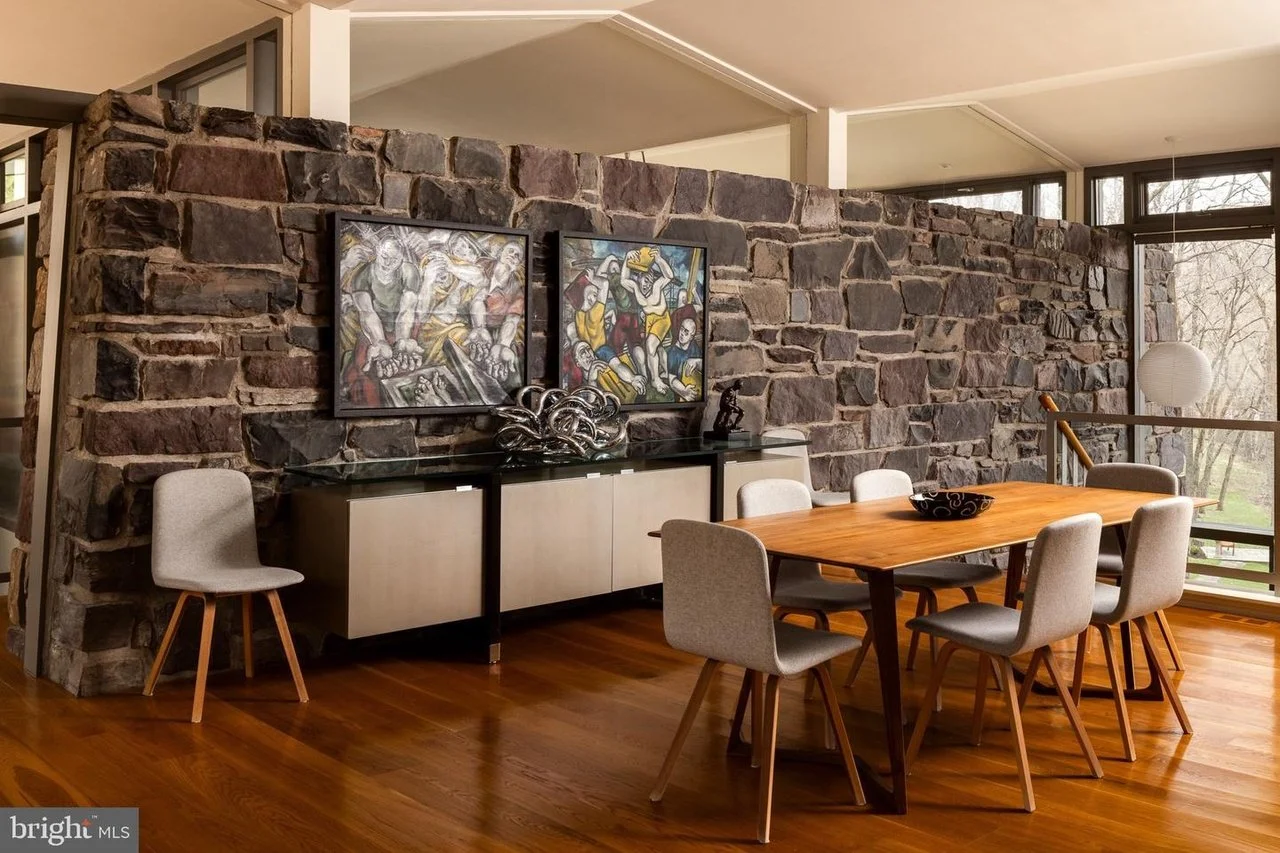
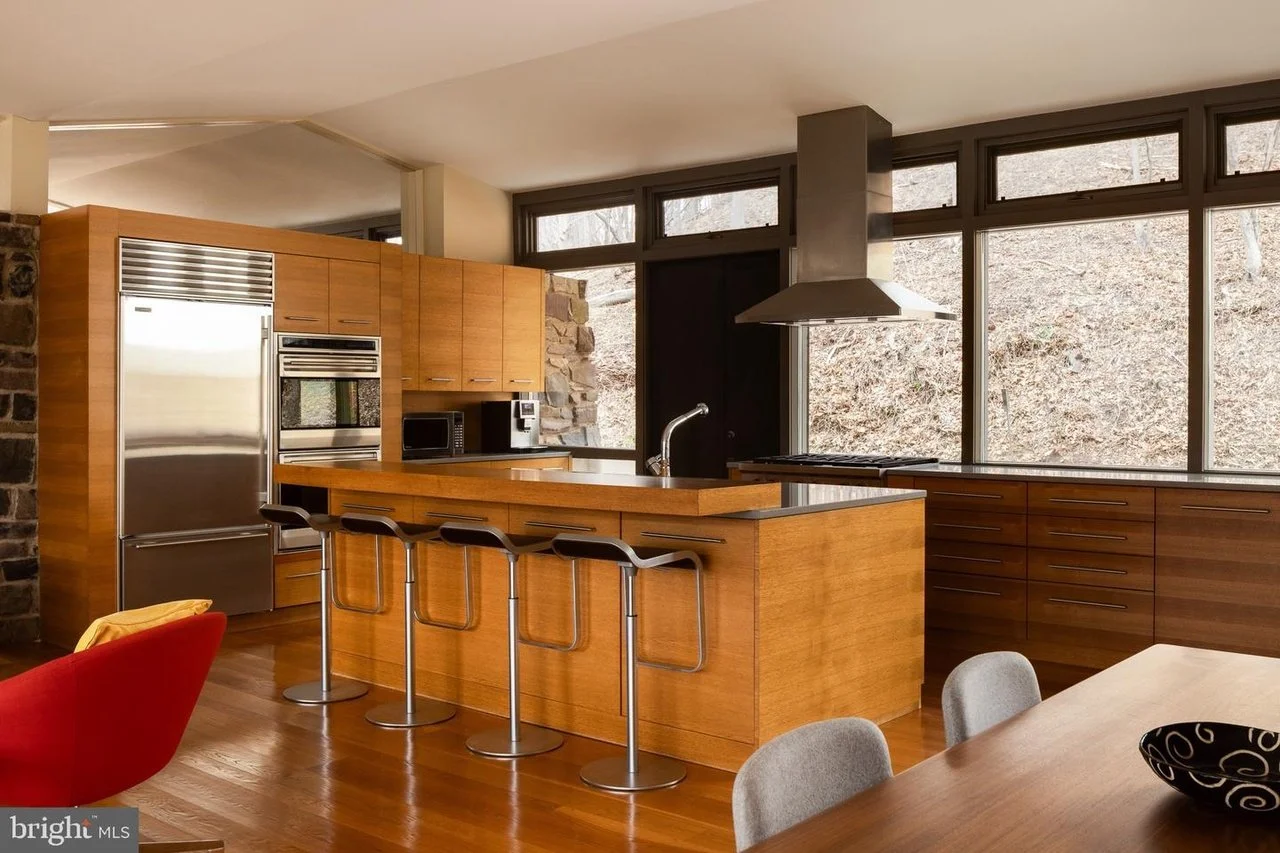
Inside, the residence offers approximately 3,500+ square feet, including 4 bedrooms and 3.5 baths, with living spaces that feel both expansive and intimate. The interplay of stone, glass, and wood creates a tactile richness, while the home’s multi-level design provides a unique spatial experience.

The 2014 completion faithfully realized Rudolph’s original intent while integrating modern systems and efficiencies. Surrounded by complete privacy, yet within close proximity to New Hope, Princeton, and major metropolitan areas, The Fullam House offers a rare convergence of architectural pedigree, historical significance, and modern livability.
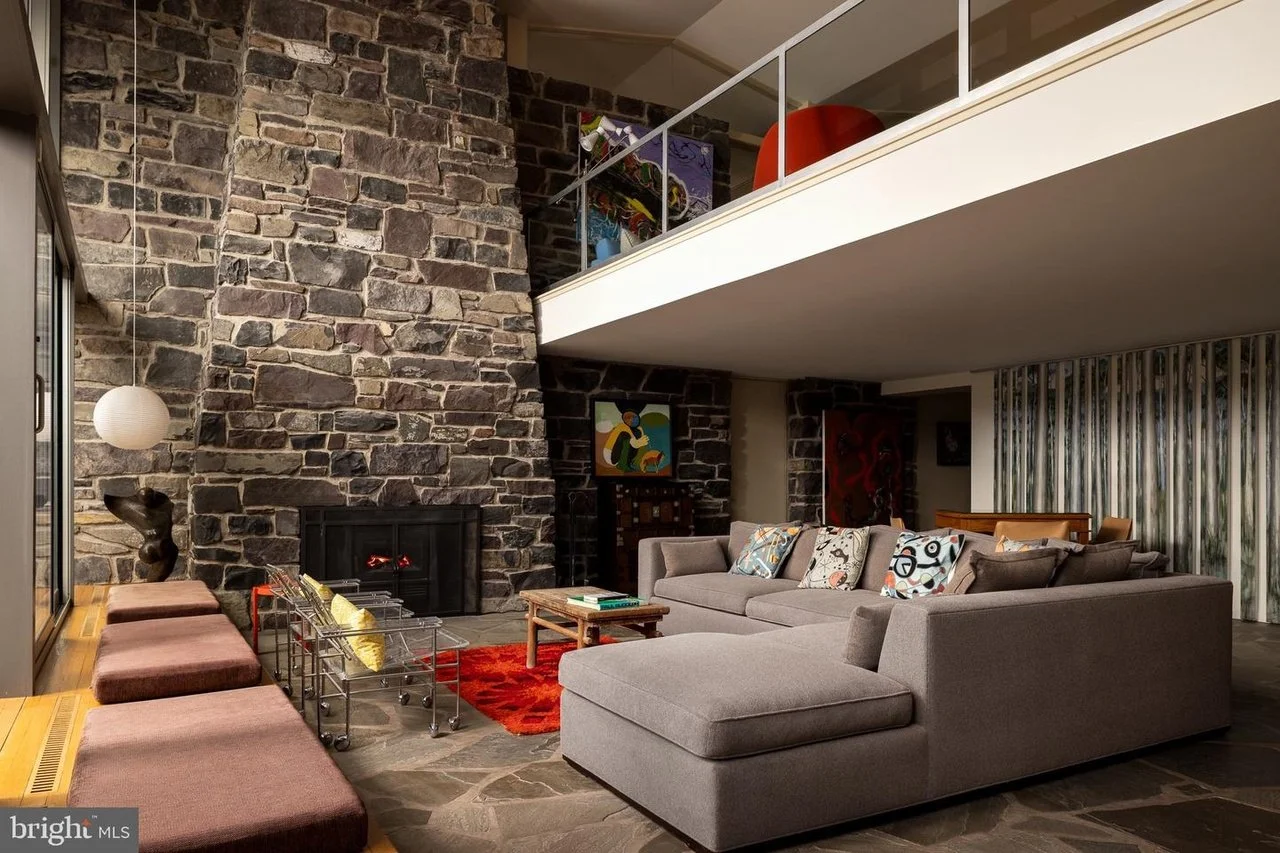
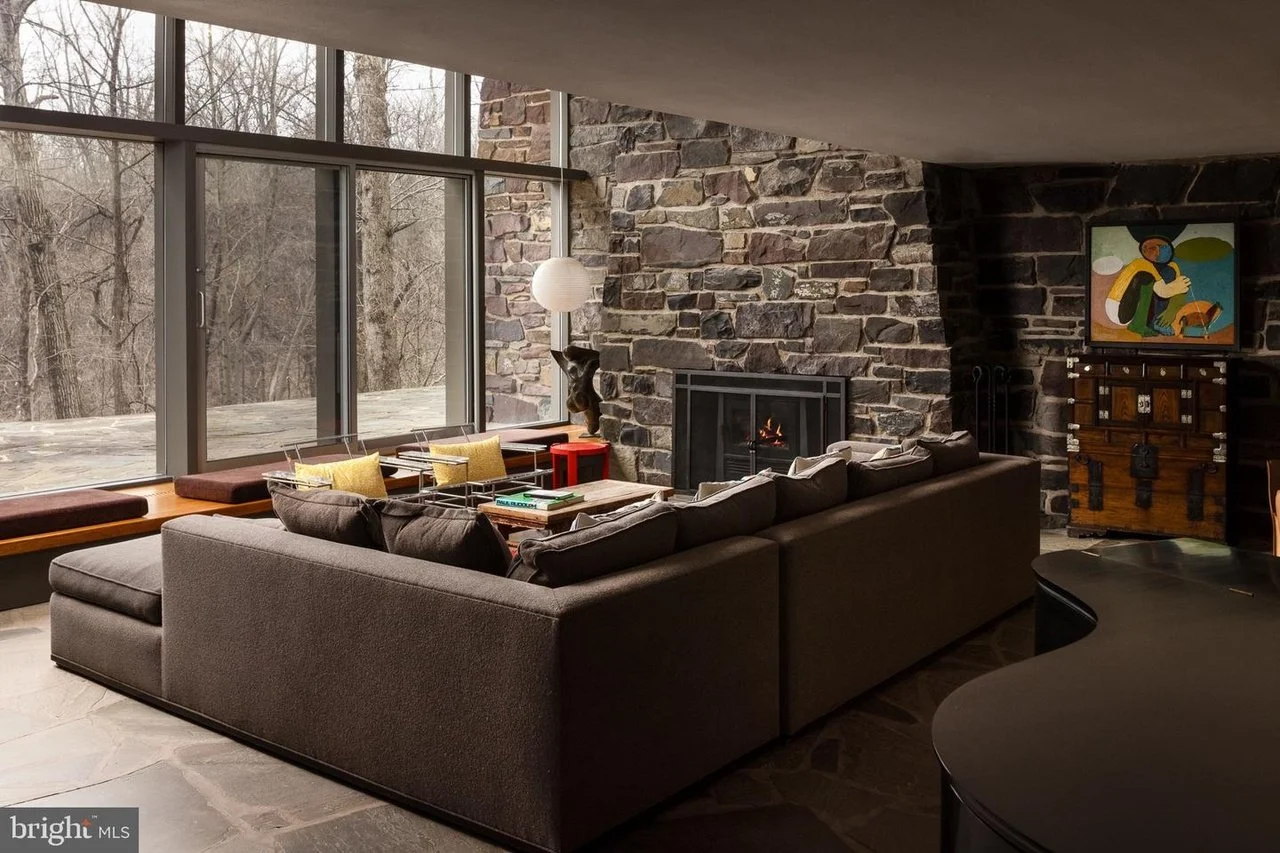
The property features a tennis court, rolling lawns, stone terraces, and lush landscaping.

Features

Square Footage: 3,550 ft² (329.8 m²)

Lot size : 25.5 acres / 1,110,780 ft² (103,194.8 m²)

Location: Newtown, Pennsylvania

Systems: Central Air for cooling; Electric & Propane for heating

Layout: 4 bedrooms and 3.5 baths

Taxes: $19,506 / year for 2025

For more information about the property’s history, see the Project Page in the Paul Rudolph Institute Archives.

The home is being offered for sale by the current owners for $5.85 million USD.

You can learn more about the Fullam Residence (including more images of the interior and exterior) at the Paul Rudolph Institute’s page for the property’s sale here.

It is always a good time to celebrate Paul Rudolph’s architecture —and we can’t think of a better way to celebrate than finding a new owner who will appreciate and preserve this modernist gem.

You can reach out to us at office@paulrudolph.institute for more information.

TWO RESIDENCES BY PAUL RUDOLPH LISTED WITH THE NATIONAL REGISTER OF HISTORIC PLACES

Paul Rudolph’s “Umbrella House” from 1953—as seen in 2018. Photo: Kelvin Dickinson, Paul Rudolph Heritage Foundation Archives

Paul Rudolph’s “Umbrella House” from 1953—as seen in 2018. Photo: Kelvin Dickinson, Paul Rudolph Heritage Foundation Archives

Paul Rudolph’s Fullam Residence, from 1959. Photo: Chris Mottalini and Eric Wolff

Paul Rudolph’s Fullam Residence, from 1959. Photo: Chris Mottalini and Eric Wolff

SOME GREAT NEWS

When there’s news about any of Rudolph’s buildings, it’s not always good: too often, we’ve heard about the act (or plan) to demo or damage one of Paul Rudolph’s great designs. But sometimes there is delightful news: for example, the recent purchase of Rudolph’s Hirsch (a.k.a. Halston) Residence by Tom Ford—and Mr. Ford’s stated intention to restore it—which you read about in one of our recent posts, is an example of great news about a Rudolph building!

Now we have some more good news!

Two of Rudolph’s most interesting residential designs—the Fullam Residence (in Bucks County, PA) and the “Umbrella House” (in Sarasota, FL) have been listed on the National Register of Historic Places !

THE UMBRELLA HOUSE

Readers of this Blog may have come across our article about Rudolph’s “Umbrella House”—but in case you haven’t seen it, you can read it (and learn a great deal about this fascinating design) here.

The “Weekly List” of the National Register of Historic Places now shows that it is listed with them. Here’s the page on which this is announced.

And the official listing reads:

FLORIDA, SARASOTA COUNTY,
Umbrella House,
1300 Westway Dr.,
Sarasota, MP100003417,
LISTED, 2/4/2019
(Sarasota School of Architecture MPS)

THE FULLAM RESIDENCE

The “Weekly List” of the National Register for Historic Places shows that it now listed with them. Here’s the page on which this is announced.

And the official listing reads:

PENNSYLVANIA, BUCKS COUNTY,
Fullam, John and Alice, House,
372 Brownsburg Rd.,
Wrightstown Township, SG100003519,
LISTED, 3/15/2019

By-the-way:

This is a good moment to make a note on the house’s (and original client’s) correct name. The accurate spelling is: Fullam (as shown in the National Register listing above). We only point this out because one sometimes sees it listed as “Fulham”—and that’s led to some confusion when doing research.

ABOUT BEING LISTED ON THE NATIONAL REGISTER

WHAT CRITERIA FOR EVALUATION ARE USED, WHEN THEY CONSIDER A BUILDING, SITE, OR STRUCTURE FOR “LISTING”?

Let’s let the National Park Service (of which the National Register is a part) speak for themselves. The range of possible reasons for listing are fascinatingly varied—and here is their document about “NATIONAL REGISTER CRITERIA FOR EVALUATION”:

Criteria for Evaluation

The quality of significance in American history, architecture, archaeology, engineering, and culture is present in districts, sites, buildings, structures, and objects that possess integrity of location, design, setting, materials, workmanship, feeling, and association, and:

  • That are associated with events that have made a significant contribution to the broad patterns of our history; or

  • That are associated with the lives of significant persons in our past; or

  • That embody the distinctive characteristics of a type, period, or method of construction, or that represent the work of a master, or that possess high artistic values, or that represent a significant and distinguishable entity whose components may lack individual distinction; or

  • That have yielded or may be likely to yield, information important in history or prehistory.

Criteria Considerations

Ordinarily cemeteries, birthplaces, graves of historical figures, properties owned by religious institutions or used for religious purposes, structures that have been moved from their original locations, reconstructed historic buildings, properties primarily commemorative in nature, and properties that have achieved significance within the past 50 years shall not be considered eligible for the National Register. However, such properties will qualify if they are integral parts of districts that do meet the criteria or if they fall within the following categories:

  • A religious property deriving primary significance from architectural or artistic distinction or historical importance; or

  • A building or structure removed from its original location but which is primarily significant for architectural value, or which is the surviving structure most importantly associated with a historic person or event; or

  • A birthplace or grave of a historical figure of outstanding importance if there is no appropriate site or building associated with his or her productive life; or

  • A cemetery that derives its primary importance from graves of persons of transcendent importance, from age, from distinctive design features, or from association with historic events; or

  • A reconstructed building when accurately executed in a suitable environment and presented in a dignified manner as part of a restoration master plan, and when no other building or structure with the same association has survived; or

  • A property primarily commemorative in intent if design, age, tradition, or symbolic value has invested it with its own exceptional significance; or

  • A property achieving significance within the past 50 years if it is of exceptional importance.

WHAT IS THE PROCESS FOR A BUILDING TO BE “LISTED” ON THE NATIONAL REGISTER OF HISTORIC PLACES—AND WHAT DOES IT MEAN?

Once again, we’ll let them speak for themselves. The following is excerpted from their own information pages:

The National Register of Historic Places is the official list of the nation's historic places worthy of preservation. Authorized by the National Historic Preservation Act of 1966, the National Park Service's National Register of Historic Places is part of a national program to coordinate and support public and private efforts to identify, evaluate, and protect America's historic and archaeological resources.

How are Properties Evaluated?

To be considered eligible, a property must meet the National Register Criteria for Evaluation. This involves examining the property’s age, significance, and integrity.

  • Age and Integrity:  Is the property old enough to be considered historic (generally at least 50 years old) and does it still look much the way it did in the past?

  • Significance:  Is the property associated with events, activities, or developments that were important in the past? With the lives of people who were important in the past? With significant architectural history, landscape history, or engineering achievements? Does it have the potential to yield information through archaeological investigation about our past?

National Register Listing Process

Proposed nominations are reviewed by your state’s historic preservation office and the state’s National Register Review Board. The length of the state process varies but will take a minimum of 90 days.

Complete nominations, with certifying recommendations, are submitted by the state to the National Park Service in Washington, D.C. for final review and listing by the Keeper of the National Register of Historic Places. The National Park Service makes a listing decision within 45 days.

Results & Owner Information

Listing in the National Register of Historic Places provides formal recognition of a property’s historical, architectural, or archaeological significance based on national standards used by every state.

Results include:

  • Becoming part of the National Register Archives, a public, searchable database that provides a wealth of research information

  • Encouraging preservation of historic resources by documenting a property’s historic significance

  • Providing opportunities for preservation incentives, such as:

  • Federal preservation grants for planning and rehabilitation

  • Federal investment tax credits

  • Preservation easements to nonprofit organizations

  • International building code fire and life safety code alternatives

  • Possible State tax benefit and grant opportunities. Check with your State Historic Preservation Office for historic property incentives available within your state

  • Involvement by the Advisory Council on Historic Preservation when a Federal agency project may affect historic property

  • Find out information on the care and maintenance of your historic property through various NPS Preservation Briefs and Tech Notes

  • Network with other historic property owners, tour historic areas, or chat with preservationists through Conferences, Workshops, and Preservation Organizations