
An obviously fake image of the Paul Rudolph Institute’s headquarters we posted for Star Wars day this past May 4th. The online hate we received for using AI was strong with this one.
Editor’s Note: we used AI to help provide examples of how it can and cannot help our work. It turned out that AI came up with some ideas we hadn’t thought of when we were drafting this post.
AI - whether we like it or not - is becoming an everyday tool. We give tours several times a month to architecture students and staff of local New York City architecture firms. Afterwards, one topic we ask about (besides how’s the profession doing overall?) is whether people are using AI and if so, what are they using it for and is it any good.
The answers have surprised us as we thought it wasn’t being used as much as the online hype would suggest. It turns out many offices we spoke to are using AI and students are using it as part of learning the design process - although its most popular for making graphics and renderings.
There’s also discussion that AI is replacing the work of entry level architecture jobs. From our experience, we think that may be somewhat true. We don’t have enough evidence to support a direct connection, but we do see more architecture grads interested in volunteering at the Institute. Assuming its not a sudden groundswell of love for the work of Rudolph, Goldfinger or Geller - could it be a lack of entry level jobs affected by AI? A warning sign of a softening economy? A mix of both? We don’t know but have noticed that something is going on.
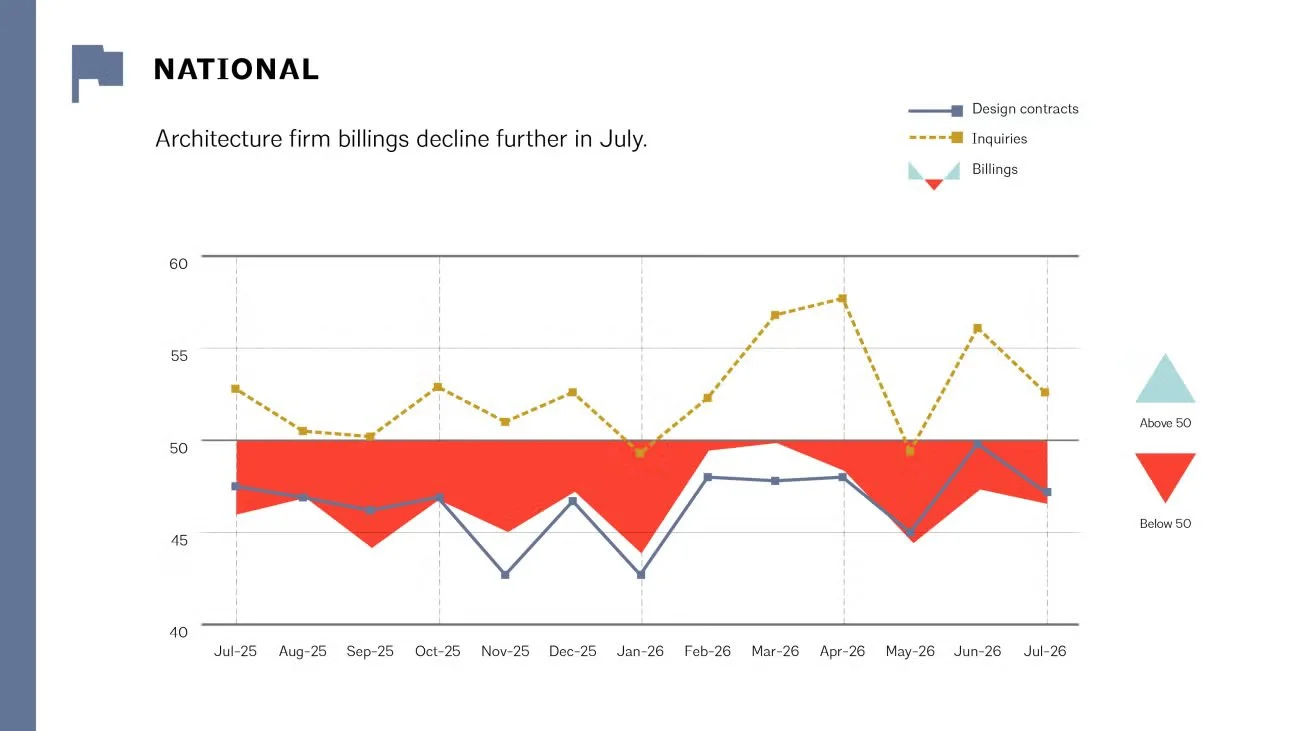
The Architecture Billings Index for July 2026: Architecture firm billings remain weak. “The persistent downturn in business conditions now extends to nearly three and a half years, as many firms continue to struggle” - AIA
Change brought about by new technology has always been an issue in the architectural profession. Think of what it was like for those who - like Paul Rudolph - insisted that everything be drawn by hand as Autocad took over the profession. Even though he as working well into the 1990’s, Autocad was not used in his office. Autocad (and similar CAD software) allowed smaller offices to design bigger projects more efficiently and AI will probably have as big - if not more - of an impact.
For small organizations like ours, AI can help with tasks that there are not simply enough people or time to do otherwise. Our work is often controlled by where we choose to put the limited time and money we have. Do we digitize archives or spend the time on fundraising? If AI can make it possible to do both quicker and more efficiently, then it becomes a useful tool. A powerful tool, but one that still needs to be managed.
But what can AI do that’s useful in historic preservation?
Used well, AI can help preservationists work faster and tell better stories which lead to more buildings being recognized and (hopefully) preserved. This post lays out where AI can genuinely help, where it can hurt, and how preservation organizations like the Institute can use it responsibly.
What AI can do well
1. Speed up documentation
Preservation work often has limited time and labor for documentation. Digitizing physical archives, organizing them, and entering the material into a database takes a lot of time. On a good day the Institute can digitize about 20-30 items. Sometimes we can do up to 100 items if they are already digitized (like photographs).
AI can help by:
Transcribing and summarizing interviews, meetings, and oral histories
Extracting data from scanned written materials (e.g. dates, addresses or names)
Tagging and clustering image collections to make archives searchable
The key value of AI isn’t replacing expertise in this instance. It’s reducing the busywork that keeps people from doing what’s really valuable.
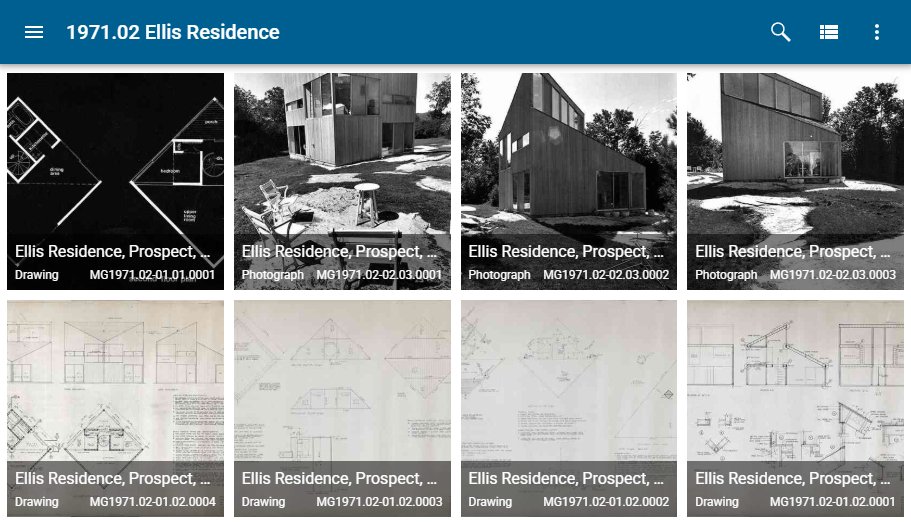
The Institute’s in house database showing the materials digitized of Myron Goldfinger’s 1971 Ellis Residence.
2. Enhance research
Sometimes preserving a project starts with: What do we already know? AI can help pull and summarize what is already known about a site or an architect. Sometimes it finds an obscure reference that would have taken hours to find otherwise.
Examples include:
Searching across large collections of written materials by meaning - and not just keywords
Generating research outlines and bibliographies to help staff and volunteers focus on what matters most or what needs to looked into further
This can be especially helpful for volunteer-heavy organizations like the Paul Rudolph Institute where training time is limited or information about a project is incomplete.
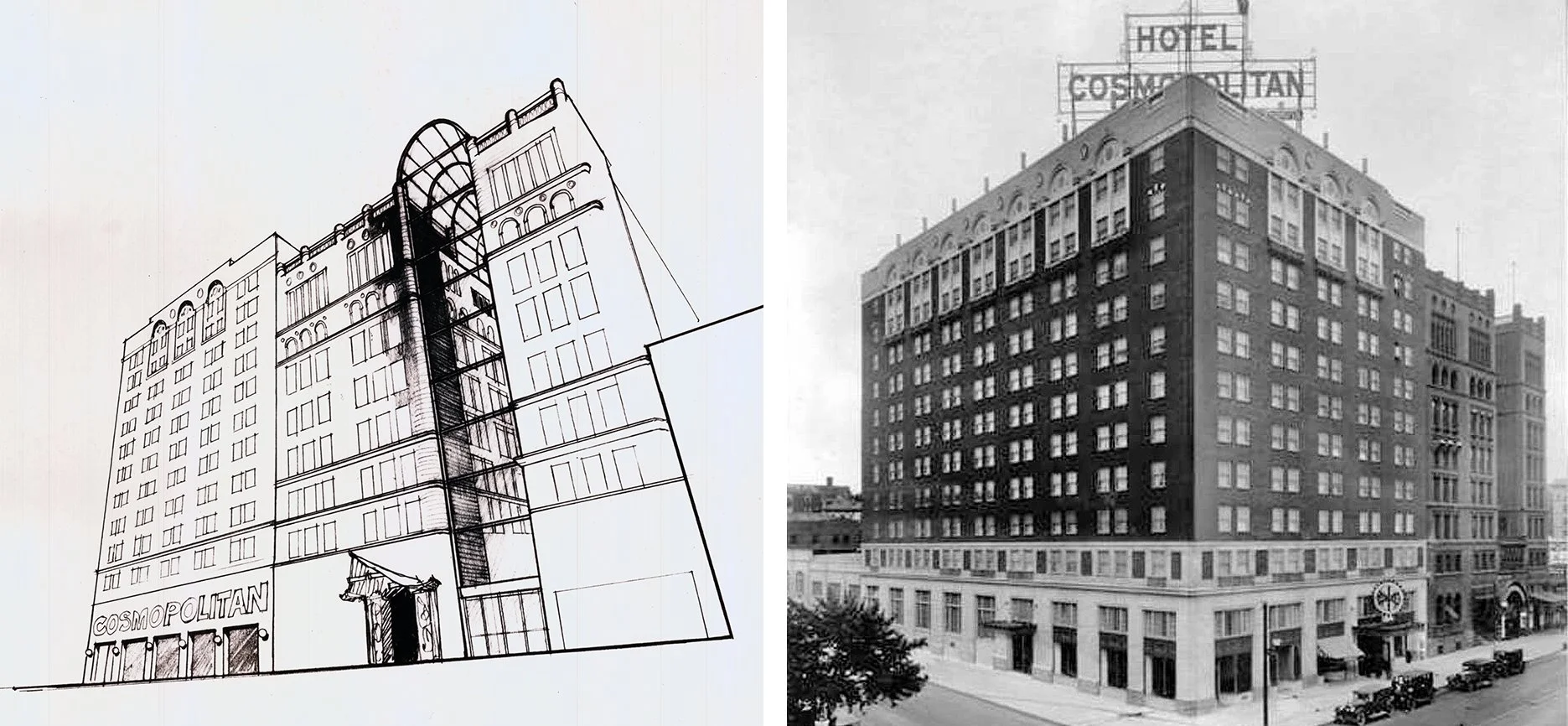
A volunteer used AI to discover that an unknown Myron Goldfinger project believed to be in New York City (left) was in fact the Cosmopolitan Hotel in Denver, Colorado (a proposed redevelopment circa 1977-1978 of the adjacent Hotel Metropole which was eventually torn down in 1984). This information allowed us to date the project, making it the only project by Goldfinger in Colorado.
3. Improve public engagement
Preservation succeeds when the public cares enough about a building or an architect’s work to want to see it taken care of and not destroyed. AI can help turn technical knowledge into stories that bring public attention to threatened buildings and sites.
AI can help with:
Drafting exhibit labels, blog posts, and tour scripts
Repurposing a lecture into a newsletter, a short article or a set of social media posts
Creating FAQs that answer the questions donors, students and journalists typically ask
AI can also help test messaging to see what resonates with different stakeholders (e.g. students vs. members of the local community)
4. Support planning
In theory, AI can help identify which sites are most at risk by tracking warning signs like:
Permit activity and zoning changes
Real estate listings and redevelopment
News coverage and comments on social media
If used carefully, this can help preservationists prioritize limited resources and intervene earlier. At a minimum a simple google search is a good start, but AI can be much more powerful if setup to monitor important works continuously.
Where AI can go wrong
1. Hallucinations
Generative AI can produce beautiful text and images that are simply wrong. In preservation, that can lead to:
Incorrect attributions (architect, date, style)
Invented citations or “facts” that never existed
Making up graphics that do not match the actual site or building
Because preservation work often becomes part of the public record, errors can propagate for years. In the case of the Institute, we update our project files as new verifiable sources become available that have been reviewed by volunteers.
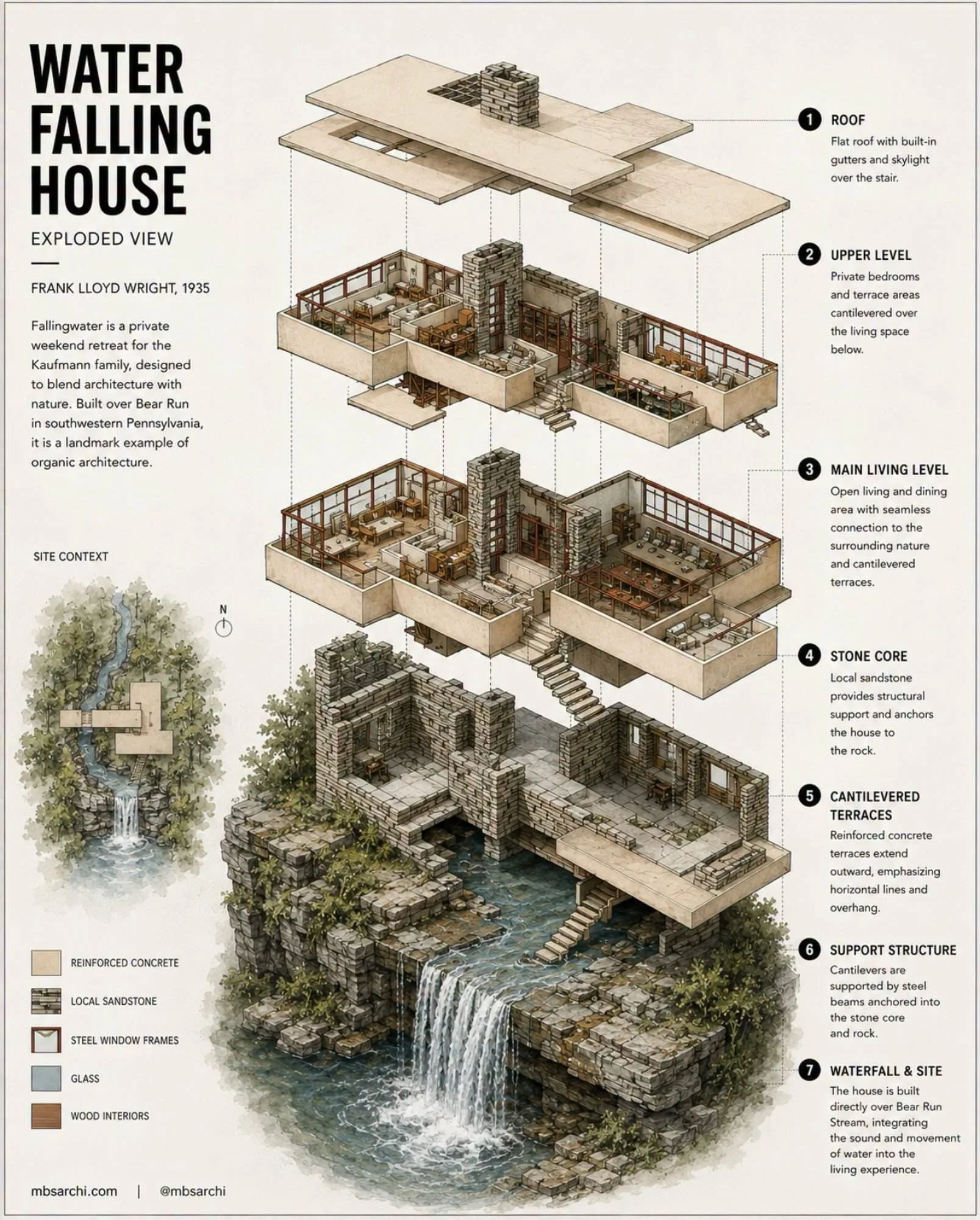
Anyone who’s been to Wright’s Falling Water would not recognize this graphic of the ‘Water Falling House’ found online
2. Bias
AI models are trained on what’s already documented, and what’s documented is what’s considered important which may leave out equally important but lesser documented projects or facts.
That can reinforce existing inequities:
Overemphasizing well-studied examples of an architect’s career over lesser known or less publicized works
Underrepresenting vernacular buildings or marginalized histories
Treating the absence of data as the absence of significance
Preservation of historic properties already struggles with whose stories and what works are worthy of getting preserved. AI can amplify that imbalance and miss equally important, yet lesser known works.
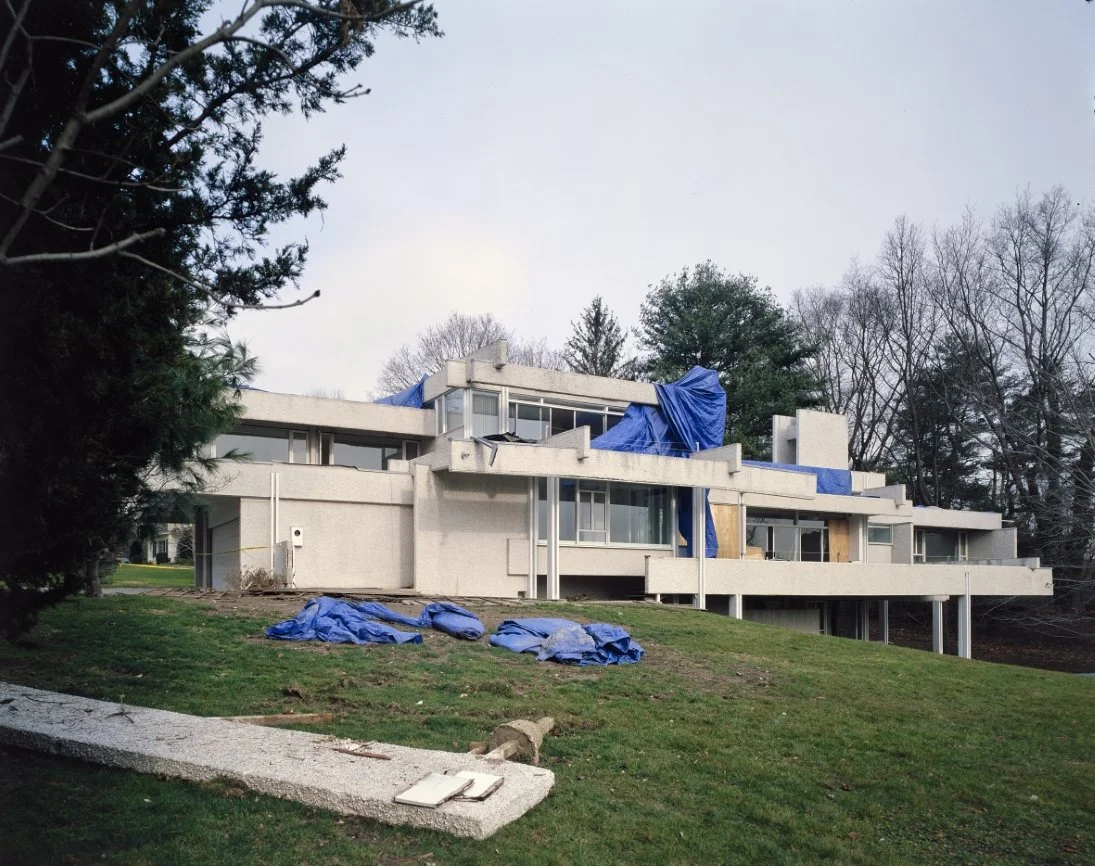
Paul Rudolph’s 1972 Louis Micheels residence shortly before it was sold and demolished in 2007. The destruction of the Micheels House - after a legal battle where a judge ruled a "lack of criteria for significance" - served as a painful wake-up call for local preservationists. The loss became a call to action for The National Trust for Historic Preservation, which initiated its own Survey of New Canaan Mid-Century Modern Houses following the teardown.
How to adopt AI without compromising integrity
1. Treat AI as a tool for writing drafts
Use AI to generate options, outlines, and first drafts. Keep final decisions - especially about significance and public claims - in the hands of humans.
2. Build a verification workflow
Follow a simple rule: no claim without a source.
Require citations for dates and attributions
Add a review by a human before anything becomes public or online.
3. Be transparent
If AI helped draft a public-facing post (like this one) consider a short disclosure statement.
So is AI worth it?
The answer, like the ethics of using AI in the first place, is complicated. AI can help preservation: faster documentation, better access to archives, and clearer storytelling. But preservation is also a field where errors and bias have lasting consequences.
The goal isn’t to “use AI” because it’s new. The goal is to protect and interpret the built environment while also showing care to being accurate. If AI helps you do that - while keeping humans accountable for truth and meaning - it’s worth using.