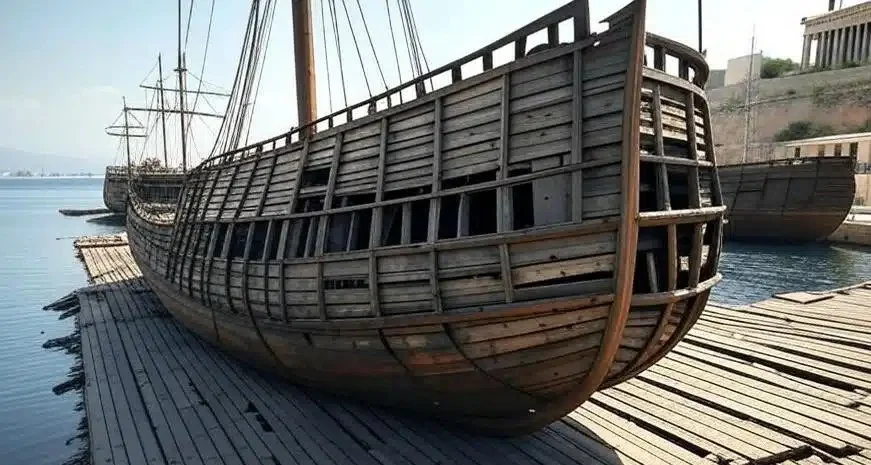
The Ship of Theseus and the preservation paradox
The classic thought experiment known as the Ship of Theseus asks a simple question: if a ship’s planks are replaced one by one over time, is it still the same ship? And if the original planks are later reassembled into a second ship, which one is “real”? Historic Preservation faces this dilemma constantly. Buildings weather, design details fail, materials decay, and the needs of owners and users change. Every intervention - repair, replacement, restoration, reconstruction - forces a choice about what we believe the “thing” actually is: its original fabric? its design intent? its history? its cultural meaning? …or some combination?
Authenticity matters because preservation is about more than just keeping old things standing. It is about maintaining trustworthy evidence of the past - evidence that scholars and the public can rely on. When authenticity is treated casually, preservation can slide into stagecraft: attractive replicas, simplified narratives, and “heritage” that is more marketing than memory.
An example of stagecraft over authenticity is Cinderella’s Castle at Disneyland which uses a visual technique known as forced perspective. The castle is built with progressively smaller bricks, windows, and turrets on each higher level. This tricks the brain into perceiving the structure as much taller and more distant than its actual physical size. ‘Design’ and ‘Authenticity’ in the castle’s design bend the knee to ‘Economics.’
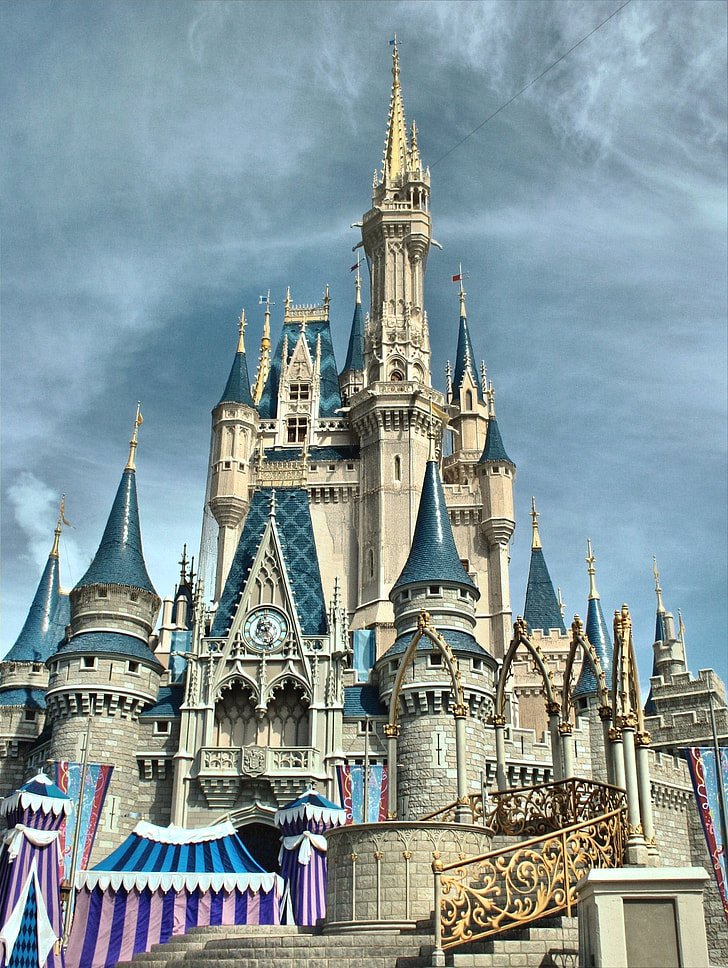
Cinderella’s Castle at Disneyland
What “authenticity” means in preservation
In preservation, authenticity is understood as the credibility of a place and the integrity of the material it presents. Authenticity can present itself in several different ways:
Materials: through original fabric, workmanship, and construction methods
Design: through form, proportions, spatial sequences, and architectural intent
Setting and context: through the relationship to site, landscape, and neighborhood
Use and function: through continuity (or change) in how a place is used by owners and visitors
Spirit and feeling: through the cultural qualities people associate with a place (a ‘vibe’)
The challenge is that these qualities can conflict with each other. A building can retain its design but lose its original materials; it can keep materials but be moved to a new location; it can be carefully restored yet feel “dead” if stripped of its social history.
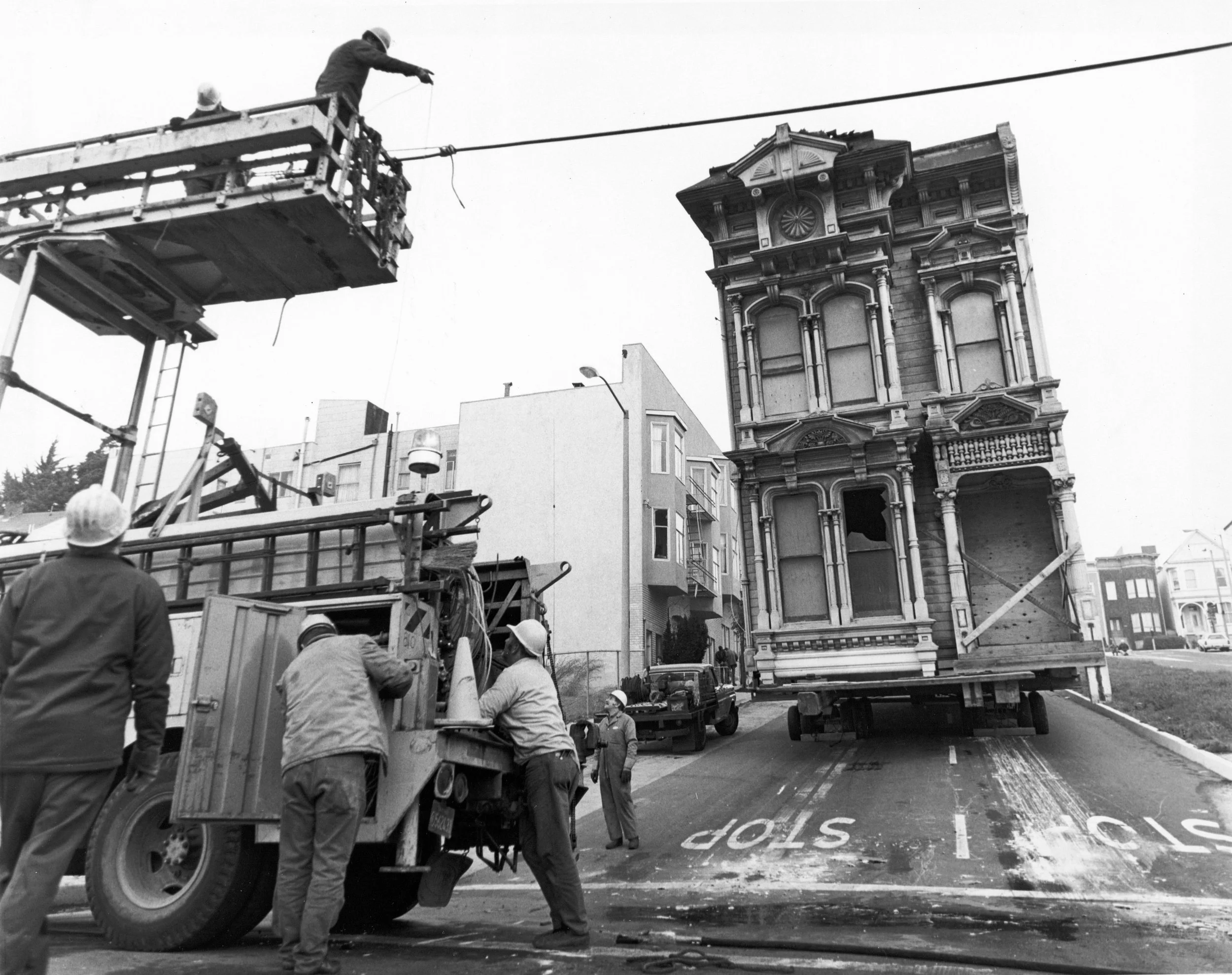
In 1973, the historic Vollmer House was moved to a new location in San Francisco, CA
Why authenticity matters - To Us and Everyone
Part of the mission of the Paul Rudolph Institute is to preserve the architectural legacy of Paul Rudolph, Myron Goldfinger and Andrew Geller. One of the ways we do this is through preserving and presenting their architectural archives so that the significance of their work is understood and appreciated. In keeping with that role, our priority is to preserve the work as originally conceived. No one is better at designing a Paul Rudolph home than Paul Rudolph.
Authenticity is not just a concern of purists like many of us are accused of being here at the Institute. It is the foundation for ethical decision-making when dealing with maintaining a historic property. Authenticity matters in the following ways:
Public trust and accountability - Preservation often relies on public benefits - tax incentives, landmark protections and philanthropic support. Authenticity is how we justify that benefit: the public is not funding a fictional place, but the stewardship of real cultural heritage.
Historical truth and scholarship - Original fabric and clearly identifiable modifications are important facts. When we replace too much, or “correct” history to match a preferred era, we erase information that future researchers cannot recover.
Cultural meaning and identity - Communities attach meaning to places through memory and experience. Authenticity protects those meanings from being overwritten by short-lived aesthetic trends or callous real-estate returns.
Design integrity and craft knowledge - Historic buildings embody techniques and material intelligence. Preserving authentic fabric sustains craft traditions and teaches future builders what worked and what failed.
professional references that shape authenticity
Authenticity is not governed by a single rulebook worldwide. Instead, it is guided by a family of professional standards and advisory bodies. Together, they form a shared vocabulary for what counts as “authentic” and how to act responsibly. These standards include the Venice Charter (1964) and the Nara Document (1994).
The Venice Charter emphasizes respect for original material and documentation, minimum intervention and legibility of additions so history is not falsified. The Nara Document broadened the concept of authenticity beyond a simple focus on original material. It argues that authenticity must be understood within cultural context - including traditions and values.
In the United States, the Secretary of the Interior’s Standards for the Treatment of Historic Properties guide work on designated historic resources. They define four treatments - preservation, rehabilitation, restoration, reconstruction - and emphasize repair over replacement; replacement in kind (when necessary); avoiding made-up “false history”; and retaining changes that have gained significance over time.
Preservation Controversies are often Just an argument over Authenticity
Many preservation controversies are framed as style wars or property-rights disputes, but underneath it is usually a disagreement about what is “authentic.”
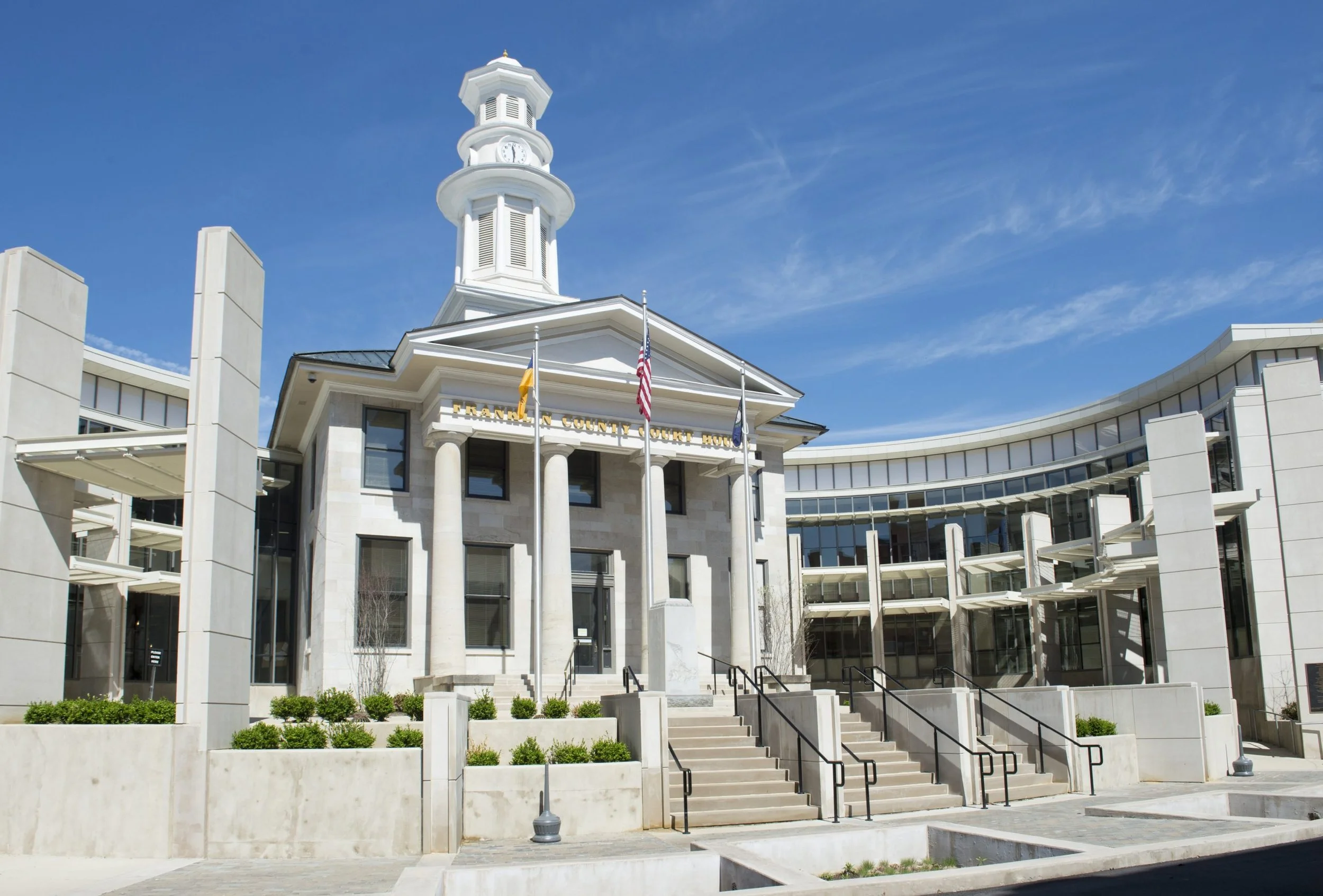
An example of a 2010-2013 modern addition to the historic Franklin County Courthouse in Franklin, Kentucky which was originally constructed in 1835-1839.
Examples of contested authenticity
Paul Rudolph: the Biggs Residence
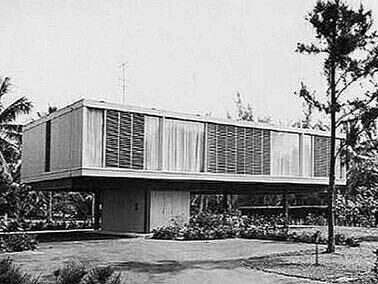
Paul Rudolph’s Biggs Residence in Delray Beach, Florida. Here it is shown in a 1956 photograph, in just-completed condition, as Rudolph had conceived it.
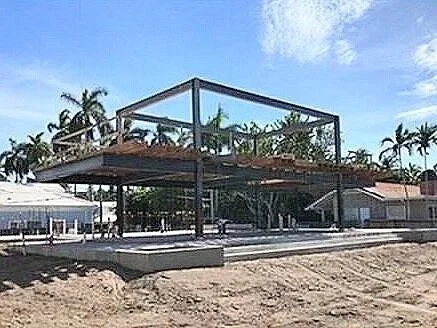
And what happened: per the application for a Certificate Of Appropriateness, “The house is being preserved and restored as originally designed by Paul Rudolph without any compromise arising out of the addition proposal, except for the connector at the rear, least public view.”
Paul Rudolph’s residential work is frequently at the center of authenticity debates because it combines experimental detailing with materials that can be difficult to maintain. Residential work by Rudolph - or any architect for that matter - is especially susceptible to alterations where an owner considers the home a ‘castle’ where they are king and not simply a steward. Ownership - like in the old proverb “possession is nine-tenths of the law” - excuses all kinds of destruction.
When a Rudolph house is heavily altered - or demolished and “recreated” - the Ship of Theseus problem becomes real: at what point does a Rudolph become about Rudolph rather than by Rudolph?
Frank Lloyd Wright and the “Wrightness” question
Wright’s buildings have generated many preservation controversies because of their nature - they are usually iconic, frequently visited by the public and difficult to maintain. Fallingwater has required significant conservation work due to structural and environmental issues. Here, authenticity arguments weigh the necessity of intervention against the desire to preserve original fabric and experience.
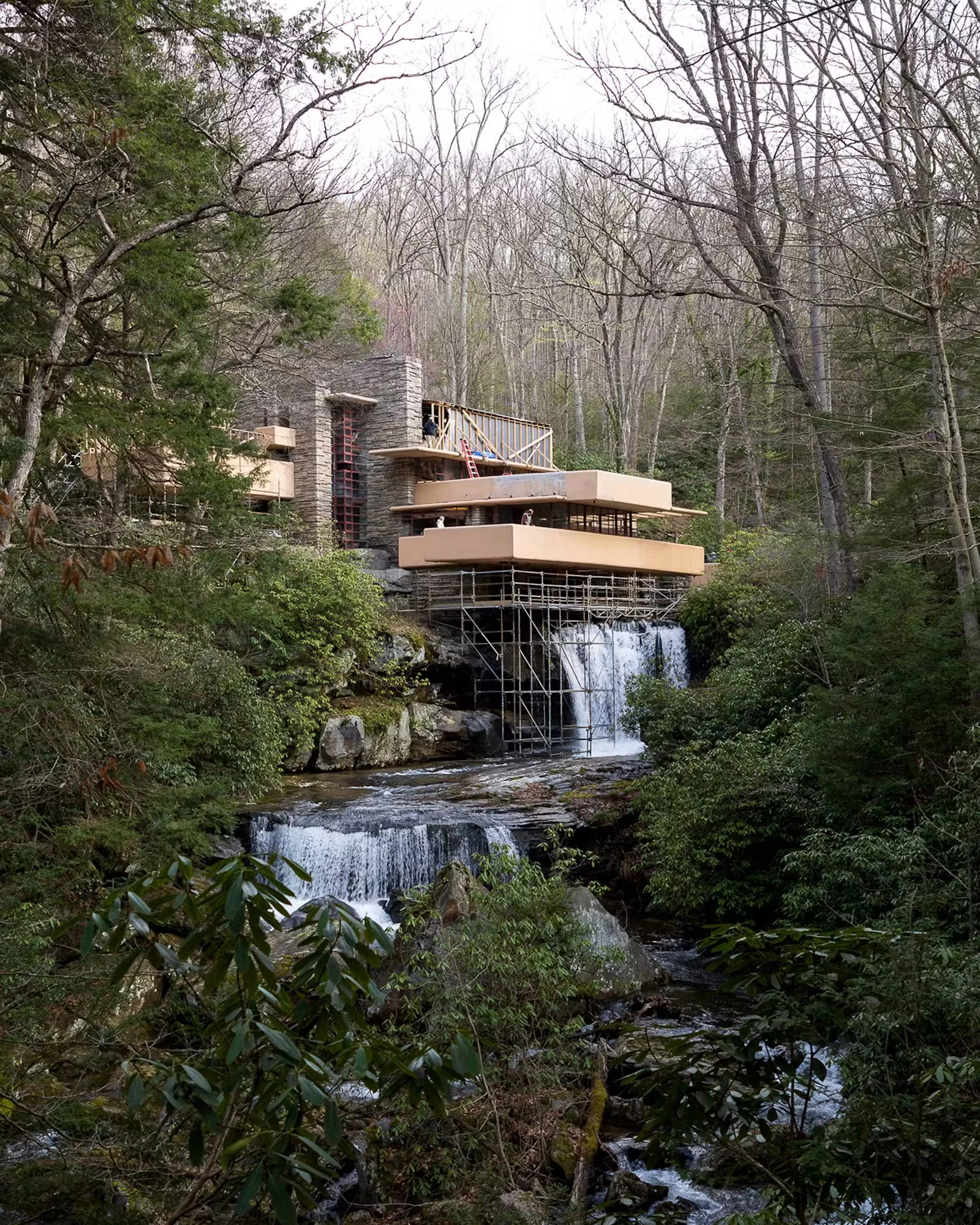
Wright’s Fallingwater under repair. Image: Western Pennsylvania Conservancy
In Wright’s case, authenticity is frequently measured against “Wrightness” - a mix of material, geometry, and experiential qualities. That can be powerful, but it can also tempt stakeholders to privilege a purified design narrative over the building’s full history - in this case debate over Wright’s design of the building’s cantilevers.
Other significant architects and controversial outcomes
Modern architecture, in particular, is prone to authenticity disputes because many buildings used early or experimental systems that are either lost or in need of replacement. Le Corbusier, Mies van der Rohe and Louis Kahn (not to mention Rudolph or Wright) have all had issues come up that touch on the subject of authenticity.
A practical way to think about authenticity
A useful preservation ethic is to treat authenticity as the protection of a building’s actual self:
Keep what you can: prioritize repair and maintenance.
When replacement is necessary, replace honestly: match material and detail where appropriate, but document what changed.
Make new work legible: avoid falsifying history.
Preserve layers of time when they carry meaning.
Document everything: drawings, photos, material analysis, and rationale.
This approach does not eliminate controversy, but it makes decisions defensible both in the present and the future.
Conclusion
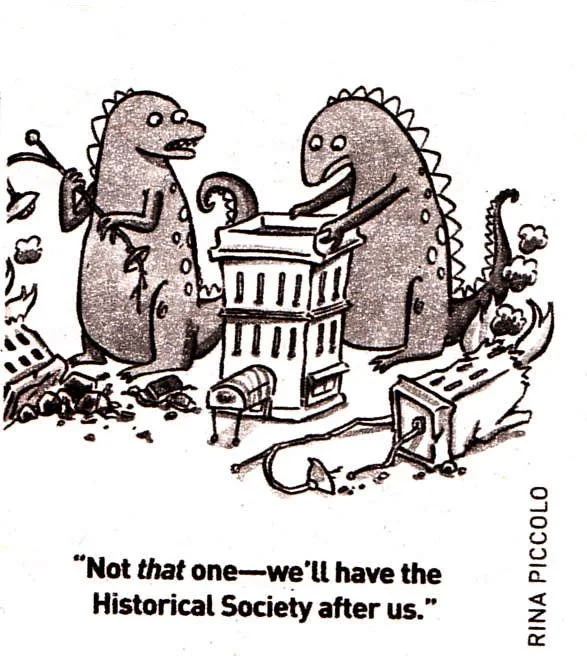
The Ship of Theseus endures because it captures the central tension of preservation: change is inevitable, yet identity must remain credible. Authenticity matters because it connects preservation to truth - truth in materials, truth in design, truth in cultural meaning, and truth in the record we leave behind.
In the end, the goal is not to freeze buildings in time, but to steward them so that what they claim to be remains believable and future generations inherit not a replica of history, but history itself.